
A hospital's infection prevention committee approves an evidence-based urinary catheter maintenance bundle, yet compliance on two medical units remains low one month after an educational email announcement. Nurses report that the new workflow feels disconnected from daily shift routines. Which change management strategy should the infection preventionist prioritize next?
Select an answer to reveal the explanation.
Short Explanation
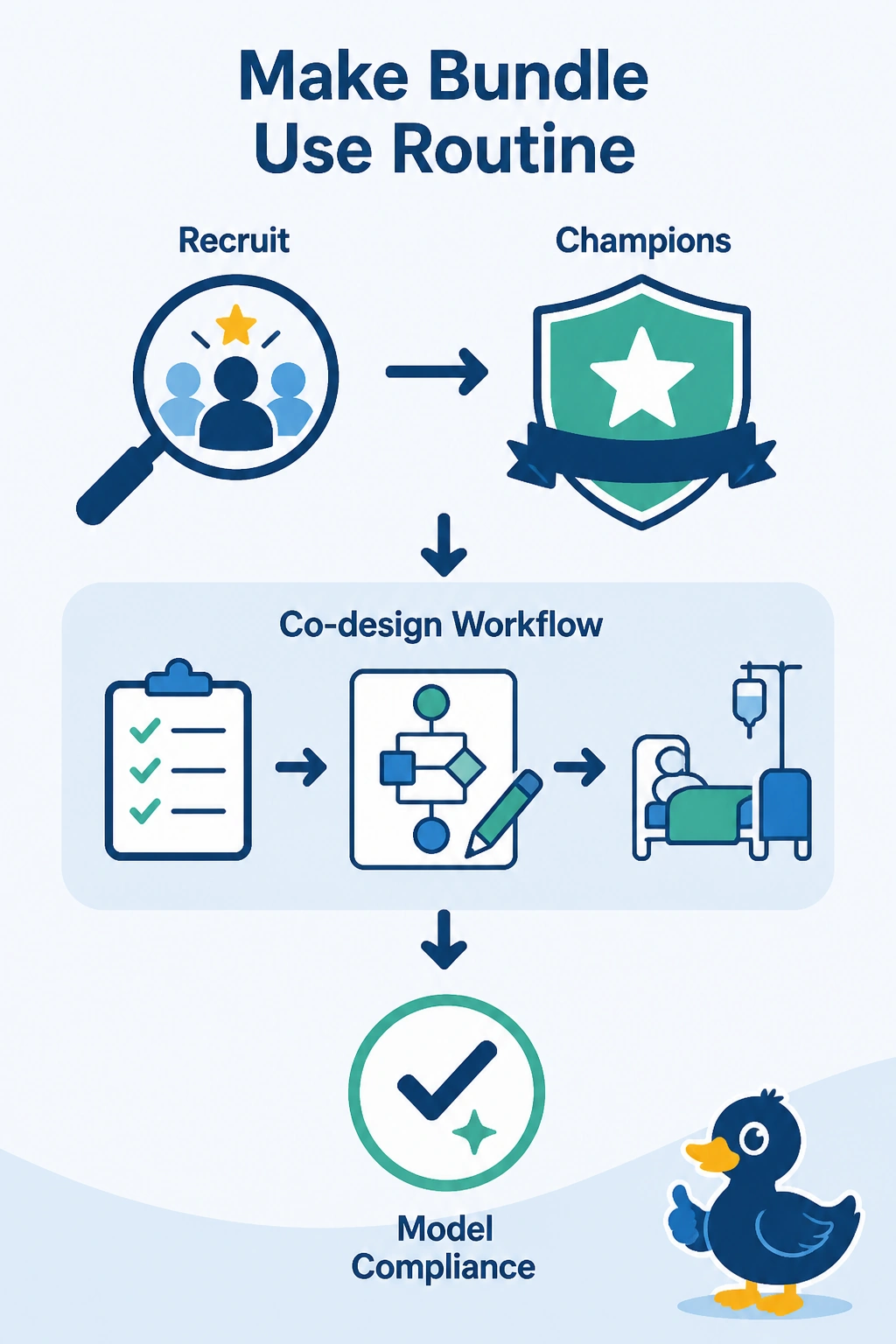
Think of the policy email as a playbook without a team huddle: you may know the steps but still struggle to fit them into a shift. Discipline, another memo, or pausing audits won’t solve that workflow barrier. Partnering with respected frontline champions helps you adapt the bundle to daily routines and build lasting adoption.
Full Explanation
Sustained practice change in healthcare requires addressing practical workflow barriers and unit social norms, not simply relying on top-down communication. Recruiting respected frontline unit champions to co-design workflow integration and model compliance builds peer ownership, surfaces hidden logistical obstacles, and translates the policy into realistic bedside habits. Escalating noncompliance to nursing administration for formal disciplinary action can undermine psychological safety and ignores the workflow friction that makes the desired action difficult. Resending the original policy memorandum with a mandatory electronic read receipt may confirm that staff received it, but does not resolve why they struggle to execute the bundle during busy shifts. Suspending bundle auditing for six months removes feedback and allows inconsistent legacy practices to persist. One caveat is that champions need protected time and clear expectations so the role does not become an unfunded burden. As a practical check, pair champion-led coaching with brief weekly bedside observations and share unit-specific compliance trends at shift huddles.
Prefer to study offline? Printable PDF study book + test engine ($7.50, unofficial). These questions stay free here.