
An infection preventionist reviews six months of urinary catheter maintenance audit data showing seven different types of compliance failures across medical-surgical units and needs to help nursing leadership focus limited improvement resources on the biggest contributors. Which quality improvement tool best serves this goal?
Select an answer to reveal the explanation.
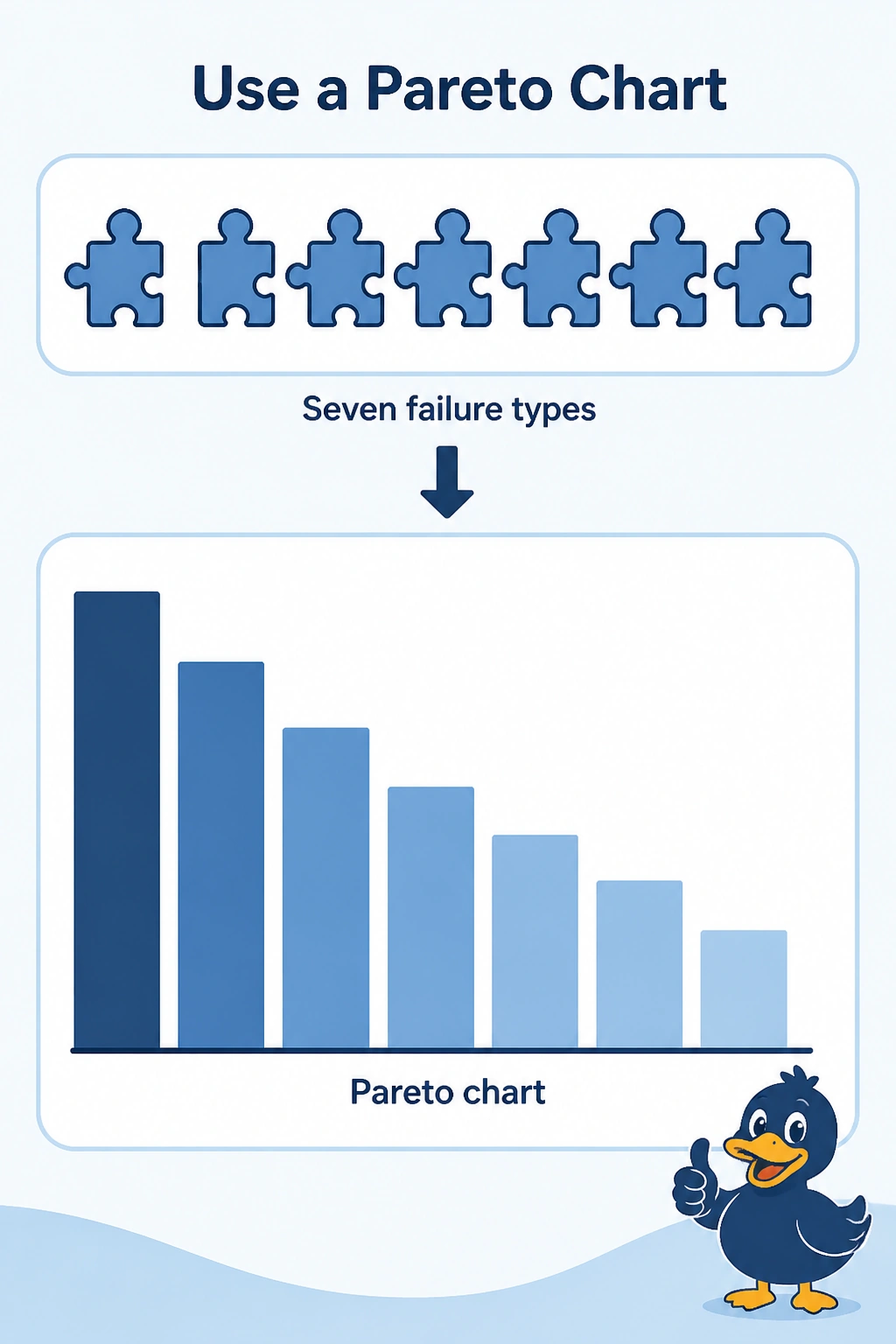
Short Explanation
When resources are tight, you want to fix the biggest leaks in the boat before patching tiny pinholes. A Pareto chart to rank contributing factors by frequency and target the largest drivers applies the 80/20 principle to quality improvement. The trap is picking a correlation or prospective risk tool when you already have audit data showing multiple causes.
Full Explanation
To focus limited quality improvement resources on the few barriers causing the majority of catheter maintenance failures, you should use a Pareto chart to rank contributing factors by frequency and target the largest drivers. Based on the Pareto principle, a small number of high-frequency causes typically account for most defects, so ordering bars from highest to lowest frequency with a cumulative percentage line lets teams prioritize high-impact interventions. Choosing a scatter diagram to measure the correlation between nurse staffing hours and monthly patient days evaluates the relationship between two continuous variables rather than ranking categorical failure reasons. Using a run chart of daily hand hygiene observations to detect seasonal shifts across all hospital units tracks a single metric over time rather than comparing competing root causes. Conducting a failure mode and effects analysis to brainstorm hypothetical equipment failures before purchase is a proactive risk-assessment method for new processes rather than a tool for prioritizing existing audit counts. Caveat: high frequency alone does not always equal highest clinical severity, so pair frequency rankings with patient-harm weighting. Operational check: review the unit's monthly catheter audit tally and verify that the top two Pareto categories receive targeted workflow countermeasures first.
Prefer to study offline? Printable PDF study book + test engine ($7.50, unofficial). These questions stay free here.