
During annual budgeting, a hospital administrator proposes cutting infection prevention staffing to a fixed ratio based solely on licensed inpatient beds, without accounting for the hospital's new outpatient oncology infusion center, transplant program, and high surgical volume. How should the infection preventionist respond?
Select an answer to reveal the explanation.
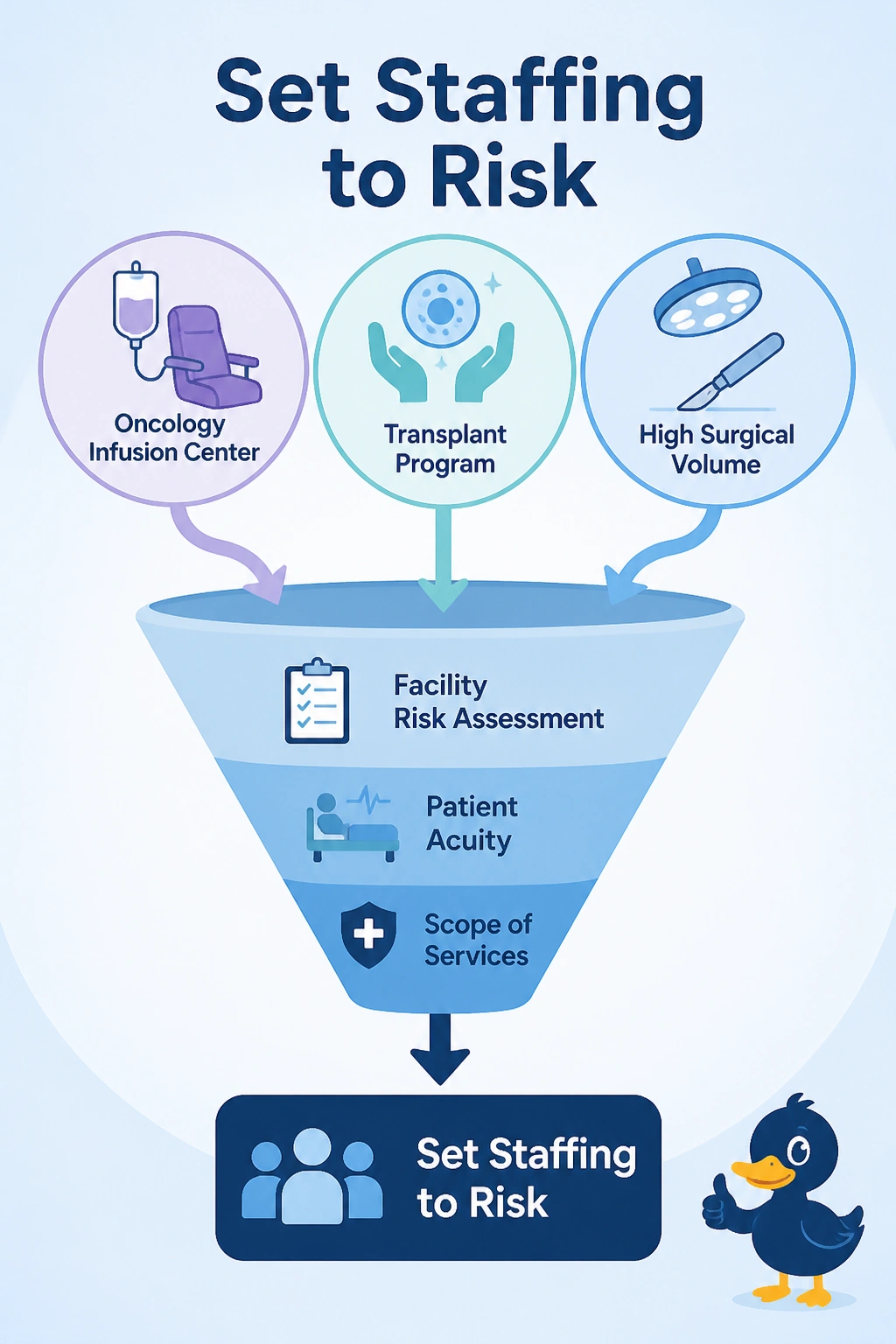
Short Explanation
Counting only inpatient beds to staff an infection prevention program is like staffing an airport by the number of waiting-room chairs while ignoring how many planes land. Your workload is driven by high-risk procedures, immunocompromised patients, and outpatient clinics, not just bed count. The trap is letting a simple bed ratio override your facility's actual risk profile.
Full Explanation
The infection preventionist should Recommend basing staffing on facility risk assessment, patient acuity, and scope of services so program resources match the true complexity of care delivered across inpatient and ambulatory settings. High-risk services such as transplantation, oncology infusion, and complex surgery generate substantial surveillance, construction, reprocessing, and consultation demands independent of licensed bed count. Choosing to Adopt the national median hospital bed-to-staffing ratio as the sole benchmark for all facilities ignores wide differences in case mix, regulatory obligations, and outpatient volume that make one-size-fits-all ratios inaccurate. Deciding to Exclude ambulatory and procedural clinics from infection prevention oversight to match bed counts leaves high-risk invasive and infusion care unmonitored and violates accreditation and public health expectations. Trying to Replace routine surveillance and environmental rounding with automated electronic alerts only fails because software cannot conduct device-reprocessing audits, construction risk assessments, or frontline staff coaching. One caveat is that staffing justifications are strongest when tied to measurable hours required for mandated reporting and risk-mitigation tasks. As an operational check, document time spent on each program domain in an annual resource gap analysis for executive leadership.
Prefer to study offline? Printable PDF study book + test engine ($7.50, unofficial). These questions stay free here.