
After three surgical site infections occur following total knee arthroplasties in a single month, an infection preventionist convenes perioperative nurses, surgeons, sterile processing staff, and environmental services to brainstorm all possible contributing factors across people, equipment, environment, and processes. Which quality improvement tool best organizes these potential root causes?
Select an answer to reveal the explanation.
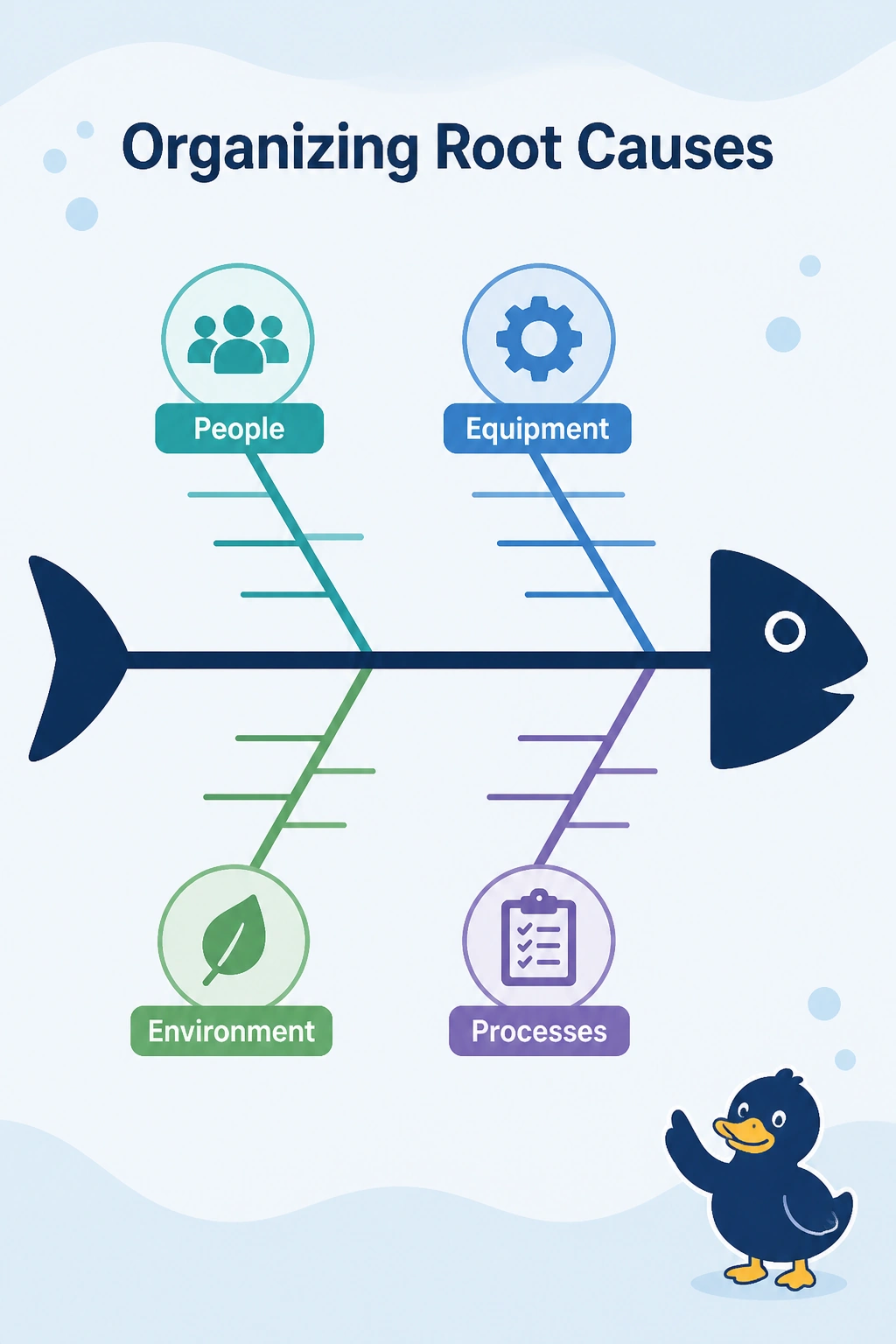
Short Explanation
Picture a fish skeleton where the head is the infection problem and each main bone holds a category of clues your team uncovers. A fishbone diagram structures multidisciplinary brainstorming by cause category, so the trap is grabbing a chart meant for timelines, trends, or rankings instead.
Full Explanation
A Fishbone diagram grouping contributing factors by category—also called an Ishikawa or cause-and-effect diagram—visually maps potential root causes under structured branches such as people, equipment, materials, environment, and clinical processes during a multidisciplinary investigation. This structure helps diverse teams surface hidden system contributors to surgical site infections rather than stopping at the first obvious human error. A Control chart tracking monthly infection rates monitors process stability over time to distinguish common-cause from special-cause variation, but it does not categorize underlying causes. A Gantt chart scheduling corrective action tasks is a project-management timeline tool used after solutions are chosen to assign owners and deadlines, not to brainstorm causes. A Pareto chart ranking defects by frequency count displays the most common contributors in descending order to prioritize high-impact targets once data are already tallied, rather than organizing qualitative team hypotheses. As a caveat, a fishbone diagram generates candidate causes that still require verification through chart audits and direct observation. For an operational check, pair the completed diagram with direct observations in the operating room and sterile processing to confirm which suspected factors actually occur in practice.
Prefer to study offline? Printable PDF study book + test engine ($7.50, unofficial). These questions stay free here.