
An infection preventionist leads a multidisciplinary initiative to standardize blood culture collection across emergency, nursing, and laboratory teams, but tasks are repeatedly missed because staff assume another department owns them. Which project management tool best clarifies who executes, approves, advises on, and receives updates for each step?
Select an answer to reveal the explanation.
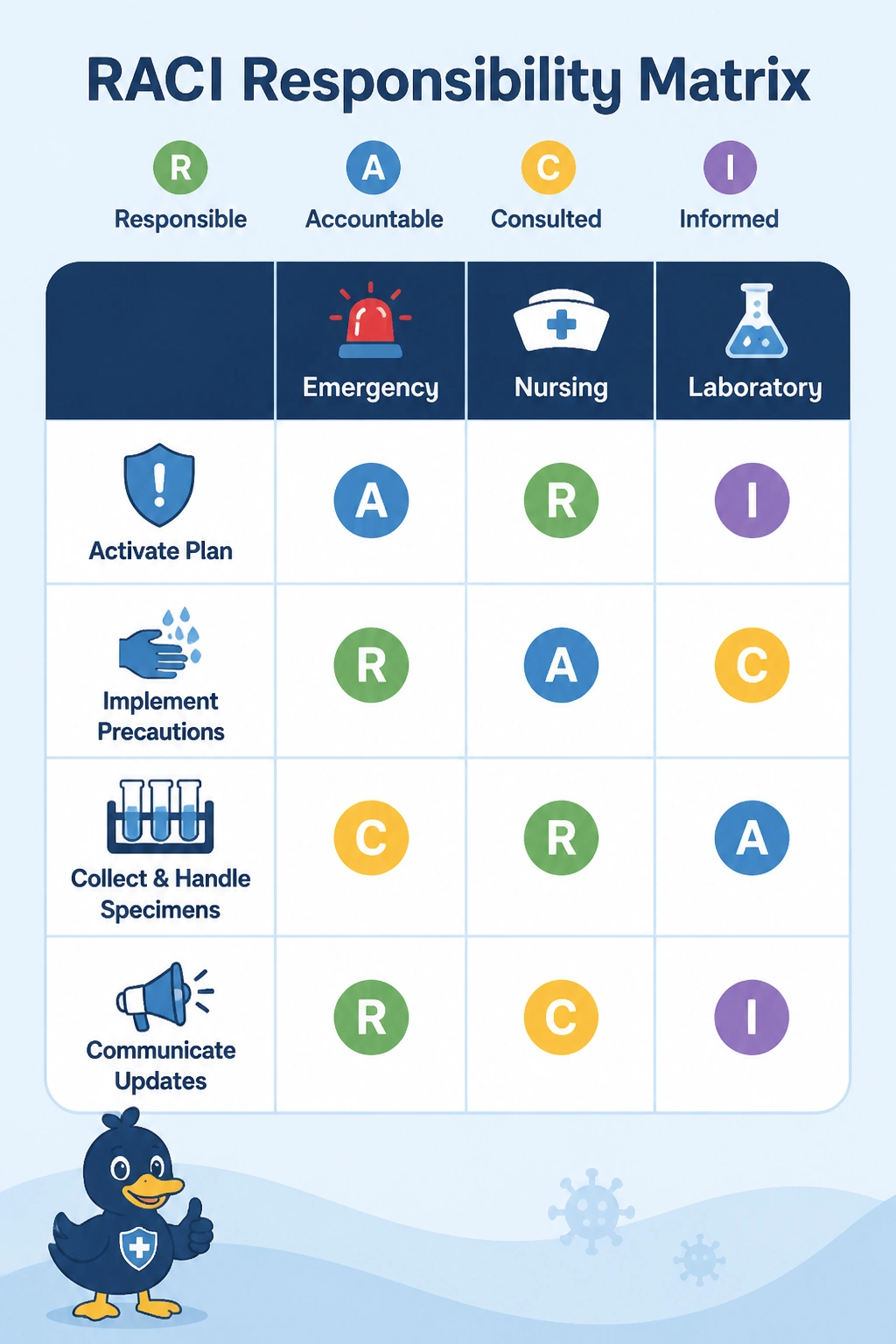
Short Explanation
When a cross-departmental project stalls because everyone thinks someone else is handling a step, you have an ownership gap rather than a data problem. The trap is reaching for a root-cause or prioritization chart instead of mapping role accountability.
Full Explanation
A RACI responsibility matrix maps every project deliverable against stakeholder roles by specifying who is Responsible for executing the task, Accountable for final approval, Consulted for subject-matter input, and Informed of progress or outcomes. Assigning a single accountable owner per task eliminates the diffusion of responsibility that causes handoff failures across emergency, nursing, and laboratory teams. A Cause-and-effect fishbone diagram is designed to brainstorm and categorize potential contributors to an existing problem, not to assign ongoing execution ownership. A Prioritized Pareto bar chart ranks defect frequencies to focus resources on the highest-volume drivers, which does not resolve ambiguity over who performs each step. Failure mode and effects analysis is a prospective risk-scoring method for identifying potential process breakdowns and their severity before launch, rather than a role-alignment grid. As a governance caveat, ensure every row in a RACI matrix has exactly one Accountable person so decision authority never splits across departments. As an operational check, review the finalized RACI chart with department directors at kickoff and revisit it whenever staffing or workflow handoffs change.
Prefer to study offline? Printable PDF study book + test engine ($7.50, unofficial). These questions stay free here.