
A community hospital notes rising broad-spectrum carbapenem utilization and an increase in Clostridioides difficile infections across medical wards despite distributing an annual antimicrobial prescribing memo. Which program management strategy should the infection preventionist recommend in collaboration with pharmacy and infectious disease leaders?
Select an answer to reveal the explanation.
Short Explanation
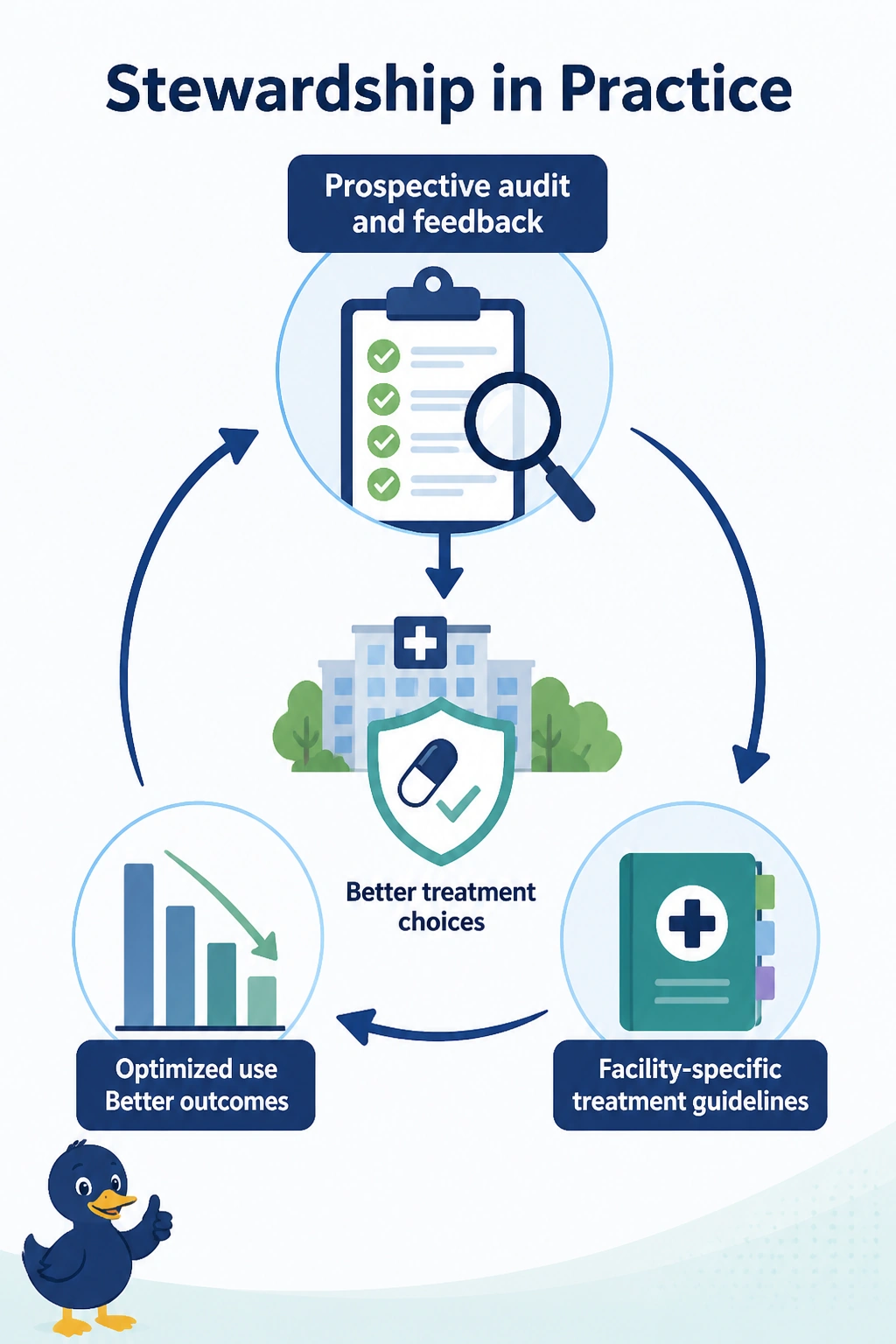
Sending an annual prescribing memo is like handing out a nutrition pamphlet at a buffet—people read it once and return to old habits. The trap is relying on passive education or blanket bans that create clinical workarounds. Partnering on prospective audit and feedback gives your prescribers real-time guidance that lowers Clostridioides difficile risk.
Full Explanation
Implementing prospective audit and feedback with facility-specific treatment guidelines is a CDC Core Element of Hospital Antibiotic Stewardship Programs and directly addresses inappropriate broad-spectrum prescribing driving Clostridioides difficile infection. Unlike passive memos, prospective audit and feedback pairs real-time review of active antibiotic orders with actionable recommendations to de-escalate or shorten therapy. Requiring written chief medical officer approval before every inpatient antibiotic order is operationally unworkable and delays urgent sepsis care without building clinician buy-in. Publishing monthly unit-level antibiotic spending totals on staff breakroom boards focuses on cost rather than clinical appropriateness and fails to guide individual prescribing decisions. Replacing all carbapenems on the hospital formulary with fluoroquinolone alternatives is counterproductive because fluoroquinolones carry a high risk of triggering C. difficile infection and selecting for resistance. As a caveat, stewardship interventions succeed best when infection prevention, pharmacy, and microbiology align antibiogram updates with clinical workflows. Operationally, track days of therapy per 1,000 patient-days alongside hospital-onset C. difficile rates quarterly to measure stewardship impact.
Prefer to study offline? Printable PDF study book + test engine ($7.50, unofficial). These questions stay free here.