
An adult inpatient with recent jaundice has a negative hepatitis B surface antigen (HBsAg), a negative hepatitis B surface antibody (anti-HBs), and a positive IgM antibody to hepatitis B core antigen (IgM anti-HBc). How should the infection preventionist interpret this serologic profile?
Select an answer to reveal the explanation.
Short Explanation
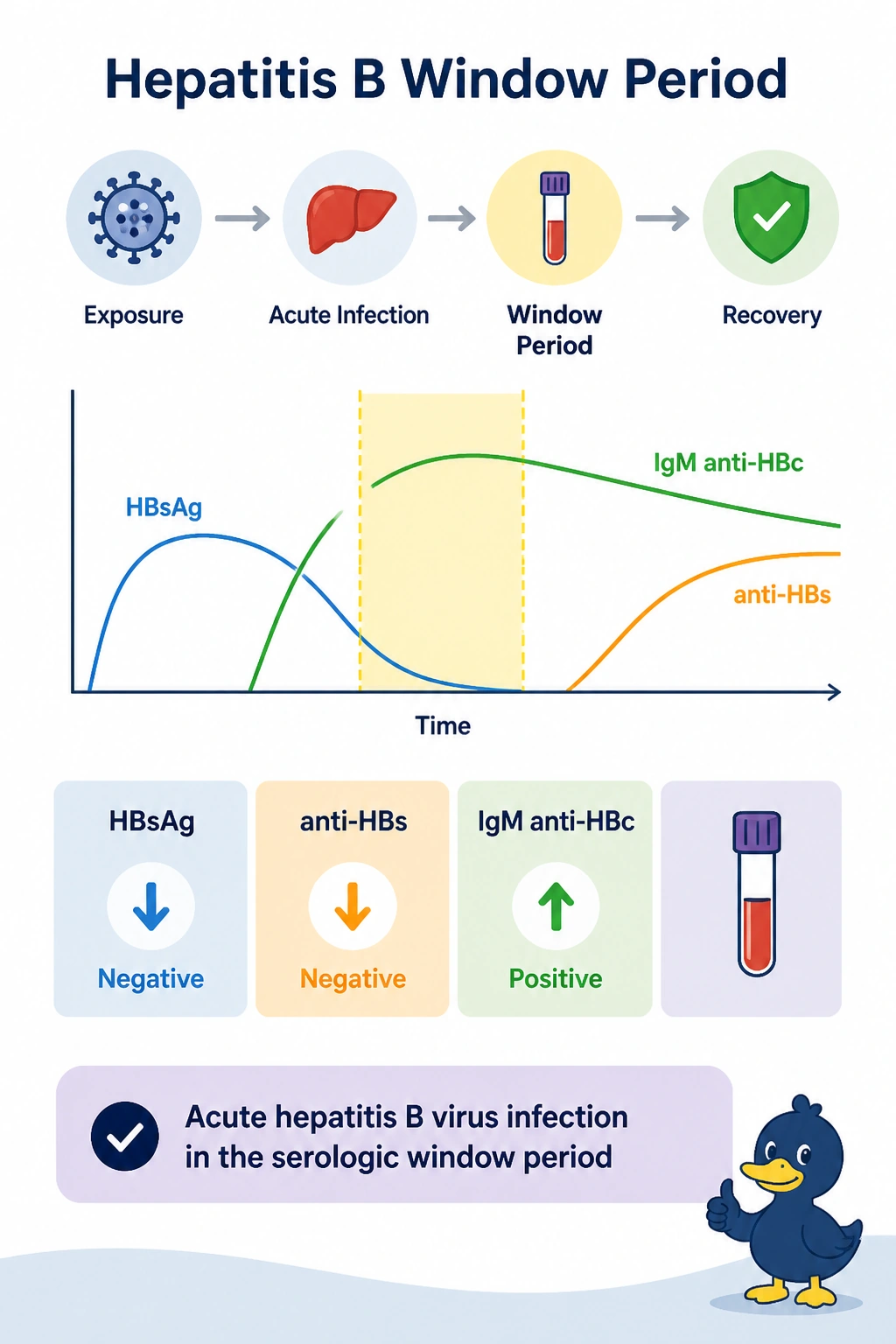
You can think of this as a gap between two markers: HBsAg has cleared, but anti-HBs has not yet appeared. Positive IgM anti-HBc points to acute hepatitis B in the serologic window period. A negative HBsAg does not rule out this acute infection.
Full Explanation
This serologic pattern indicates acute hepatitis B virus infection in the serologic window period. During resolving acute hepatitis B, hepatitis B surface antigen (HBsAg) can fall below detectable limits before hepatitis B surface antibody (anti-HBs) rises to measurable levels, leaving IgM antibody to hepatitis B core antigen (IgM anti-HBc) as the sole marker of recent acute infection. Immunity resulting from prior completion of the hepatitis B vaccine series produces isolated positive anti-HBs, with negative HBsAg and negative total and IgM anti-HBc. A chronic hepatitis B virus carrier state with low viral replication presents with persistently positive HBsAg and positive total anti-HBc, while IgM anti-HBc is typically negative. Resolved past hepatitis B infection with durable protective immunity shows negative HBsAg, positive total anti-HBc, negative IgM anti-HBc, and positive anti-HBs. Caveat: rare false-positive IgM anti-HBc results or reactivation flares can occur, so correlate the profile with clinical history and liver enzymes. Practical check: verify that the microbiology report flags positive IgM anti-HBc for public health reporting, and repeat anti-HBs testing in several weeks to document seroconversion.
Prefer to study offline? Printable PDF study book + test engine ($7.50, unofficial). These questions stay free here.