
A surgical wound culture grows methicillin-resistant Staphylococcus aureus (MRSA), and a medical student asks why adding a beta-lactamase inhibitor such as clavulanate to amoxicillin will not restore susceptibility against this organism. Which mechanism explains this resistance?
Select an answer to reveal the explanation.
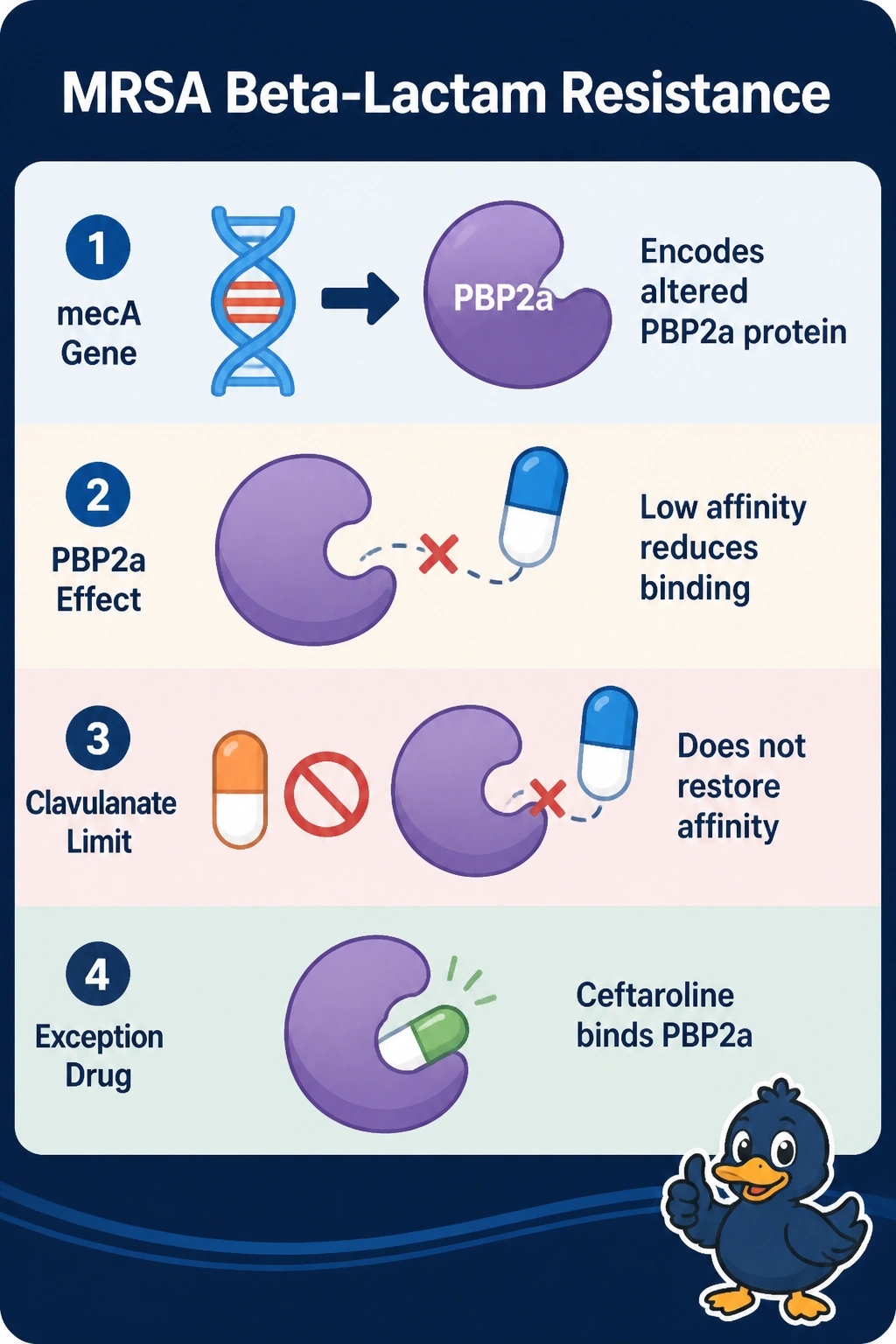
Short Explanation
Adding a beta-lactamase inhibitor is like bringing a bodyguard to protect a key when the lock itself has been swapped out. The trap is confusing penicillinase-producing Staphylococcus aureus with true methicillin resistance, which changes your drug choices completely.
Full Explanation
Methicillin resistance in Staphylococcus aureus is mediated by the mecA gene, which encodes an altered penicillin-binding protein called PBP2a that has very low affinity for almost all beta-lactam antibiotics. Because the target site itself is modified, Low-affinity PBP2a reduces amoxicillin binding, and clavulanate does not restore its target affinity. Overproduction of plasmid-mediated beta-lactamase enzymes rapidly hydrolyzes all penicillins describes penicillin-resistant, methicillin-susceptible S. aureus (MSSA), where beta-lactamase inhibitors like clavulanate or penicillinase-stable penicillins like nafcillin remain effective. Efflux pumps actively expel beta-lactamase inhibitors before they reach the bacterial cell wall is not the primary mechanism of MRSA resistance and confuses resistance to other drug classes with PBP2a-mediated beta-lactam resistance. Complete absence of a peptidoglycan cell wall eliminates the target site for beta-lactam drugs applies to organisms such as Mycoplasma species, whereas S. aureus possesses a thick Gram-positive peptidoglycan cell wall. Caveat: newer anti-MRSA cephalosporins such as ceftaroline are specifically engineered to bind PBP2a, unlike standard beta-lactams. Operational check: confirm MRSA status via cefoxitin disk/MIC or mecA detection on the microbiology report before de-escalating empiric therapy.
Prefer to study offline? Printable PDF study book + test engine ($7.50, unofficial). These questions stay free here.