
An elderly inpatient with a catheter-associated urinary tract infection has a urine culture growing Enterococcus faecalis. A resident asks the infection preventionist why the microbiology laboratory did not report susceptibility results for ceftriaxone or cefazolin. What explains this omission?
Select an answer to reveal the explanation.
Short Explanation
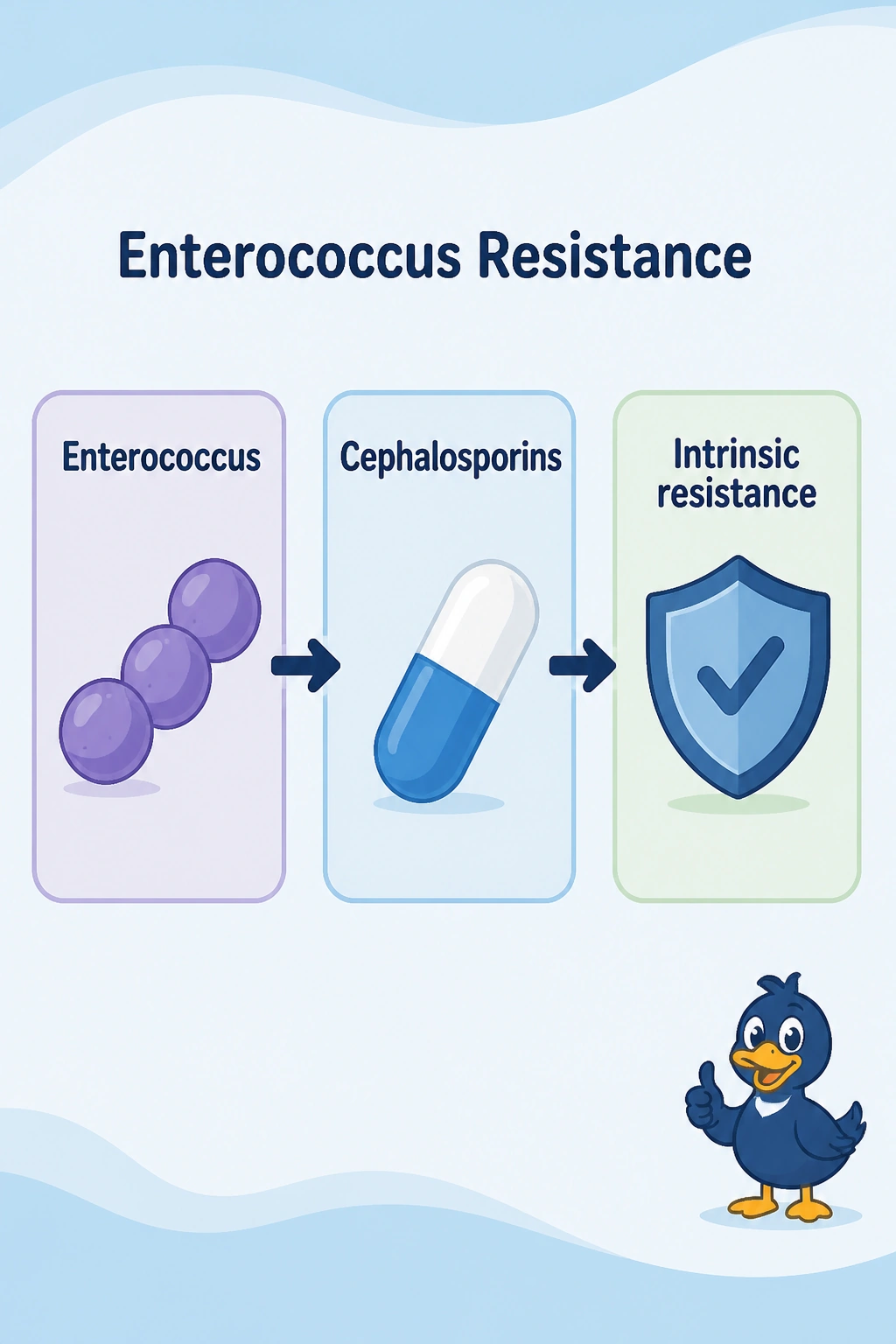
You can think of testing Enterococcus against a cephalosporin like checking whether a screen door can stop rain: the result would not change the treatment choice. The key is intrinsic resistance from low-affinity binding, not inducible ESBL production, so the laboratory suppresses the results to help prevent ineffective prescribing.
Full Explanation
Clinical microbiology laboratories follow Clinical and Laboratory Standards Institute (CLSI) rules to suppress agents to which an organism is intrinsically resistant, helping prevent selection of ineffective therapy. Enterococcus species have low-affinity penicillin-binding proteins, so cephalosporins lack reliable clinical activity even if low inhibitory concentrations appear in vitro. The explanation that Enterococcus species produce inducible extended-spectrum beta-lactamases (ESBLs) that destroy cephalosporins is incorrect: enterococci rarely produce beta-lactamases, and their cephalosporin resistance is intrinsic rather than ESBL-mediated. The claim that cephalosporins cannot achieve therapeutic urinary concentrations in catheterized patients is also incorrect; many are renally excreted at high urinary levels and can treat susceptible Gram-negative uropathogens. The claim that cephalosporin breakpoints apply only to Enterococcus faecium is incorrect because no Enterococcus species has valid clinical cephalosporin breakpoints. As a caveat, ampicillin, vancomycin, or linezolid are typically tested depending on the clinical site and resistance profile. As a practical check, review antimicrobial stewardship cascade-reporting rules with the microbiology laboratory to ensure intrinsically resistant agents remain suppressed.
Prefer to study offline? Printable PDF study book + test engine ($7.50, unofficial). These questions stay free here.