
A clinician suspects a hospitalized adult has an atypical respiratory infection that is difficult to culture, and an initial serum specimen collected on admission shows a low-positive IgG antibody titer. When using a validated organism-specific paired-serology method, which laboratory strategy best confirms an acute infection serologically?
Select an answer to reveal the explanation.
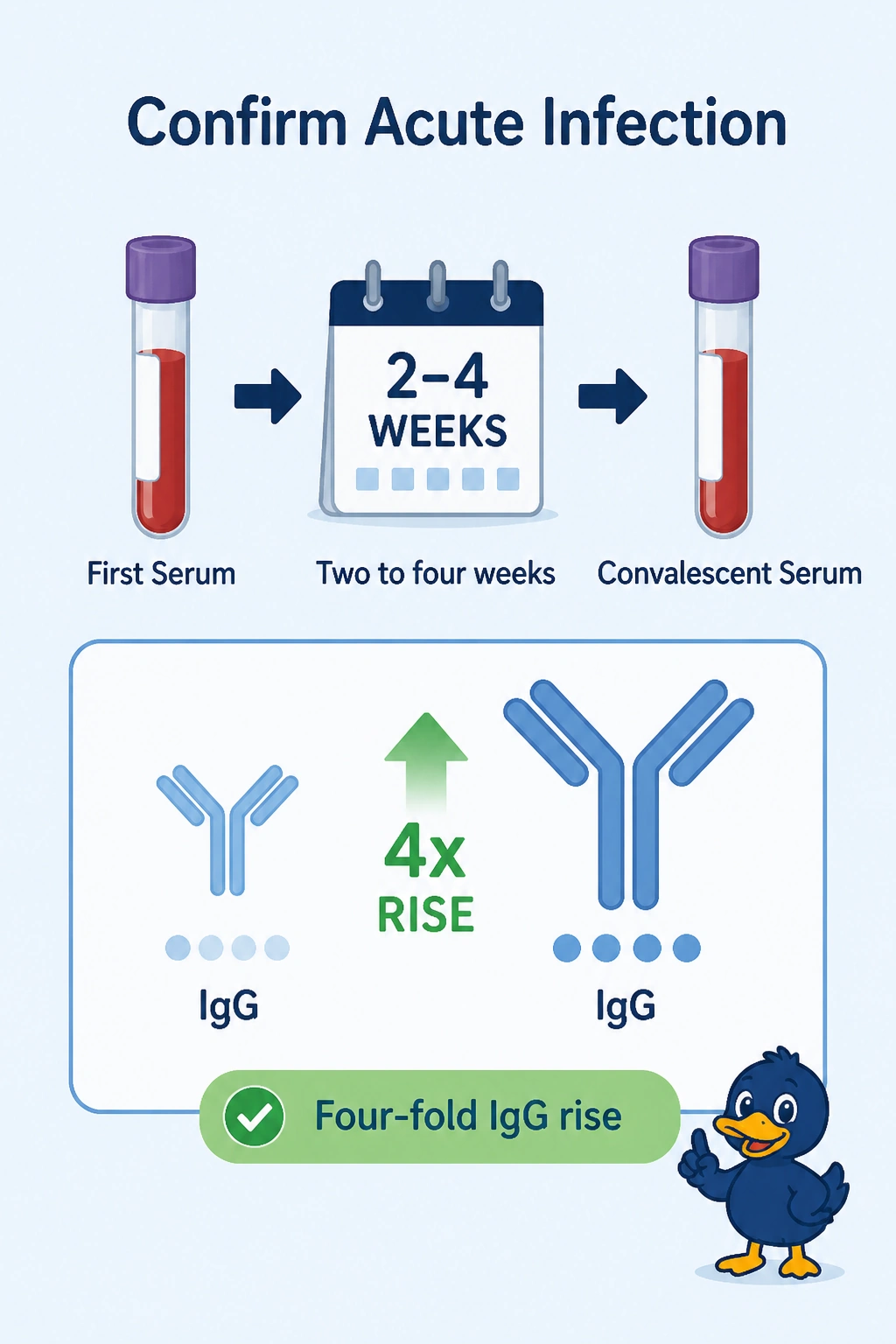
Short Explanation
One IgG snapshot only tells you your immune system has seen a germ before, not when it arrived. You need a before-and-after comparison weeks apart using a validated method to show your body is mounting a fresh response. Watch out for relying on one admission titer, testing too soon, or comparing numbers across different assays.
Full Explanation
Collecting a convalescent serum specimen two to four weeks later to check for a four-fold IgG rise using a validated organism-specific paired-serology method is the best serologic approach because IgG synthesis increases over days to weeks, allowing detection of a temporal boost. A validated significant rise supports recent infection; collect paired samples at the laboratory-recommended interval and use molecular testing when preferred. Timing and thresholds are assay- and pathogen-specific, so acute and convalescent sera should be tested in parallel by the same laboratory-recommended method. Repeating the same IgG antibody assay on a specimen drawn twelve hours later fails because twelve hours is too brief for a meaningful IgG increase. Using the single admission IgG titer alone to confirm active infection immediately fails because a low-positive result often reflects past infection, prior vaccination, or cross-reactivity rather than current disease. Repeat the original serum on a different manufacturer’s IgG assay and interpret any numerical difference as a fourfold rise fails because different assay scales and one specimen cannot establish a temporal titer rise, and only parallel testing of paired sera by the same method can assess change. Paired serology is retrospective and should not delay empirical management of severe illness.
Prefer to study offline? Printable PDF study book + test engine ($7.50, unofficial). These questions stay free here.