
An elderly inpatient with chronic obstructive pulmonary disease is admitted with acute dyspnea and a low-grade fever. A multiplex respiratory viral panel detects influenza A, while two sets of blood cultures remain negative at 48 hours and the chest radiograph shows no focal consolidation. The patient is clinically improving, has no purulent sputum, sepsis, ventilatory-support indication or other evidence of bacterial infection, and the treating team’s reassessment finds no bacterial indication. How should the infection preventionist collaborate with the care team regarding antimicrobial stewardship?
Select an answer to reveal the explanation.
Short Explanation
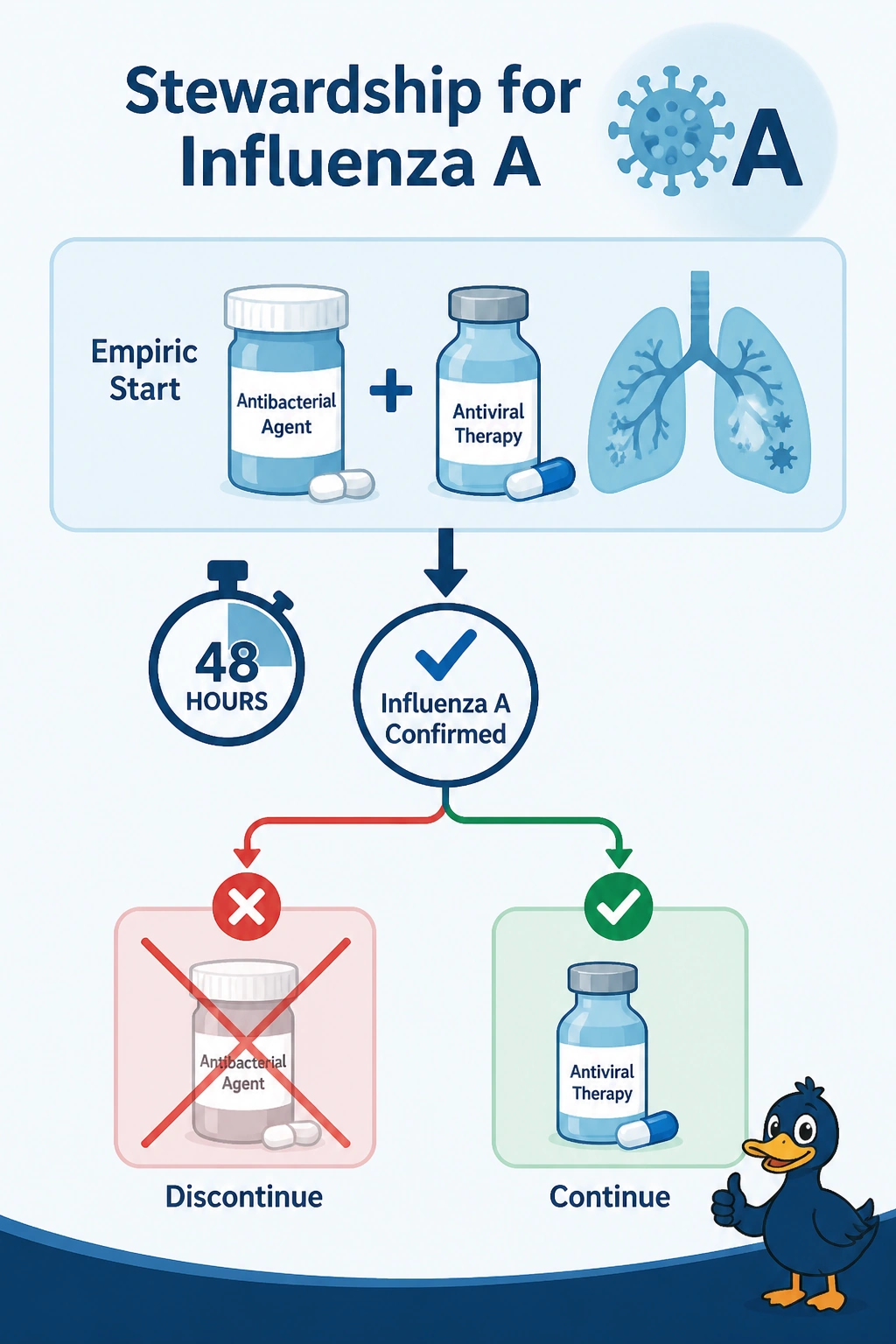
Antibiotics against a confirmed viral illness are like sending a locksmith when the key is already in your hand. Once negative cultures and clear imaging support reassessment; discontinue antibacterials when the overall clinical evaluation finds no bacterial indication, you can safely advocate for stopping empiric antibacterials. The trap is continuing broad-spectrum drugs just in case.
Full Explanation
Effective antimicrobial stewardship relies on matching therapy to confirmed microbiology rather than continuing unnecessary broad-spectrum coverage, so you should Support discontinuing empiric antibacterial agents while continuing targeted antiviral therapy for confirmed influenza A. With a positive influenza A assay, negative 48-hour blood cultures, and no radiographic consolidation, continued antibacterial exposure increases risks of Clostridioides difficile infection, drug toxicity, and antimicrobial resistance without clinical benefit. Choosing to Recommend extending broad-spectrum intravenous antibacterial therapy for fourteen days to prevent secondary pneumonia promotes resistance and adverse events when no bacterial infection is present. Electing to Request repeat sputum fungal cultures daily until the patient's baseline dyspnea resolves completely wastes laboratory resources and risks treating airway colonization. Deciding to Advise adding empiric vancomycin coverage because chronic lung disease always predisposes to MRSA bacteremia relies on an inaccurate generalization and exposes the patient to nephrotoxicity without supporting clinical or culture evidence. A caveat is that clinicians should still monitor for delayed secondary bacterial pneumonia if fever or oxygenation worsens later in the stay. Operational check: review stewardship daily alerts for viral-positive inpatients still receiving empiric antibacterials past 48 hours.
Prefer to study offline? Printable PDF study book + test engine ($7.50, unofficial). These questions stay free here.