
An inpatient with suspected healthcare-associated pneumonia has a sputum specimen sent to the microbiology laboratory before antibiotics are started. The Gram stain shows abundant squamous epithelial cells and rare polymorphonuclear leukocytes under low-power magnification. How should the infection preventionist and clinical team interpret this result?
Select an answer to reveal the explanation.
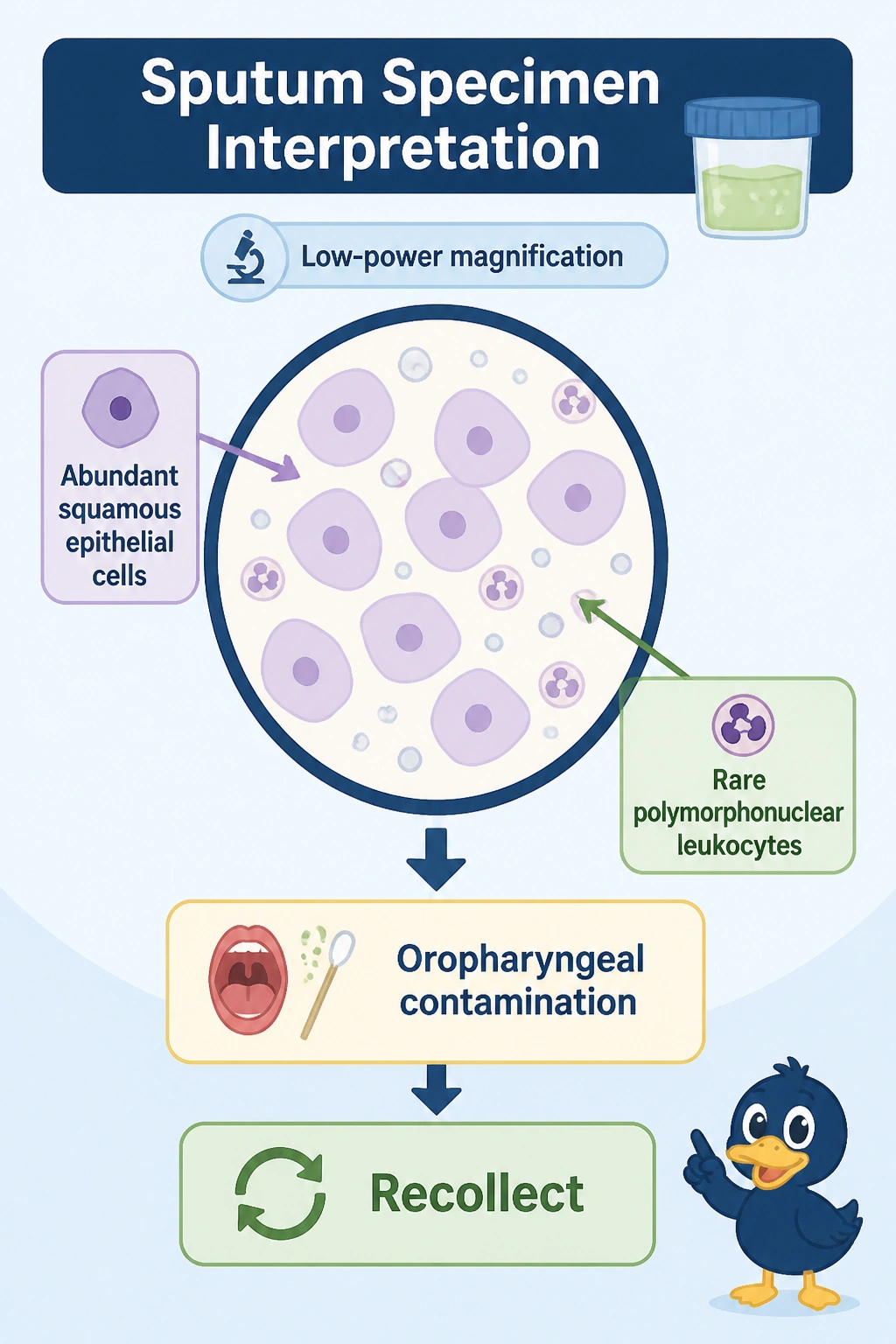
Short Explanation
A sputum Gram stain acts like a quality-control window into whether you actually reached the lungs or just collected saliva. The classic trap is treating a poor specimen as proof that bacterial pneumonia is absent or atypical. When squamous epithelial cells dominate with few neutrophils, you are looking at upper airway contamination that requires a fresh recollection.
Full Explanation
The sample reflects oropharyngeal contamination and should be recollected because abundant squamous epithelial cells originate from the mouth and upper airway rather than the lower respiratory tract. In an immunocompetent patient with bacterial pneumonia, an adequate lower respiratory specimen demonstrates polymorphonuclear leukocytes and minimal epithelial contamination. Culturing saliva risks isolating normal oral flora and misleading antimicrobial therapy or surveillance classification. The result confirms atypical pneumonia caused by an intracellular pathogen is incorrect because atypical organisms do not generate squamous epithelial cells; they simply stain poorly on routine Gram stain. The absence of neutrophils rules out bacterial lower respiratory infection is incorrect because a contaminated sample cannot reliably represent the lower-respiratory process and cannot exclude pneumonia. The specimen is acceptable for culture if a fungal stain is added concurrently is incorrect because additional staining cannot salvage an invalid specimen. Caveat: severely neutropenic patients may produce sputum with few neutrophils, yet numerous squamous epithelial cells still indicate oral contamination. Operational check: review laboratory rejection criteria with respiratory therapists and nurses, and verify oral rinsing precedes deep sputum collection. Apply test-specific acceptance rules; specimens for Legionella, mycobacteria or selected fungal testing may need processing despite routine sputum-quality rejection criteria.
Prefer to study offline? Printable PDF study book + test engine ($7.50, unofficial). These questions stay free here.