
A young adult presents to an outpatient clinic with ten days of fever, pharyngitis, generalized lymphadenopathy, and a maculopapular rash after a recent high-risk exposure. A rapid point-of-care HIV antibody test is nonreactive. Which diagnostic test should the clinician order next to evaluate suspected acute HIV infection?
Select an answer to reveal the explanation.
Short Explanation
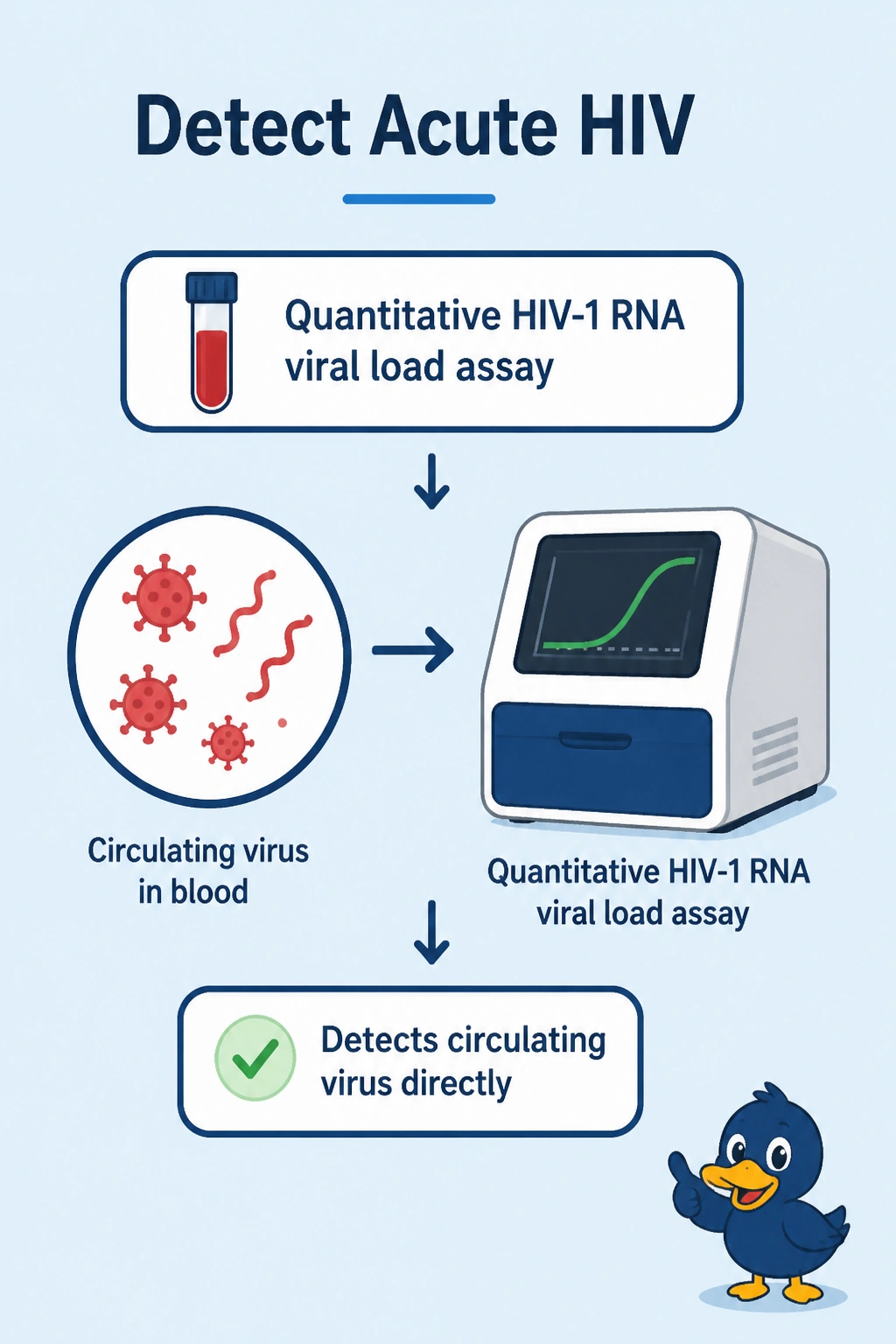
During acute HIV infection, your body may not yet have made detectable antibodies. A rapid antibody test can miss infection during the window period, so you need an HIV-1 RNA viral load assay to detect the virus directly.
Full Explanation
A quantitative HIV-1 RNA viral load assay is the appropriate next test because it detects circulating virus directly; HIV RNA becomes detectable in plasma roughly one to two weeks after exposure, well before host antibodies develop. Identifying acute infection early matters because viral load and transmission risk peak during this window period. Repeating a rapid antibody fingerstick test in three days may remain falsely negative because antibody production typically takes several weeks. A CD4 T-lymphocyte count alone cannot confirm primary retroviral infection: CD4 counts fluctuate in many acute illnesses and do not establish HIV status. A heterophile antibody test alone screens for infectious mononucleosis, not all acute viral syndromes, and leaves acute retroviral syndrome undiagnosed. One caveat is that even a fourth-generation antigen/antibody immunoassay can be negative during the earliest days of infection, before p24 antigen rises. As a practical check, pair the quantitative HIV-1 RNA viral load assay with a laboratory-based fourth-generation HIV antigen/antibody test, and confirm positive results through the CDC diagnostic algorithm.
Prefer to study offline? Printable PDF study book + test engine ($7.50, unofficial). These questions stay free here.