
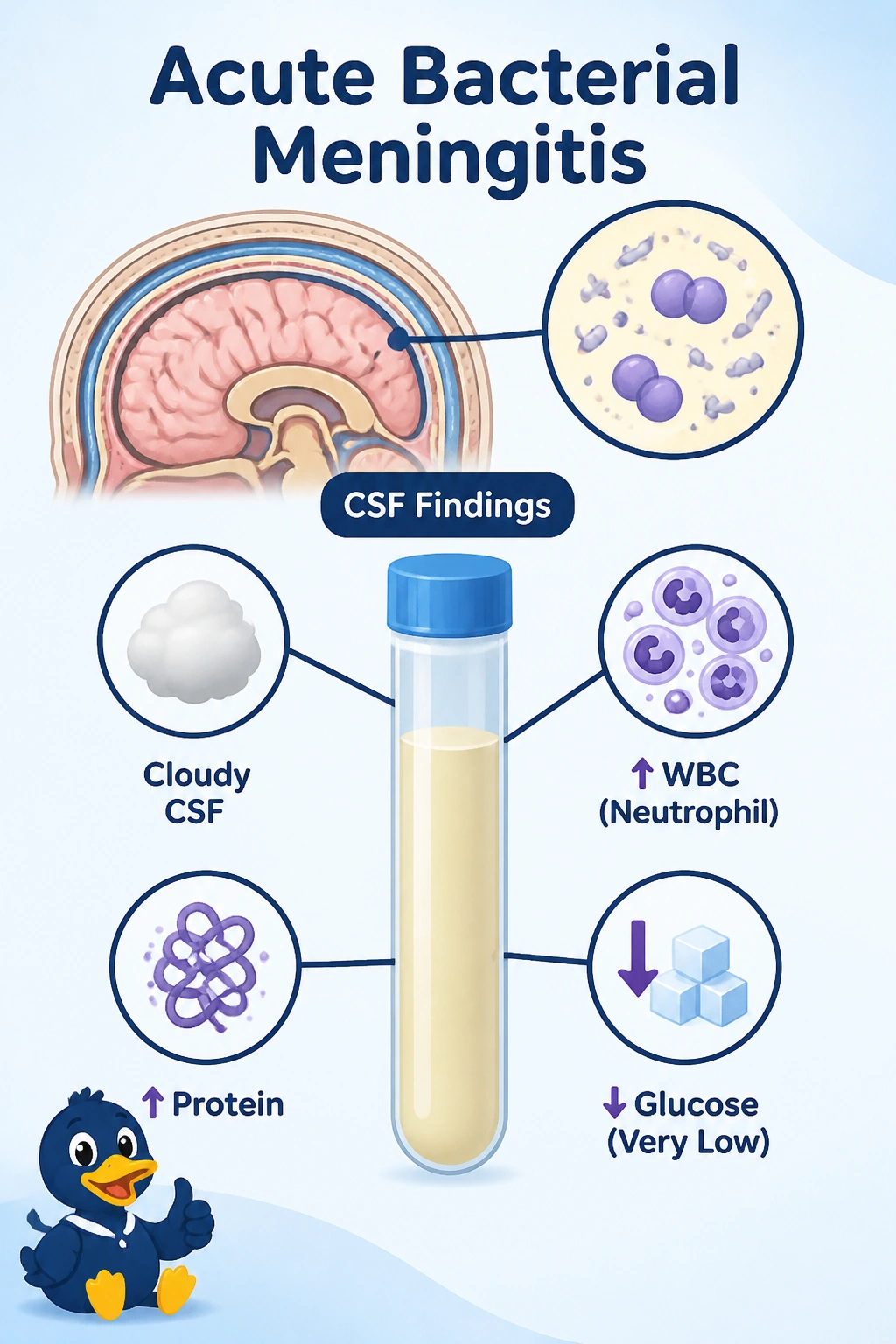
An adult presents to the emergency department with fever, nuchal rigidity, and altered mental status. Lumbar puncture reveals cloudy cerebrospinal fluid (CSF) with markedly elevated white blood cells dominated by neutrophils, elevated protein, and very low glucose. Which type of meningitis do these CSF findings most strongly indicate?
Select an answer to reveal the explanation.
Short Explanation
Reading cerebrospinal fluid results gives you quick clues at the bedside, and neutrophils plus rock-bottom glucose point straight to bacteria! The trap is confusing this profile with viral meningitis, which typically brings lymphocytes and normal glucose instead.
Full Explanation
Cloudy cerebrospinal fluid with neutrophilic pleocytosis, high protein, and markedly low glucose (hypoglycorrhachia) is the classic hallmark of Acute bacterial meningitis. Bacteria trigger an intense acute polymorphonuclear inflammatory response and consume glucose while disrupting blood-brain barrier transport, driving CSF glucose down and protein up. Uncomplicated viral meningitis typically presents with clear CSF, lymphocytic predominance after the earliest hours, mildly elevated protein, and normal CSF glucose. Subacute tuberculous meningitis generally produces a lymphocytic predominance with very high protein and moderately low glucose over a more insidious course rather than an acute neutrophilic surge. Cryptococcal fungal meningitis most commonly occurs in immunocompromised hosts and classically shows a lymphocytic predominance with elevated opening pressure rather than an acute neutrophilic profile. As a caveat, prior antibiotic administration before lumbar puncture can partially normalize CSF glucose and shift cell counts. For an operational check, immediately notify the clinical team and verify whether Droplet Precautions are indicated while awaiting Gram stain and culture identification.
Prefer to study offline? Printable PDF study book + test engine ($7.50, unofficial). These questions stay free here.