
An elderly resident in a long-term care facility with a chronic indwelling urinary catheter has a routine urine culture ordered for cloudy, foul-smelling urine, which grows more than 100,000 CFU/mL of Escherichia coli. The resident is afebrile, alert, and has no suprapubic tenderness or costovertebral angle pain. How should this finding be classified?
Select an answer to reveal the explanation.
Short Explanation
Cloudy or smelly urine in a catheterized resident is a classic false alarm—it usually reflects hydration or harmless colonization, not infection. The trap is letting a high colony count push you into calling a urinary tract infection when your resident has zero clinical symptoms.
Full Explanation
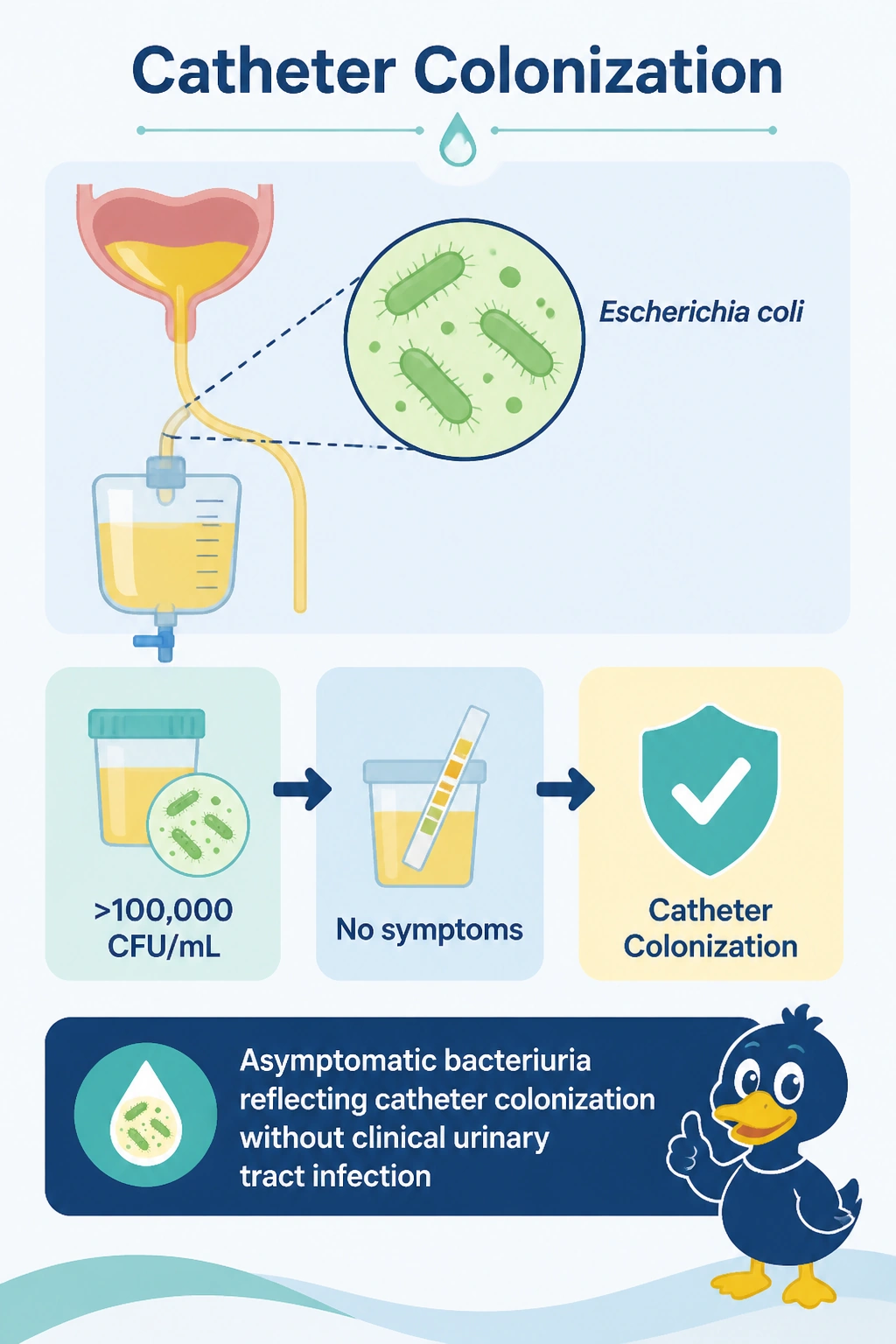
Asymptomatic bacteriuria reflecting catheter colonization without clinical urinary tract infection is the accurate classification because bacteria rapidly colonize chronic indwelling urinary catheters, and CDC surveillance criteria require both microbiologic growth and compatible clinical signs or symptoms such as fever, rigors, suprapubic tenderness, or costovertebral angle pain. Acute pyelonephritis requiring immediate broad-spectrum intravenous antimicrobial therapy is incorrect because upper tract infection presents with systemic signs like fever, flank pain, or hemodynamic instability, none of which are present. Catheter-associated urinary tract infection confirmed by urine odor and colony count relies on cloudy or foul-smelling urine, which are nonspecific findings that do not distinguish infection from benign colonization. Specimen contamination from perineal flora requiring repeat catheterization and culture is unlikely given a single predominant uropathogen exceeding 100,000 CFU/mL, and repeating cultures without symptoms only promotes unnecessary antibiotic use. As a caveat, asymptomatic bacteriuria generally should not be treated with antimicrobials except in specific situations such as pregnancy or before traumatic urologic procedures. For an operational check, review urine culture ordering triggers with nursing staff and track unnecessary antimicrobial starts for asymptomatic bacteriuria.
Prefer to study offline? Printable PDF study book + test engine ($7.50, unofficial). These questions stay free here.