
An inpatient with a peripheral intravenous catheter has two sets of blood cultures drawn for a transient low-grade temperature that resolves spontaneously without antipyretics. One bottle from the first set grows Staphylococcus epidermidis after 48 hours, while the second set remains negative and the patient is clinically stable. How should the infection preventionist interpret this laboratory finding?
Select an answer to reveal the explanation.
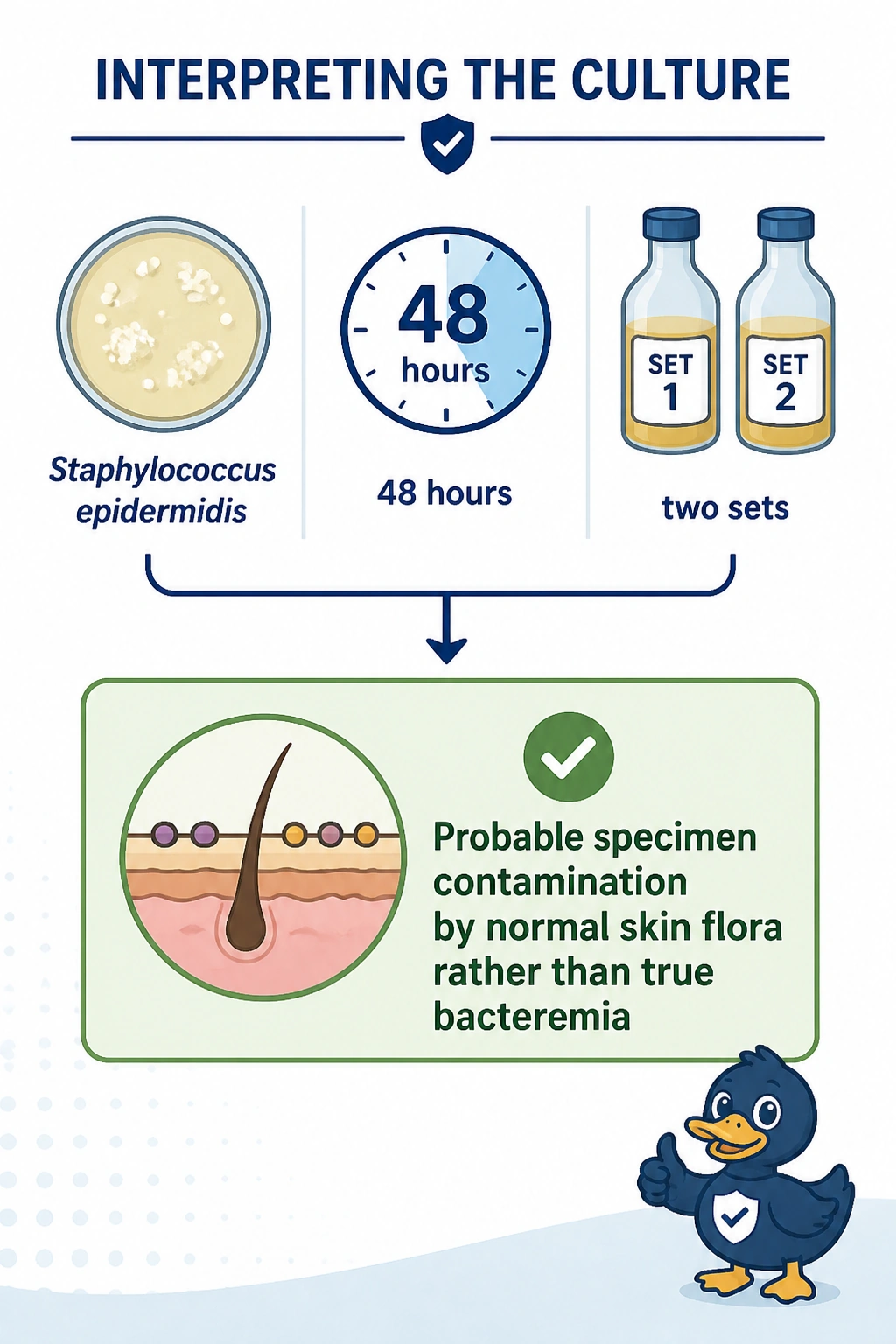
Short Explanation
Think of a single bottle growing skin bacteria like finding one stray footprint outside a locked door—it points to a messy collection rather than a break-in. The trap is treating every positive culture as a true bloodstream infection, so always check how many sets grew the organism and whether your patient has matching clinical signs.
Full Explanation
Probable specimen contamination by normal skin flora rather than true bacteremia is the accurate interpretation because Staphylococcus epidermidis is a common skin commensal. Under CDC NHSN surveillance definitions, a common commensal requires isolation from two or more blood specimens drawn on separate occasions along with clinical signs such as fever, chills, or hypotension to qualify as a laboratory-confirmed bloodstream infection. Confirmed central line-associated bloodstream infection requiring immediate antimicrobial lock therapy fails because the patient has only a peripheral catheter, lacks persistent clinical signs, and has only one positive bottle. Polymicrobial bacteremia caused by inadequate laboratory incubation of the second blood culture set is incorrect because only a single organism was isolated and standard incubation routinely detects bacteremia. False-negative blood culture result caused by drawing specimens before antimicrobial administration reverses the actual mechanism, since drawing cultures before antibiotics maximizes organism recovery rather than causing false negatives. As a caveat, immunocompromised patients or those with prosthetic devices still warrant clinical correlation before dismissing a commensal isolate. For an operational check, audit blood culture skin antisepsis with alcohol-containing chlorhexidine and track unit contamination rates monthly.
Prefer to study offline? Printable PDF study book + test engine ($7.50, unofficial). These questions stay free here.