
A medical-surgical patient with confirmed Clostridioides difficile infection is discharged from an isolation room. Which environmental cleaning agent must environmental services staff use to disinfect high-touch surfaces in the room?
Select an answer to reveal the explanation.
Short Explanation
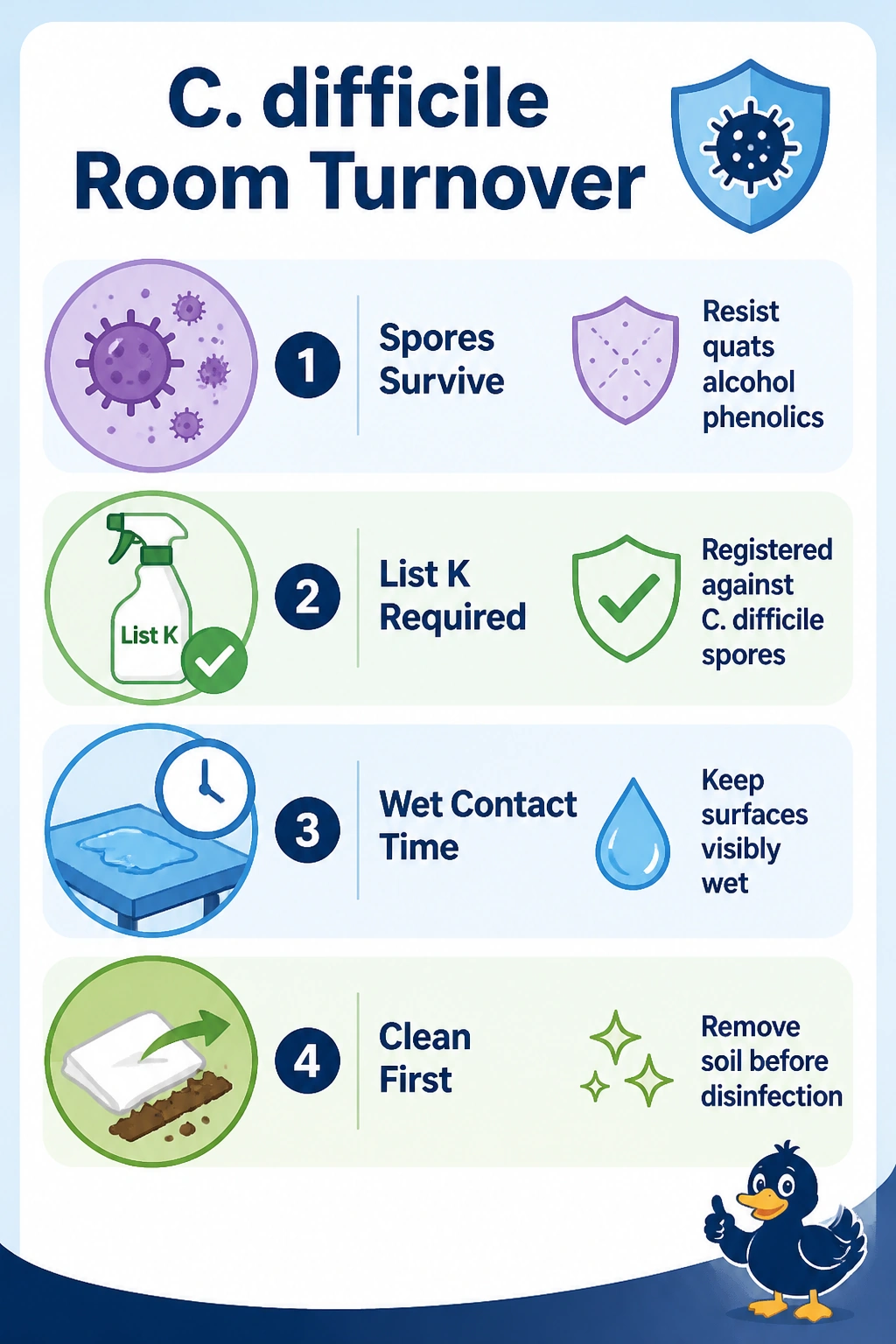
C. difficile spores wear tough armor that laughs at everyday hospital cleaners, so you need the right chemical weapon for room turnover! The trap is grabbing routine quaternary ammonium or alcohol wipes, which leave resilient spores behind on bedrails and call bells.
Full Explanation
Clostridioides difficile forms hardy bacterial spores that resist standard vegetative disinfectants, so environmental services must use An EPA-registered List K product effective against C. difficile spores, used for its labeled wet contact time. Sporicidal agents, such as EPA-registered bleach or hydrogen peroxide-peracetic acid formulations, are specifically tested to inactivate C. difficile spores when surfaces stay visibly wet for the full manufacturer-specified dwell time. Using A standard quaternary ammonium hospital disinfectant with a one-minute contact time fails because quaternary ammonium compounds do not kill C. difficile spores and can even leave spores viable on surfaces. Applying A 70 percent isopropyl alcohol wipe solution applied to all bedrails and call bells is ineffective for the same reason alcohol hand rubs fail against spores: alcohol lacks sporicidal activity. Relying on A phenolic detergent-disinfectant diluted according to routine room turnover policy also lacks sporicidal efficacy against C. difficile. As a caveat, organic soil must be removed first because debris can inactivate sporicides. For an operational check, audit room turnover logs and observe staff using timer-verified wet contact times with EPA List K products.
Prefer to study offline? Printable PDF study book + test engine ($7.50, unofficial). These questions stay free here.