
Facilities engineering plans to remove ceiling tiles in an occupied medical intensive care unit corridor to repair a leaking chilled-water pipe above the nurses' station. What should the infection preventionist require before any ceiling tiles are disturbed?
Select an answer to reveal the explanation.
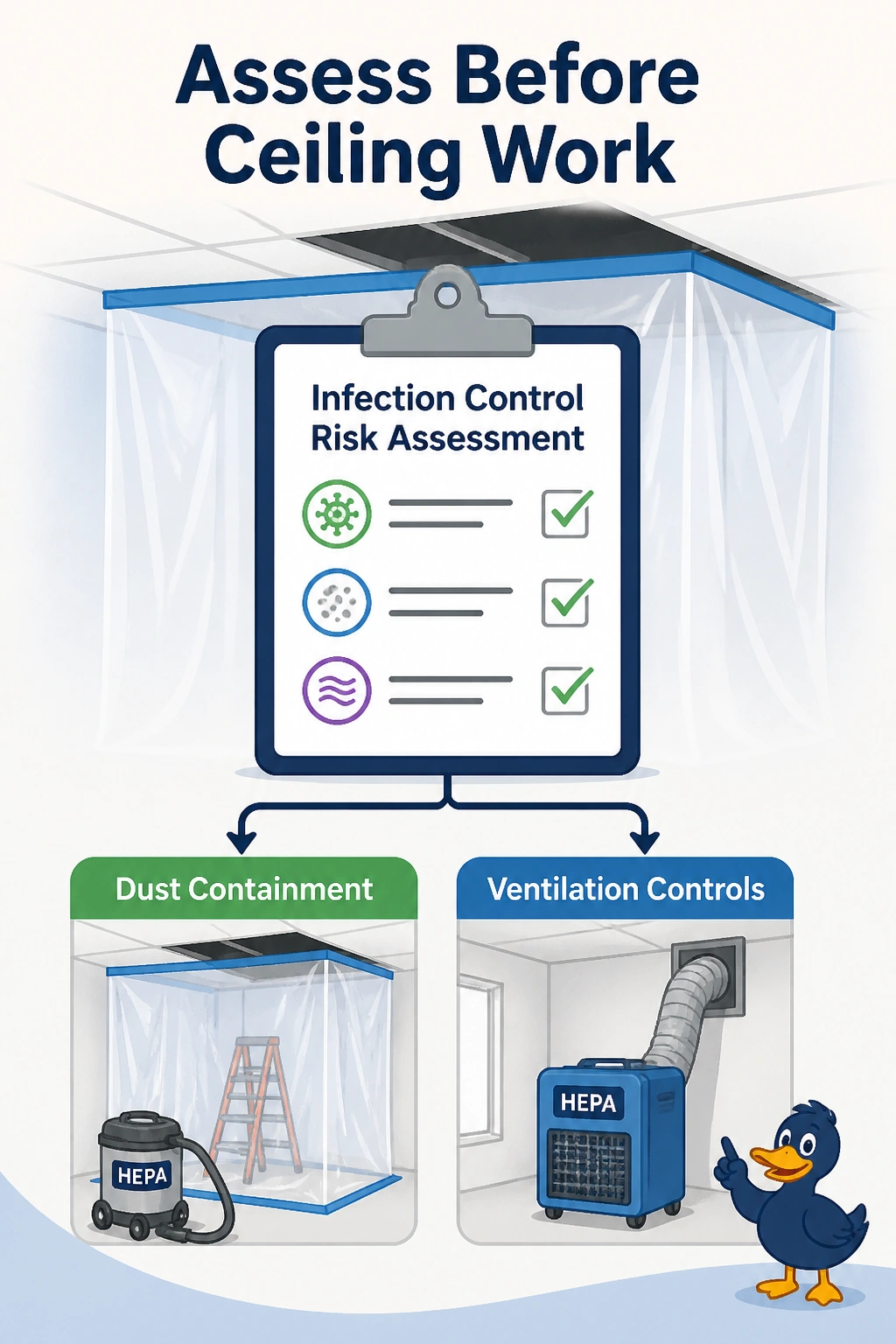
Short Explanation
Popping open a hospital ceiling without a plan is like shaking a dust rug over an open wound—fungal spores such as Aspergillus can be released right above vulnerable patients. You must require a formal risk assessment first, rather than relying on off-hours scheduling or basic signage.
Full Explanation
Complete an Infection Control Risk Assessment to determine dust containment and ventilation controls is required because disturbing ceiling spaces in healthcare facilities can aerosolize dust containing Aspergillus and other environmental pathogens near critically ill patients. An Infection Control Risk Assessment classifies the project scope and patient risk group to specify barriers, negative air pressure, and HEPA filtration before work begins. Post a warning sign at the unit entrance advising staff to wear surgical masks fails to contain fungal spores or protect immunocompromised patients in adjacent rooms. Schedule the repair during the night shift when fewer visitors are on the unit does not reduce airborne dust generation or protect patients who remain on the unit around the clock. Place standard portable fans in the corridor to blow airborne dust toward the stairs is dangerous because uncontained positive airflow disperses spores into patient care areas. As a construction caveat, emergency plumbing leaks still require immediate containment measures rather than bypassing infection control review. Perform an operational check by verifying negative pressure differentials and sealed barrier integrity with a manometer or smoke tube before work starts.
Prefer to study offline? Printable PDF study book + test engine ($7.50, unofficial). These questions stay free here.