
During environmental rounds in an outpatient wound clinic, an infection preventionist finds boxes of wrapped sterile gauze and dressing trays stored inside a cabinet directly beneath a staff handwashing sink. What corrective action should the infection preventionist recommend?
Select an answer to reveal the explanation.
Short Explanation
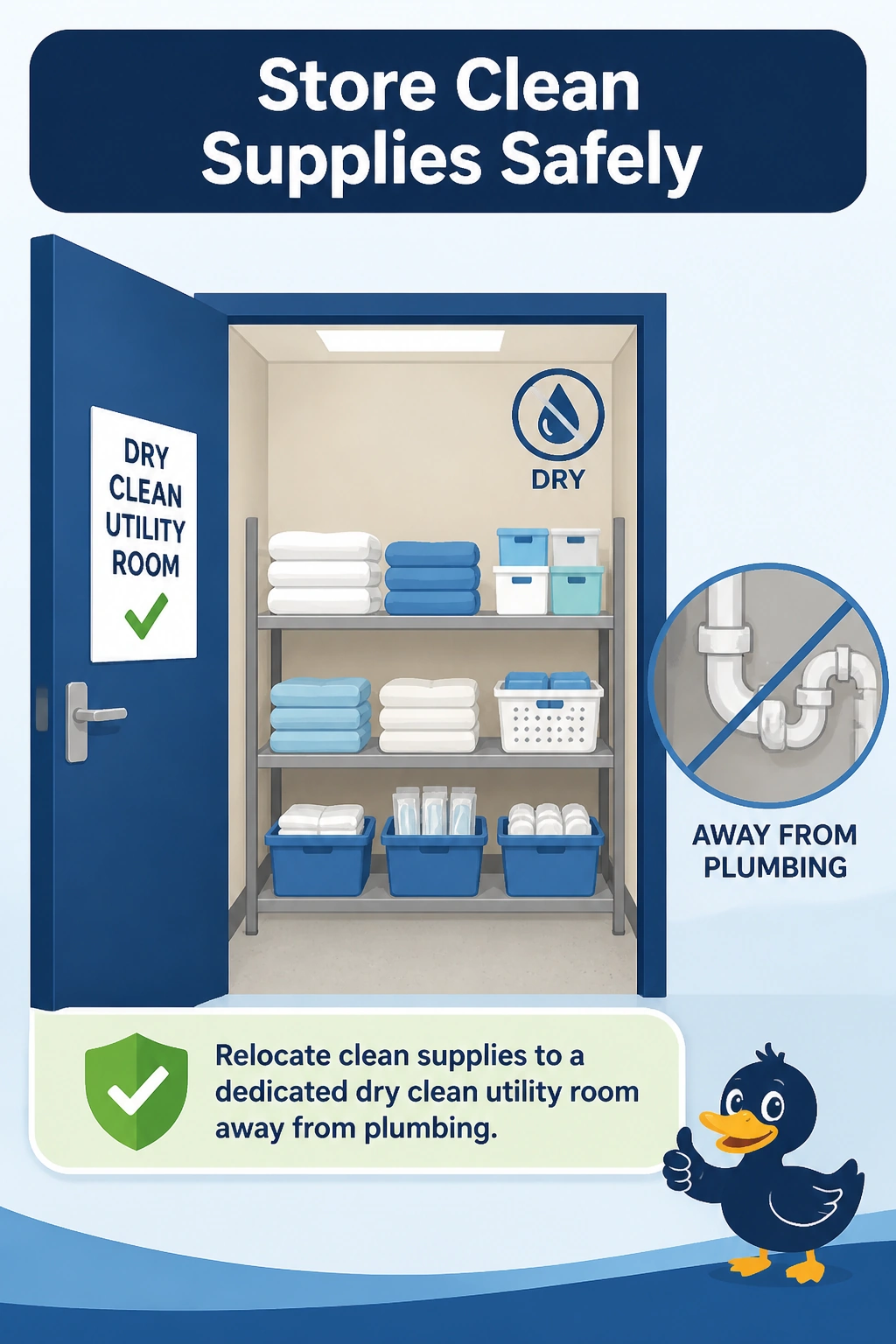
A closed cabinet may seem protective, but a leak or hidden moisture can compromise sterile packaging. Keep supplies dry by storing them in a dedicated clean utility room away from plumbing.
Full Explanation
Moisture can compromise the microbial barrier of paper and other porous sterile packaging through wicking, allowing organisms to reach sterile contents. Relocating clean supplies to a dedicated dry clean utility room away from plumbing helps keep wrapped dressings dry and intact and separates them from waterborne contaminants and drain aerosols. Keeping wrapped sterile dressings in a cabinet beneath the handwashing sink, even with the doors shut, does not prevent slow trap leaks, condensation, or plumbing backups from affecting supplies inside. Covering supply bins with plastic sheeting beside the clinical hopper still places clean items in a soiled utility zone exposed to heavy bioaerosols and splashes; plastic covering does not make that location suitable. Storing clean wound supplies on an open counter next to the scrub sink’s splash zone exposes packaging directly to water droplets generated during handwashing. As an exam caveat, intact-looking wrapping does not ensure that sterile contents remain protected if moisture has compromised the packaging barrier. For a practical check, inspect under-sink cabinets and clean supply shelving monthly for water stains, leaks, and proper separation from sinks.
Prefer to study offline? Printable PDF study book + test engine ($7.50, unofficial). These questions stay free here.