
During environmental rounds in a long-term care facility, an infection preventionist observes dietary staff scooping ice for resident beverages with a plastic cup kept inside the ice bin. What is the most appropriate corrective action?
Select an answer to reveal the explanation.
Short Explanation
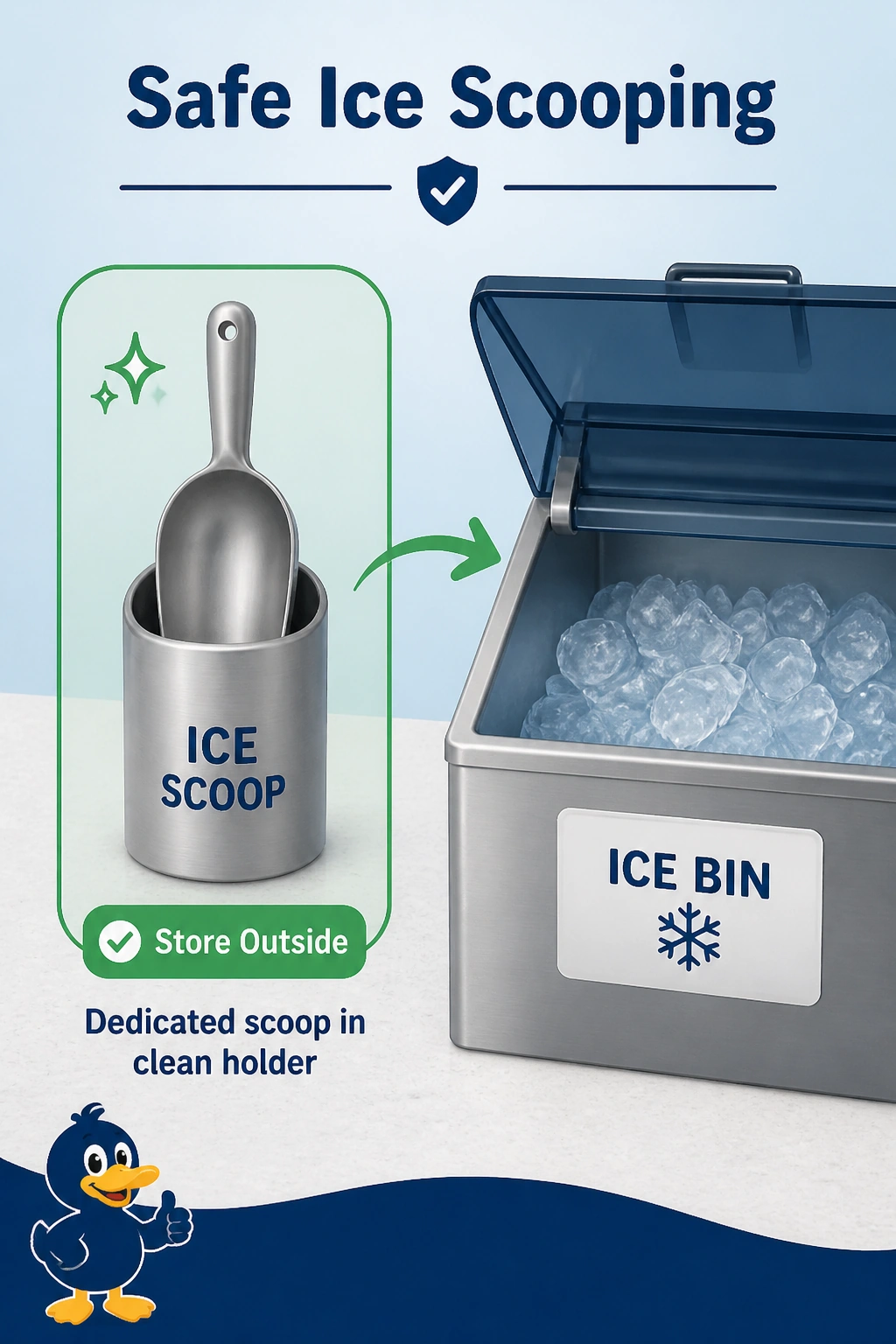
Ice seems too cold to harbor trouble, yet contaminated ice machines are classic outbreak culprits. The trap is leaving any scoop or cup resting inside the bin where bare hands and sleeves brush the ice. You keep residents safe when you store a dedicated scoop in a clean holder outside the machine.
Full Explanation
CDC environmental infection control guidelines recommend that facilities "Provide a dedicated ice scoop stored in a clean holder outside the ice bin" to prevent hand-to-ice contamination with enteric or waterborne pathogens. Using a drinking cup or scoop kept in the ice allows hands, clothing, and unwashed surfaces to contact ice consumed by vulnerable residents. Choosing to "Keep the plastic cup inside the bin but replace it with a clean cup at the start of each shift" fails because the cup and rim still sit in the ice and become contaminated with repeated hand contact. Selecting to "Switch to a stainless steel scoop and store it buried handle-up directly inside the ice bin" fails because CDC (Category II) says do not store the ice scoop in the ice bin; keep it on a short chain or on a clean, hard surface when not in use. Opting to "Store the scoop in a communal cup of room-temperature water between uses." fails because standing room-temperature water can contaminate the scoop and does not replace a clean protected holder. As a caveat, ice machines also require scheduled manufacturer-recommended cleaning and descaling of interior surfaces and water lines. For an operational check, inspect machines during rounds to confirm an intact external holder, clean scoop, and current cleaning log.
Prefer to study offline? Printable PDF study book + test engine ($7.50, unofficial). These questions stay free here.