
During routine facility rounds in a long-term care building, the infection preventionist and plant operations manager discover an unused wing with stagnant plumbing dead-legs and domestic hot water returning below recommended control temperatures. Which action best addresses the Legionella proliferation risk?
Select an answer to reveal the explanation.
Short Explanation
Stagnant, lukewarm pipes act like an incubator for Legionella, so you have to fix the plumbing rather than just swabbing the room. The trap is choosing surface cleaning or resident testing while leaving your building's water loop stagnant and out of temperature range.
Full Explanation
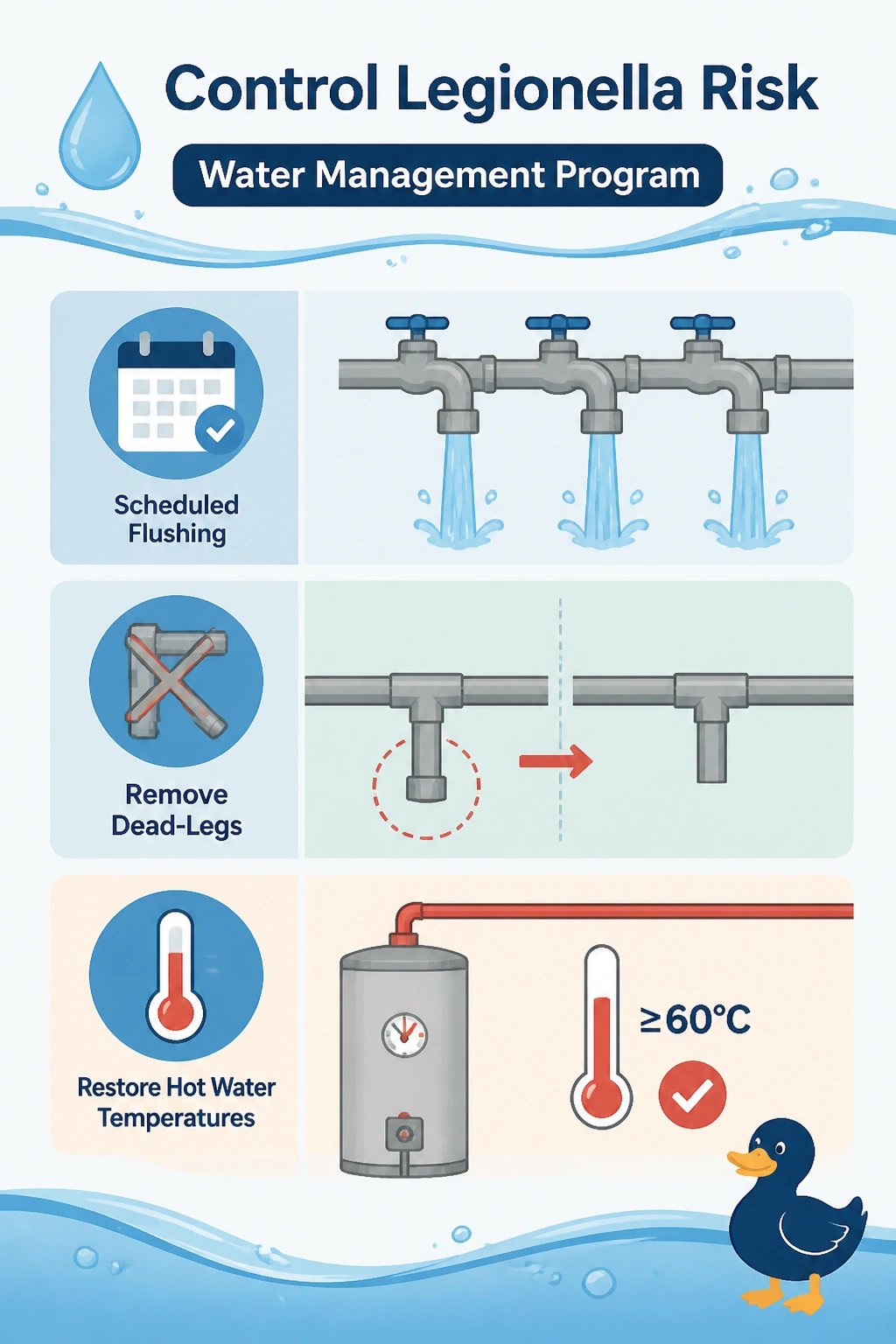
Implement scheduled flushing, remove dead-legs, and restore hot water temperatures per the water management program directly targets the environmental conditions—stagnation, biofilm accumulation, and permissive water temperatures—that allow Legionella bacteria to multiply in building premise plumbing. Increase routine clinical sputum cultures for all asymptomatic residents in nearby wings is inappropriate because Legionella is acquired by inhaling or aspirating contaminated water aerosols rather than person-to-person spread, and asymptomatic screening does not correct the hazard. Replace all resident drinking fountains with bottled water dispensers until next summer leaves showerheads, faucets, and recirculating hot water loops untreated, failing to prevent aerosol exposure during bathing. Apply quaternary ammonium disinfectant to sink basins in the occupied resident rooms addresses only visible external surfaces and does not reach the biofilm inside supply pipes and unused branches. As a caveat, any temperature adjustment must balance thermal Legionella control against scald prevention using thermostatic mixing valves at points of use. For an operational check, review weekly flushing logs, point-of-use temperature measurements, and residual disinfectant levels during multidisciplinary water management meetings.
Prefer to study offline? Printable PDF study book + test engine ($7.50, unofficial). These questions stay free here.