
A nursing assistant removes heavily soiled bed linens from the room of a patient with a draining surgical wound. To prevent environmental and staff contamination under CDC environmental infection control guidelines, how should the linens be handled?
Select an answer to reveal the explanation.
Short Explanation
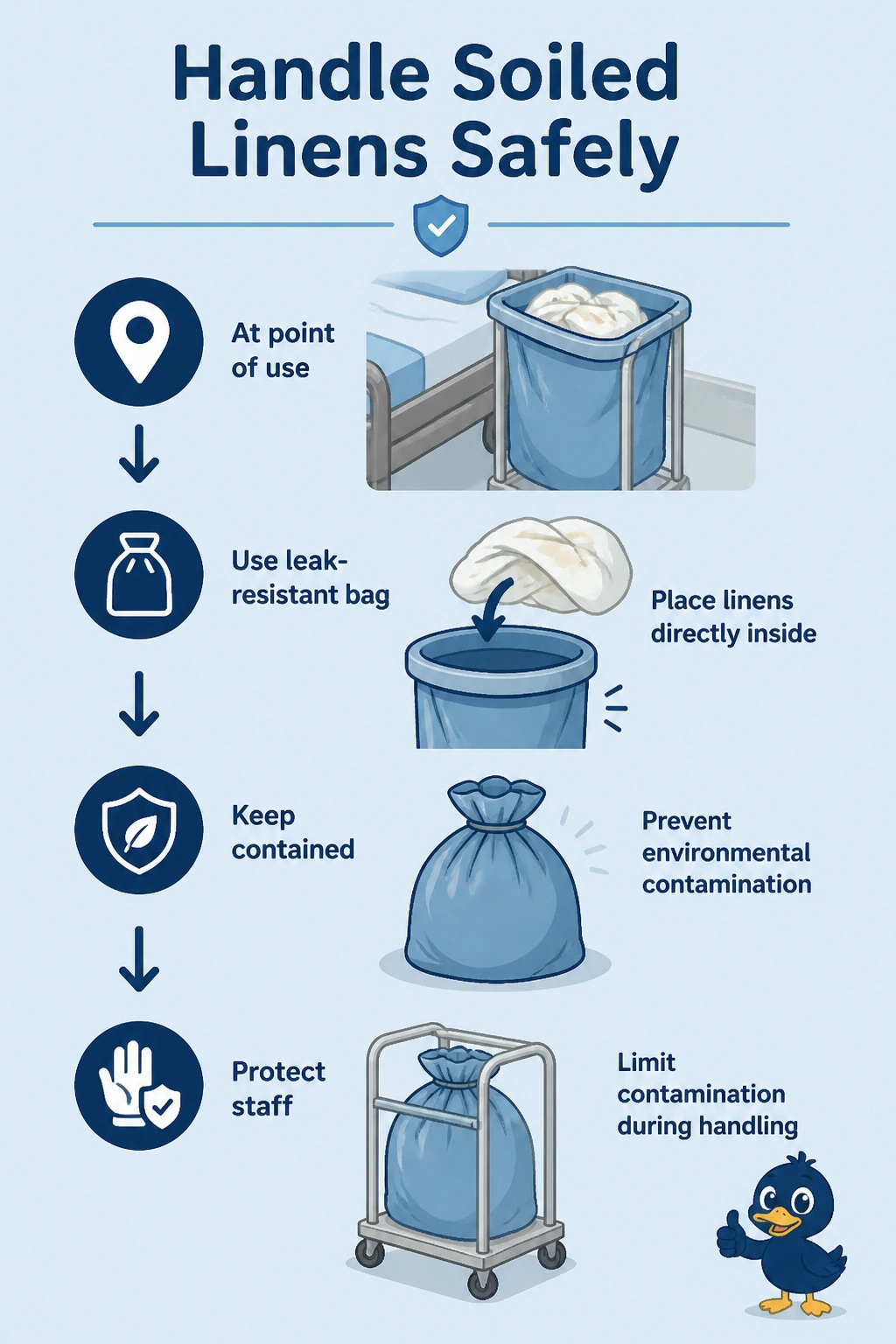
You can think of soiled sheets like dusty rugs: the more you handle or shake them, the more microbes you may spread into the room and onto your uniform. Containment at the point of use keeps contaminated textiles bagged with minimal handling; rinsing, shaking, or sorting them before bagging adds avoidable exposure.
Full Explanation
Placing the linens directly into a leak-resistant bag at the point of use follows CDC and HICPAC environmental infection control guidance: contain contaminated textiles where they are used and minimize agitation. Prompt bagging helps prevent wound exudate from dripping onto floors or uniforms and reduces the spread of healthcare-associated pathogens. Rinsing visible blood and drainage in the room utility sink is inappropriate because splashing can contaminate the sink and nearby surfaces and expose staff mucous membranes. Shaking the linens gently over a hamper can disperse skin squames and microorganisms into the air. Sorting the linens by fabric type in the soiled utility room before bagging causes unnecessary handling and exposure in a clinical area; sorting belongs in the laundry processing area under appropriate engineering controls. As an exam caveat, leak-resistant containment is especially important whenever linens are saturated with blood or body fluids. For a practical check, observe bedside linen removal during environmental rounds and confirm that leak-resistant bags are available inside or immediately outside patient rooms.
Prefer to study offline? Printable PDF study book + test engine ($7.50, unofficial). These questions stay free here.