
During a hospital renovation project adjacent to an oncology unit housing immunocompromised patients, dust is observed tracking under a temporary plastic barrier into the clinical corridor. What should the infection preventionist require immediately?
Select an answer to reveal the explanation.
Short Explanation
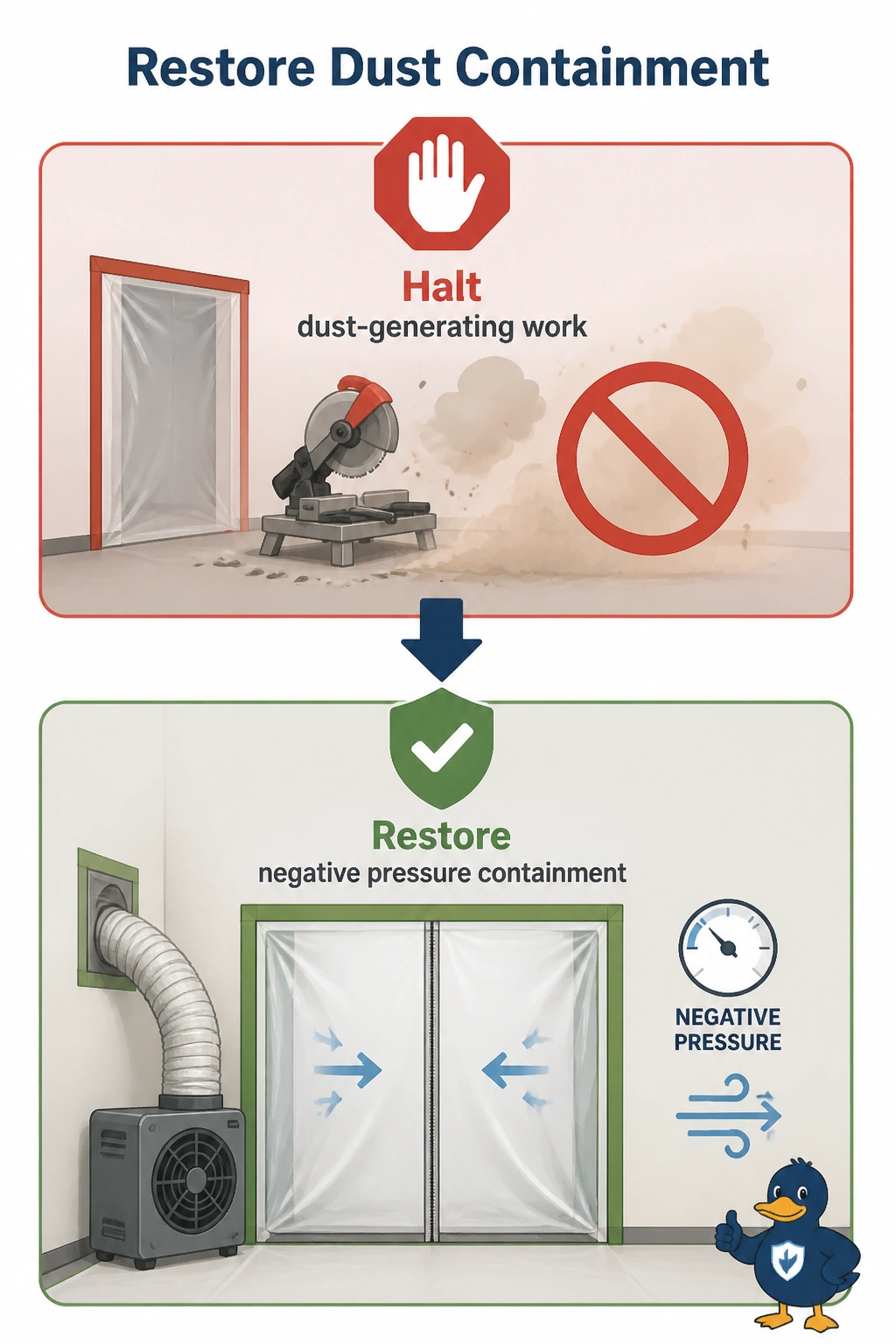
Construction dust near neutropenic patients is more than housekeeping dirt—it can carry Aspergillus spores toward vulnerable lungs. You should halt dust-generating work and restore negative pressure containment immediately, rather than relying on mopping while spores continue to escape.
Full Explanation
When containment fails next to an immunocompromised unit, you should immediately halt dust-generating work and restore negative pressure containment. Construction dust can carry fungal spores such as Aspergillus, which can cause life-threatening invasive mold infections in oncology patients; stopping work prevents further aerosolization, while resealing the barrier and restoring negative airflow relative to the corridor re-establishes directional containment. Increasing routine damp-mopping while work continues removes settled debris only after airborne spores may have dispersed into patient care areas. Placing portable fans in the corridor creates turbulent currents that can disperse fungal spores deeper into clinical spaces rather than contain them. Relocating only symptomatic patients leaves healthy oncology patients exposed, even though immunocompromised patients remain at severe risk before symptoms appear. As an exam caveat, select sealed, spore-impermeable barriers and pressure/HEPA controls through the ICRA; rigid partitions may be necessary, while validated portable plastic containment may suit limited, short-duration work. For a practical check, verify negative pressure with a manometer or smoke tube test and inspect barrier seals daily before construction resumes.
Prefer to study offline? Printable PDF study book + test engine ($7.50, unofficial). These questions stay free here.