
An infection preventionist reviews a non-randomized study reporting lower surgical site infection rates among patients who received a preoperative antiseptic wash. However, the intervention group had a much lower average comorbidity score and fewer emergency procedures than the comparison group. Which methodological flaw most likely distorts these findings?
Select an answer to reveal the explanation.
Short Explanation
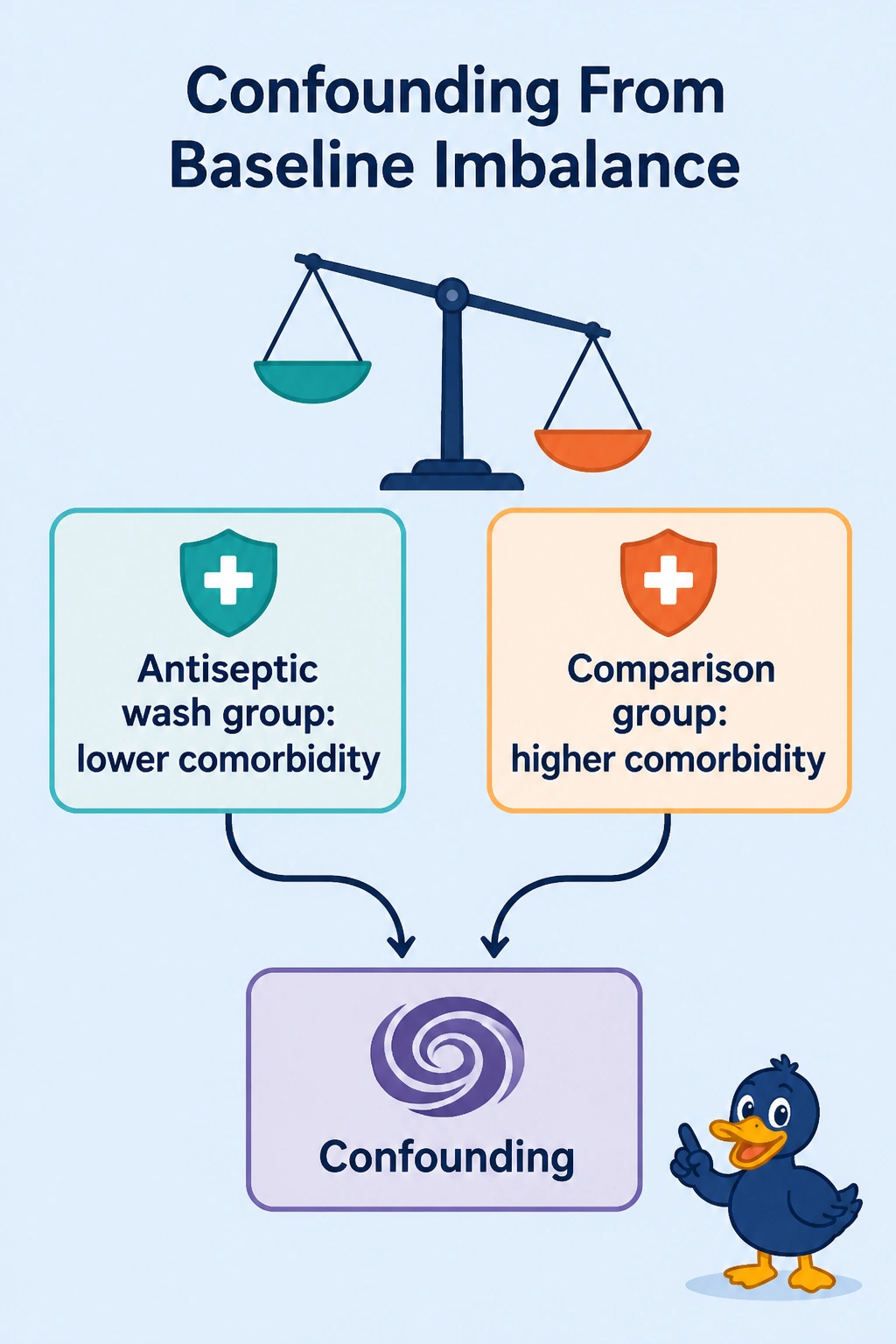
When a study compares patients with different starting risks, even a helpful antiseptic wash can look more effective than it is. You can trust the comparison more when you check whether the groups had similar baseline risk, since healthier patients naturally have fewer infections. Here, the imbalance comes from nonrandom group selection, not faulty recall, changed surgical behavior, or a small control group.
Full Explanation
Confounding from baseline clinical-risk imbalance associated with nonrandom group selection occurs when a factor related to both group assignment and outcome distorts the apparent intervention effect. Patients receiving the antiseptic wash had lower comorbidity scores and fewer emergency procedures, indicating lower underlying infection risk; that imbalance may explain fewer surgical site infections independently of the wash. Recall bias from patients misreporting preoperative bathing habits concerns inaccurate recollection, but it does not account for the recorded differences in comorbidity and emergency status. A Hawthorne effect from surgeons changing technique during the study is a behavior change caused by awareness of observation; it does not explain clinical-risk differences that existed at enrollment. Type I error means falsely rejecting a true null hypothesis, whereas too few patients generally reduce power and increase the risk of Type II error; neither describes systematic baseline imbalance. An exam caveat is that a nonrandomized design does not prove confounding, but the stated pre-existing group differences make it the most likely flaw here. As a practical check before adopting the finding, compare baseline demographic and clinical-risk tables and confirm that analyses adjust for important imbalances.
Prefer to study offline? Printable PDF study book + test engine ($7.50, unofficial). These questions stay free here.