
After a hospital launches an interactive central-line dressing change workshop for intensive care nurses, 96% of participants rate the course as engaging and useful on post-class surveys. Which evaluation metric best demonstrates higher-level program effectiveness to the infection control committee?
Select an answer to reveal the explanation.
Short Explanation
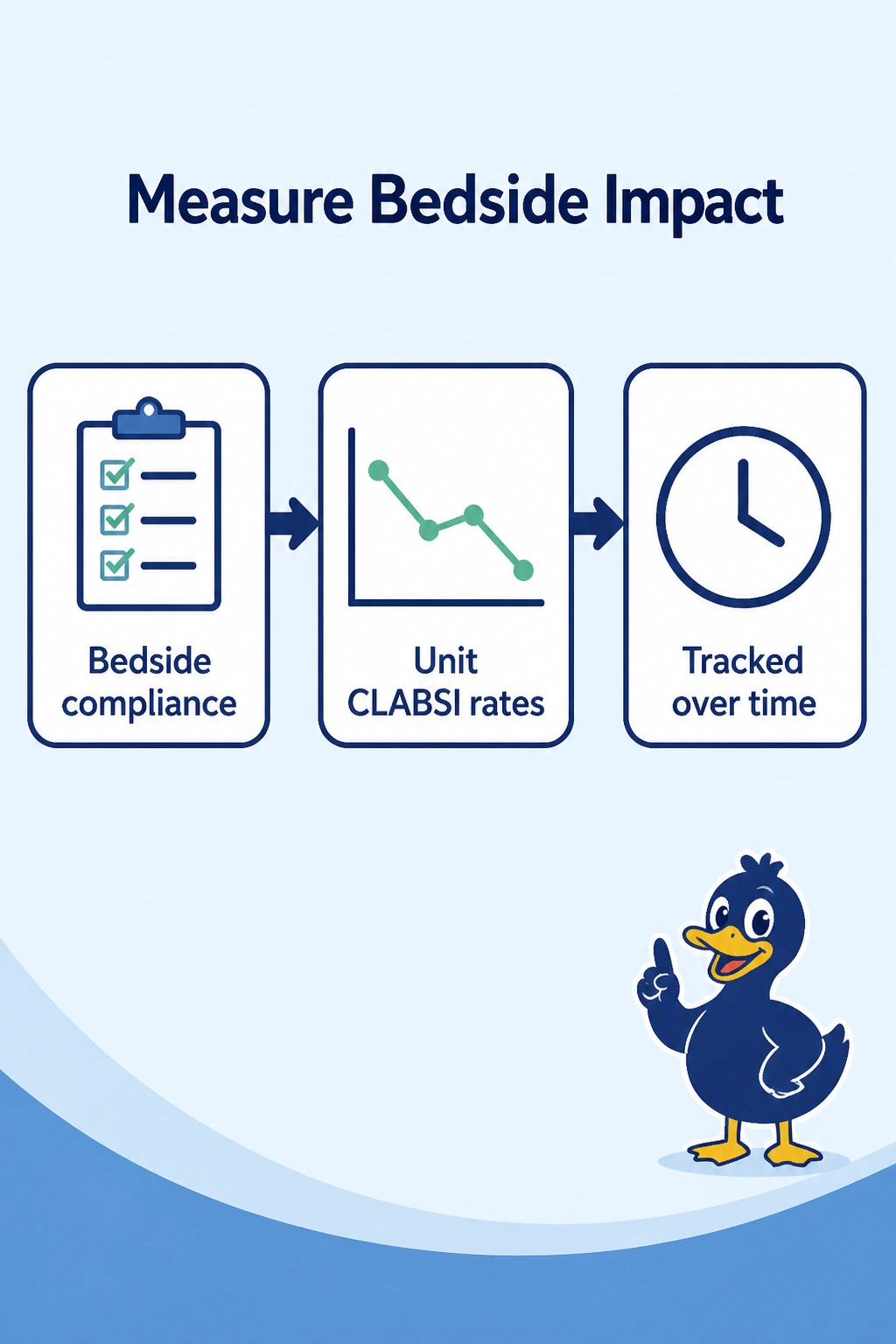
You can feel encouraged by strong course ratings, but they do not show whether care changed at the bedside. Observed compliance and CLABSI rates help you connect nurses’ dressing-change practice with patient outcomes over time.
Full Explanation
Educational evaluation frameworks such as the Kirkpatrick model distinguish immediate reaction and knowledge recall from real-world practice transfer and patient outcomes. The strongest evidence of higher-level effectiveness is observed bedside dressing-change compliance and unit CLABSI rates over time: these show whether nurses sustain the desired clinical behavior and whether the unit’s outcomes improve. The percentage of nurses who completed the post-workshop attendance sign-in sheet measures participation, not skill acquisition or clinical benefit. The average multiple-choice score on the immediate post-workshop knowledge quiz measures short-term cognitive recall, not whether nurses apply aseptic technique under real ICU workflow pressures. The total number of continuing nursing education contact hours awarded by the unit reflects administrative output, not care quality or infection reduction. One caveat is that unit-level infection rates can also be affected by patient acuity and concurrent bundle changes, so they do not by themselves establish that the workshop caused a change. As a practical check, schedule standardized direct observations of dressing changes at 30 and 90 days after training, then graph compliance alongside monthly CLABSI rates to assess whether behavior and outcomes move together.
Prefer to study offline? Printable PDF study book + test engine ($7.50, unofficial). These questions stay free here.