
An infection preventionist reviews a retrospective cohort study claiming that a new antiseptic bathing protocol lowered central line-associated bloodstream infections, but notes that the intervention unit simultaneously launched a hand hygiene campaign and daily dressing audits. Which methodological limitation best explains why the bathing protocol alone cannot be credited?
Select an answer to reveal the explanation.
Short Explanation
When three infection prevention upgrades roll out together, giving all the credit to your favorite one is risky science. The trap is blaming patient memory or sample size when overlapping interventions are muddying the waters. You have to spot confounding before you spend budget on a single product that might not be doing the heavy lifting.
Full Explanation
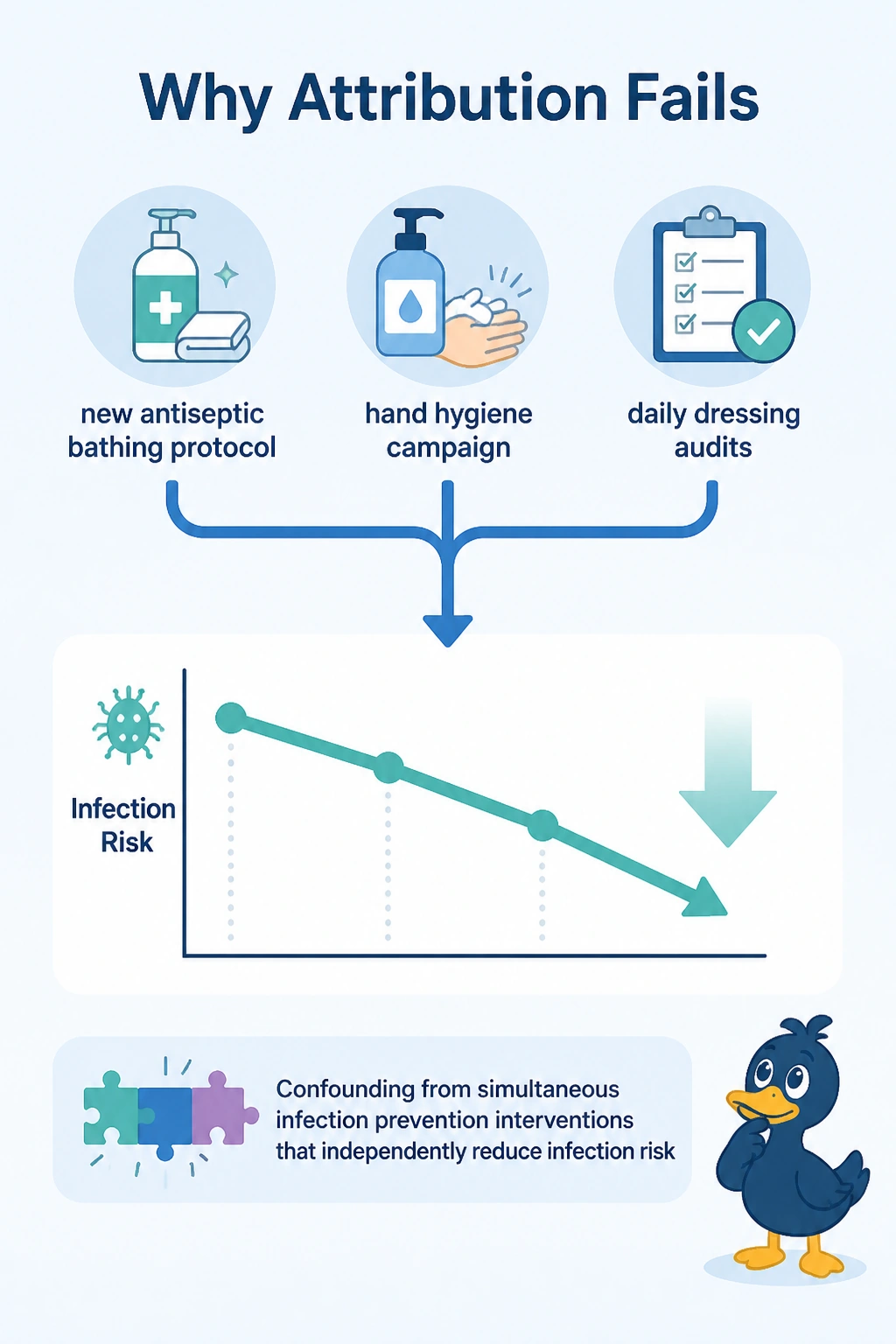
In observational research, "Confounding from simultaneous infection prevention interventions that independently reduce infection risk" prevents attributing the observed drop in bloodstream infections to the antiseptic bathing protocol alone. Because hand hygiene improvement and daily central line dressing audits both independently lower central line infection rates, their effects are mixed with the bathing change. Choosing "Recall bias caused by patients misreporting their bathing frequency after discharge" does not fit because inpatient bathing and bloodstream infection surveillance are documented in clinical records rather than recalled by patients. Selecting "Hawthorne effect resulting from nurses knowing they were being timed during baths" describes temporary behavior change under observation rather than the overlapping impact of two separate clinical initiatives. Opting for "Sampling error caused by enrolling too many intensive care patients in the control arm" refers to random variation or selection imbalance rather than concurrent bundled interventions. As a caveat, bundled quality improvement initiatives are often appropriate in clinical practice even when research isolation of a single component is impossible. For an operational check, examine the study timeline and multivariable adjustment methods before recommending product adoption to the infection control committee.
Prefer to study offline? Printable PDF study book + test engine ($7.50, unofficial). These questions stay free here.