
A home health agency's infection preventionist designs a training program to reduce central line-associated bloodstream infections during home infusion visits. Which evaluation method best demonstrates that nurses have translated the training into safe clinical practice?
Select an answer to reveal the explanation.
Short Explanation
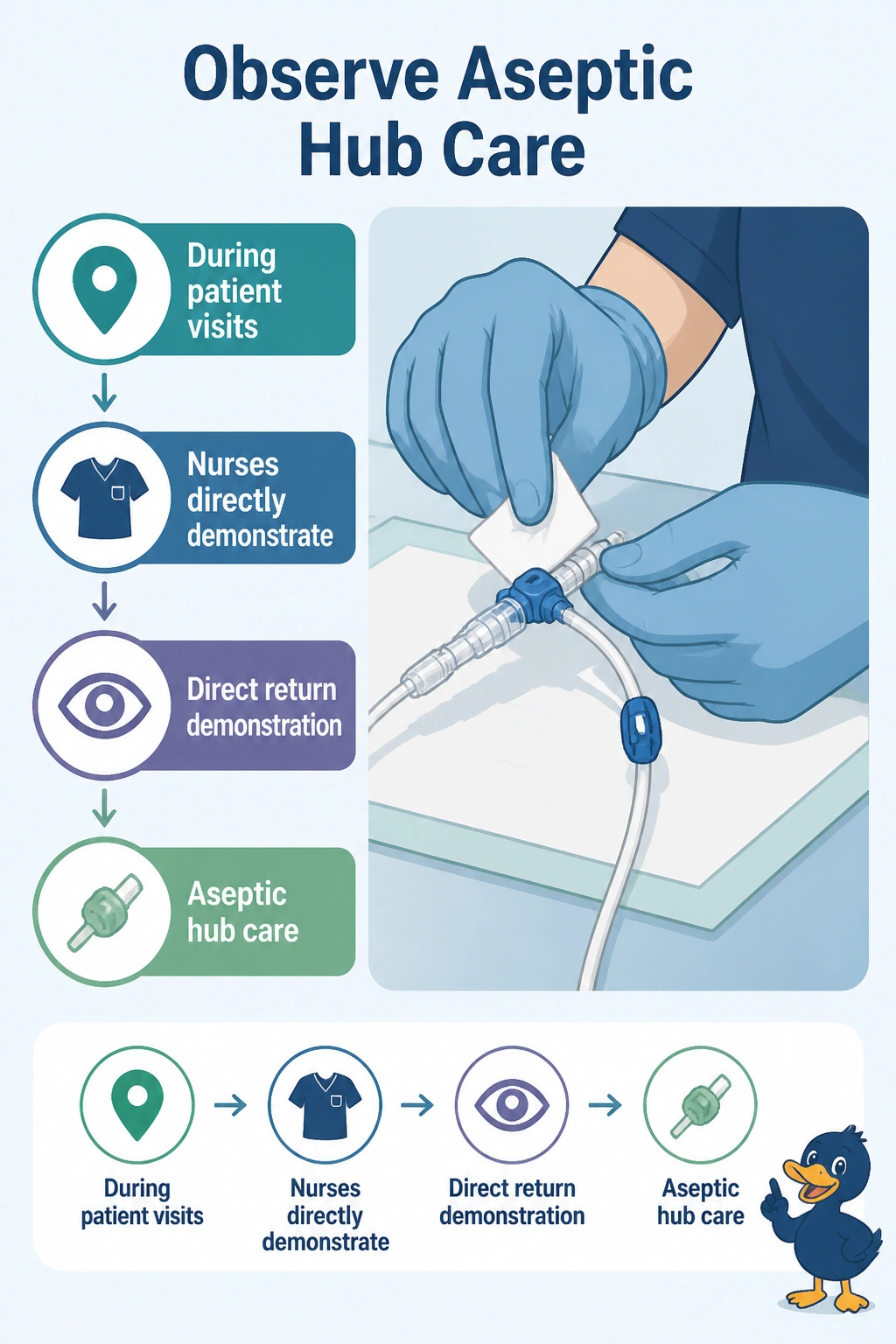
You’re looking for evidence of what nurses do during care, not just what they remember or report after class. Observing direct return demonstrations of aseptic hub care during patient visits verifies practice in the home setting.
Full Explanation
Observing direct return demonstrations of aseptic hub care during patient visits best shows that nurses have translated training into safe clinical practice. Direct observation in the care environment verifies psychomotor skill, adherence to scrub-the-hub technique, and adaptation to the home setting. A post-training multiple-choice knowledge quiz measures cognitive recall, but does not show whether a nurse maintains aseptic technique during patient care. A satisfaction survey immediately after class captures learner perceptions and engagement rather than clinical competence or infection-prevention fidelity. Attendance rosters for mandatory annual compliance credit confirm attendance only; they do not establish that procedures were understood or applied. An exam caveat is that observers may rate the same performance differently, so a standardized skills checklist can reduce inter-rater variability. As a practical check, pair field competency audits with ongoing home-infusion bloodstream infection surveillance to assess whether safe practice is sustained and associated with clinical impact.
Prefer to study offline? Printable PDF study book + test engine ($7.50, unofficial). These questions stay free here.