
An infection prevention team plans to implement a hospital-wide chlorhexidine bathing protocol across all adult intensive care units simultaneously and wants to evaluate its impact on central line-associated bloodstream infection rates over time. Because randomizing individual patients or units is not feasible, which study design provides the strongest quasi-experimental evaluation?
Select an answer to reveal the explanation.
Short Explanation
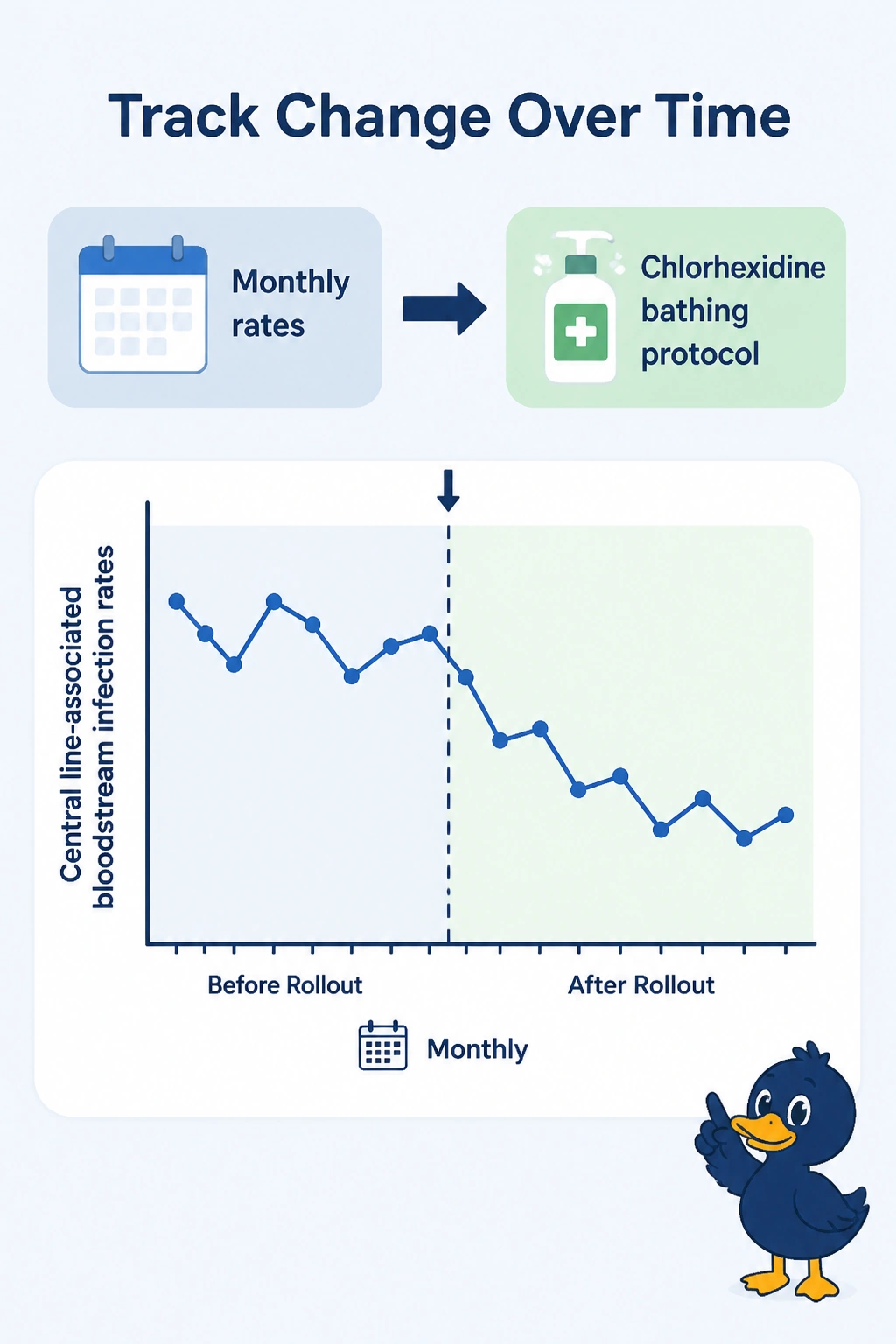
When you cannot randomize units, a simple before-and-after snapshot can fool you by mistaking a natural trend for an intervention effect. An interrupted time-series design tracks multiple intervals on both sides of the rollout so you can separate real change from background noise.
Full Explanation
An interrupted time-series analysis tracking monthly rates before and after rollout is the strongest quasi-experimental option here because it collects multiple equally spaced observations both prior to and following the protocol change. By modeling the baseline slope and level, this design estimates intervention-associated changes in level or slope while accounting for prior trends; concurrent interventions, autocorrelation, seasonality and ascertainment changes can still confound causal interpretation. A cross-sectional point-prevalence survey conducted once after implementation fails because it captures only a single moment in time and provides no baseline comparator to establish whether rates changed. A descriptive case series summarizing the first ten patients who develop an infection lacks a denominator and a comparison group, making it unable to measure risk reduction across the unit. A single uncontrolled pre-post comparison using one month before and one month after is vulnerable to regression to the mean and random monthly fluctuations. As an operational caveat, ensure that surveillance definitions and culturing practices remain consistent throughout the entire observation window, because diagnostic shifts can mimic rate changes. Perform a data-quality check by auditing denominator line-day capture for at least twelve baseline months before launching the protocol.
Prefer to study offline? Printable PDF study book + test engine ($7.50, unofficial). These questions stay free here.