
An urban community health center wants to expand diabetes self-management support and reduce missed follow-ups among residents facing transportation and language barriers. Which team-based practice best aligns with national standards?
Select an answer to reveal the explanation.
Short Explanation
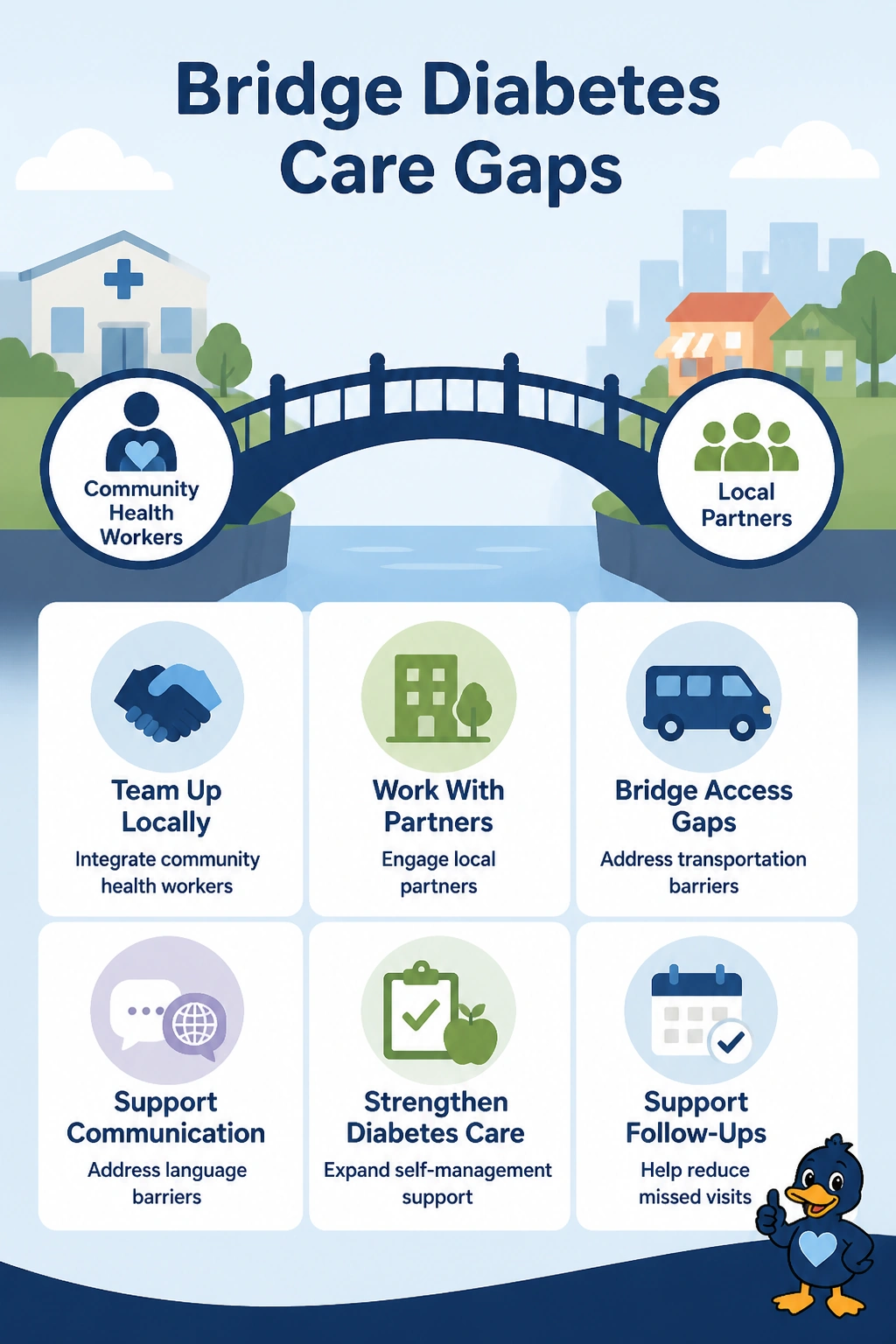
Even the best clinic curriculum cannot help someone who cannot get through the door or understand the handouts. The trap is adding slots or mailing handouts without fixing access gaps, so you should partner with community health workers to meet people where they live.
Full Explanation
Choosing Integrating community health workers and local partners to bridge access gaps reflects national standards for equitable, person-centered diabetes self-management education and support. Community health workers and trusted neighborhood organizations help address transportation, language, cultural alignment, and ongoing support between clinic visits, improving retention and outcomes in underserved populations. Expanding appointment capacity without addressing transportation or language access adds supply without removing the barriers that cause missed follow-ups, so access gaps persist. Relying on replacing all individualized follow-up with automated generic text reminders ignores language access, health literacy differences, and the human connection needed to troubleshoot real-world barriers. Using mailed education materials as the primary response without assessing community support needs provides one-way information without tailoring, language access, or linkage to local resources and follow-up. As a program caveat, community health workers should receive structured training and clear communication pathways with the clinical team rather than working in isolation. For an operational check, audit missed-appointment rates and referral completion by neighborhood and language group after launching community partnerships.
Prefer to study offline? Printable PDF study book + test engine ($7.50, unofficial). These questions stay free here.