
A community clinic is launching a diabetes self-management education and support service for a large immigrant population whose primary language is not English. Which curriculum design step best aligns with national practice standards?
Select an answer to reveal the explanation.
Short Explanation
Swapping words from one language to another is like changing the cover of a book without checking if the recipes inside work in your kitchen. The trap is assuming literal translation equals cultural fit, when food traditions and health beliefs drive real change.
Full Explanation
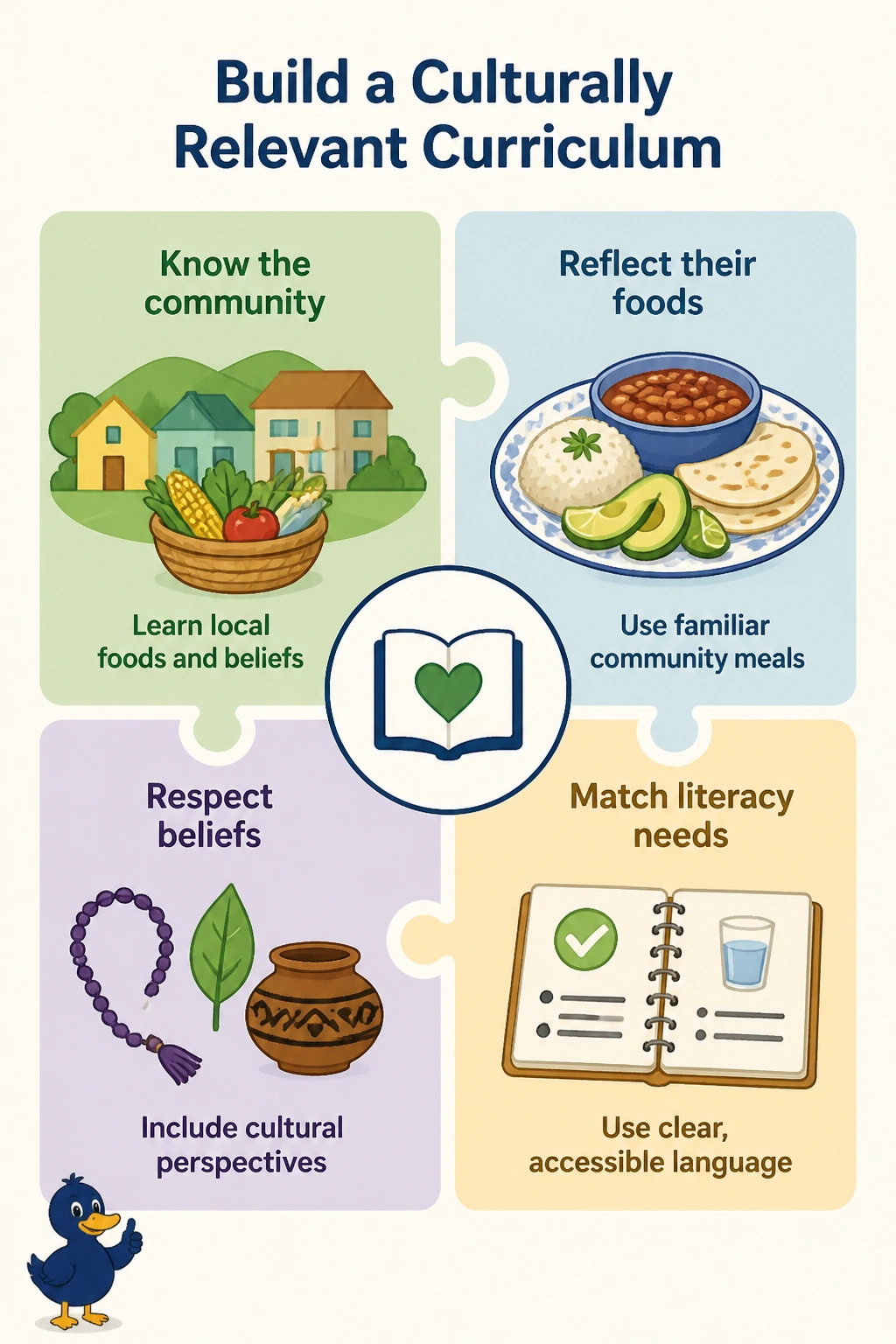
National Standards for Diabetes Self-Management Education and Support emphasize person-centered, culturally appropriate care tailored to the target population. Adapting curriculum examples to reflect community foods, beliefs, and literacy needs ensures that nutrition, medication, and monitoring guidance feels practical and respectful rather than foreign or judgmental. Translating existing English-language handouts word for word into the local language often misses idioms, traditional cooking methods, and cultural perspectives on health, reducing comprehension and engagement. Standardizing identical meal-planning worksheets across every clinic location statewide ignores regional and cultural diversity and conflicts with individualized, population-responsive education. Requiring participants to complete written pretests before joining group discussions creates an unnecessary barrier for adults with limited formal schooling or low literacy. As a caveat, cultural adaptation should avoid stereotyping by still assessing each participant's individual preferences and household resources. For an operational check, review draft visual aids and meal examples with local community advisory members or bilingual educators to confirm clarity and cultural relevance before rollout.
Prefer to study offline? Printable PDF study book + test engine ($7.50, unofficial). These questions stay free here.