
A 29-year-old warehouse worker with type 1 diabetes tells her diabetes care and education specialist that her supervisor forbids carrying glucose tablets on the floor and only allows bathroom breaks every four hours. Which advocacy-oriented guidance aligns with professional practice standards?
Select an answer to reveal the explanation.
Short Explanation
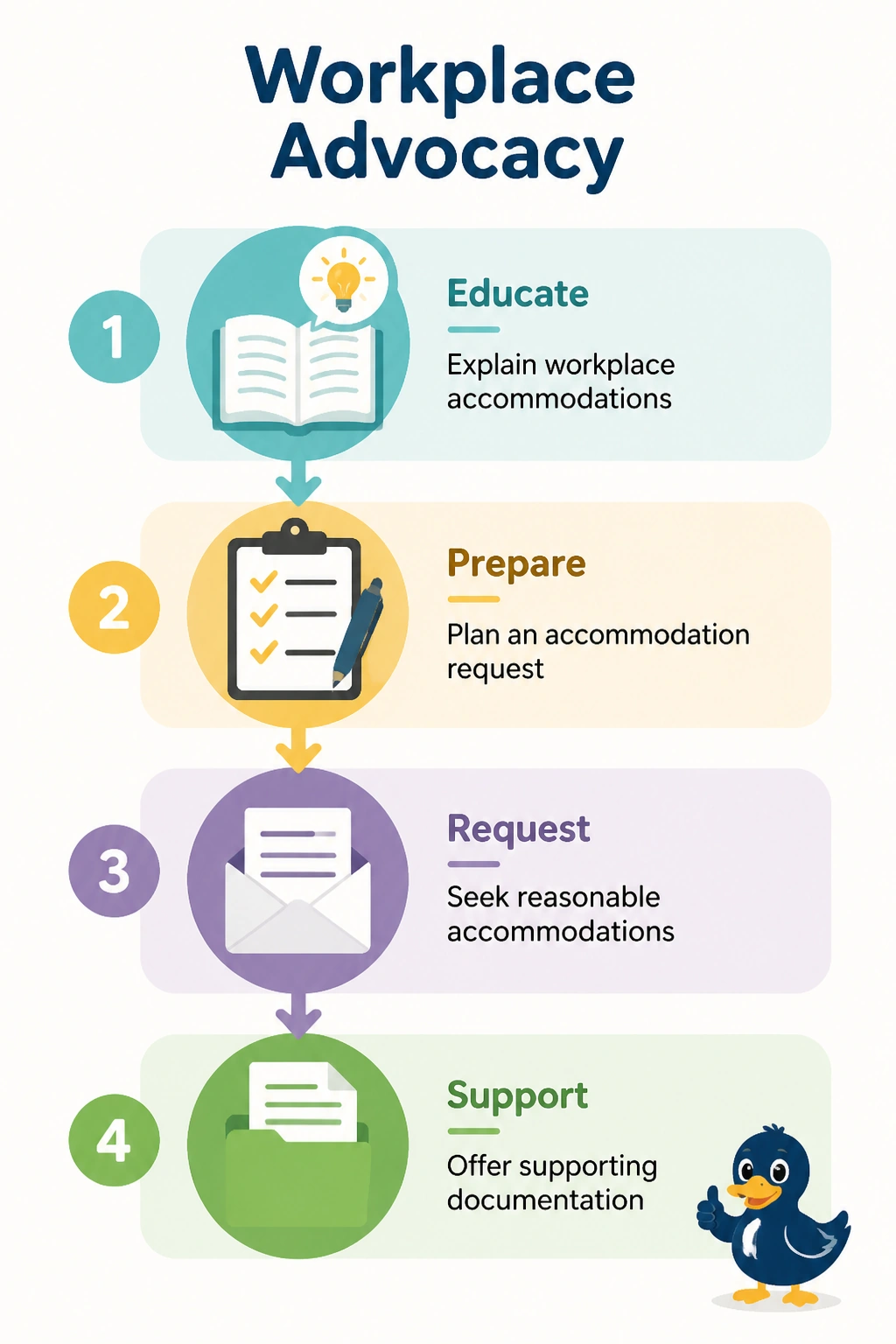
You should not have to choose between keeping your job and treating a sudden low blood glucose safely. You can support her self-advocacy by explaining how to request reasonable workplace accommodations and coordinating clinician documentation when needed.
Full Explanation
Educate her on requesting reasonable workplace accommodations and offer supporting documentation. Under US disability protections such as the Americans with Disabilities Act, diabetes may be a covered condition where those protections apply, and employees may be able to request reasonable accommodations—including carrying fast-acting carbohydrates, checking glucose, and taking brief breaks to treat hypoglycemia. You support self-advocacy by explaining this framework and coordinating documentation with the prescribing team. Seeking a job transfer before exploring accommodations for current duties may give up income and protections unnecessarily when a safety-focused adjustment could resolve the barrier. Relying on food changes alone does not provide reliable rapid treatment for hypoglycemia and leaves the unsafe restriction unaddressed. Hiding glucose tablets without discussing workplace safety needs fails to address the policy barrier and leaves no agreed safety plan; broad disclosure to coworkers is not required. Caveat: You provide education on workplace rights and support letters rather than formal legal advice. Practical check: Follow up to confirm whether accommodations were approved and whether further resources are needed.
Prefer to study offline? Printable PDF study book + test engine ($7.50, unofficial). These questions stay free here.