
A 50-year-old woman newly diagnosed with type 2 diabetes is prescribed metformin alone and asks whether she needs to carry glucose tablets everywhere in case her blood sugar drops dangerously low. How should the diabetes care and education specialist respond?
Select an answer to reveal the explanation.
Short Explanation
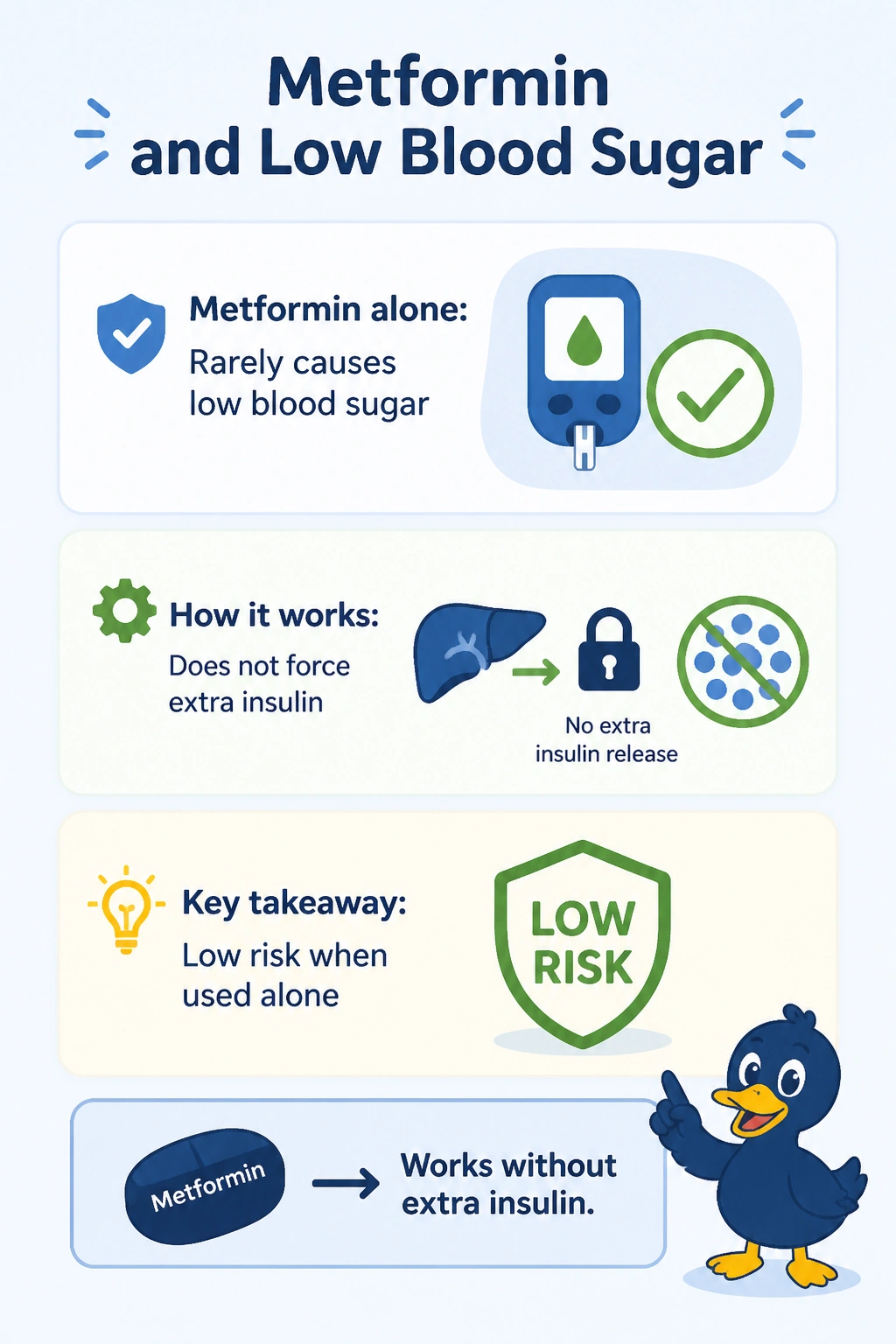
Think of metformin as a traffic controller that quiets liver sugar output rather than a pump pushing extra insulin into your bloodstream. The trap is treating every diabetes pill like a sulfonylurea or insulin and adding unnecessary snacks that work against glycemic goals.
Full Explanation
Metformin primarily decreases hepatic glucose production and improves peripheral insulin sensitivity without stimulating pancreatic beta cells to secrete extra insulin, which is why choosing to explain that metformin rarely causes hypoglycemia alone because it works without forcing extra insulin secretion gives accurate, reassuring guidance. Because its action is glucose-lowering without insulin hypersecretion, severe lows are uncommon in monotherapy. Choosing to instruct her to carry fast-acting glucose tablets at all times because metformin stimulates continuous insulin release confuses biguanides with sulfonylureas or meglitinides. Choosing to recommend checking blood glucose before every meal and bedtime specifically to catch silent metformin-induced lows creates unnecessary testing burden when hypoglycemia risk is minimal. Choosing to advise her to eat a bedtime carbohydrate snack each night to prevent overnight hypoglycemia from the medication adds unneeded calories and can raise fasting glucose. As a caveat, hypoglycemia risk does rise if a prescriber later adds insulin or a sulfonylurea, or during prolonged fasting and heavy alcohol intake. For an operational check, review her full medication list at each visit and verify she knows which drug classes actually carry hypoglycemia risk.
Prefer to study offline? Printable PDF study book + test engine ($7.50, unofficial). These questions stay free here.