
A 52-year-old man with type 2 diabetes who is switching from regular human insulin (U-100) to a rapid-acting insulin analog before meals asks how the timing and action profile of his new mealtime insulin differ. Which explanation should the diabetes care and education specialist provide?
Select an answer to reveal the explanation.
Short Explanation
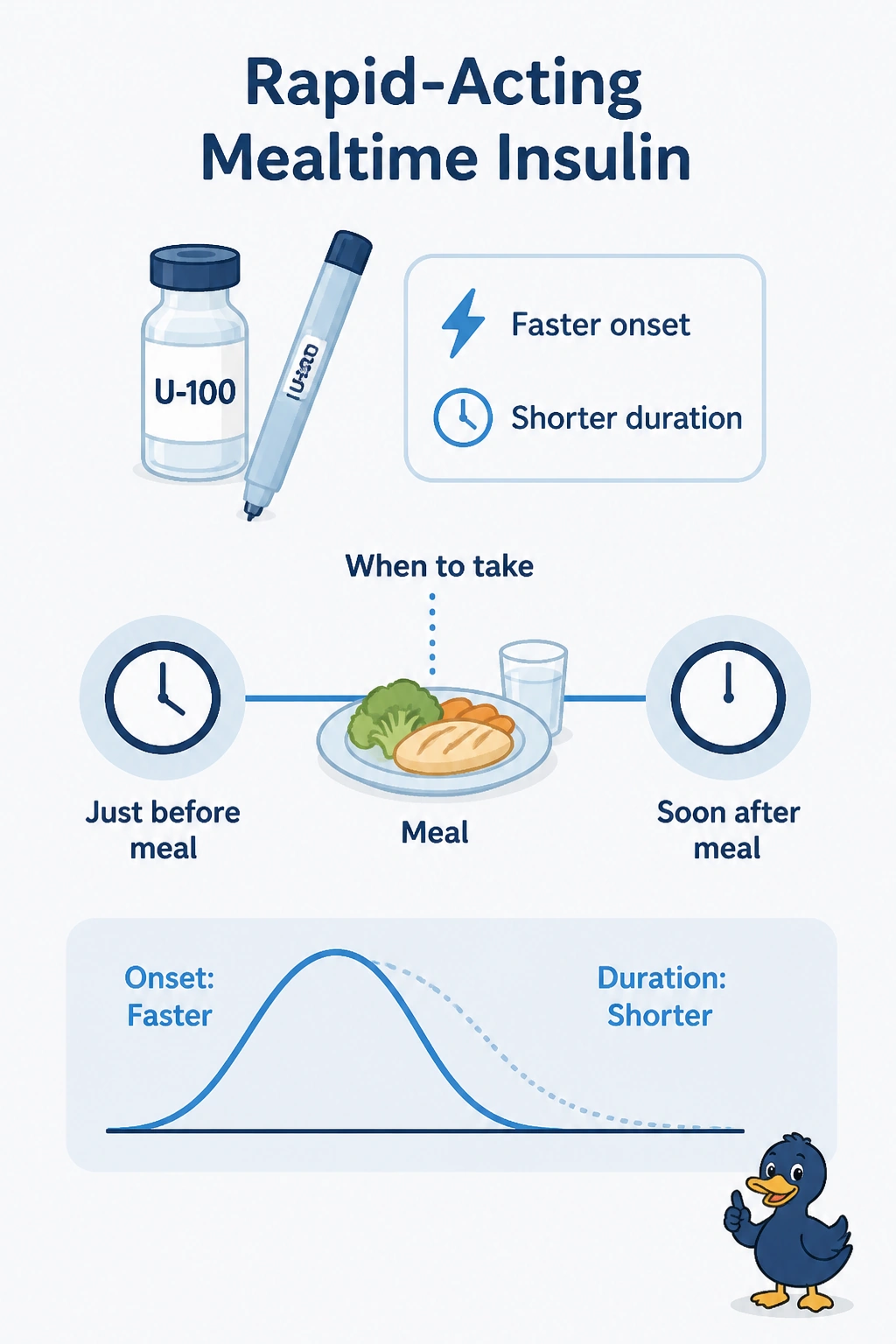
Switching from regular human insulin to a rapid-acting analog is like trading a slow-starting freight train for a commuter express. The trap is keeping the old 30-to-60-minute pre-meal wait time, which can cause your blood glucose to drop before food even hits the stomach. Knowing the faster onset and shorter duration keeps mealtime dosing safe and effective.
Full Explanation
Regular human insulin has a slower absorption profile and is typically injected about 30 minutes before a meal, lingering for several hours afterward. By contrast, Rapid-acting analogs have a faster onset and shorter duration, so they are taken closer to meals than regular insulin. Because rapid-acting analogs begin lowering blood glucose much sooner and clear faster, taking them just before eating (typically within 0 to 15 minutes, per product labeling) better matches carbohydrate absorption and reduces late post-meal hypoglycemia. The claim of slower onset with longer duration requiring injection 60 minutes before eating reverses the pharmacokinetics and would cause dangerous pre-meal hypoglycemia. The claim that analogs start sooner but retain the same prolonged action as regular insulin is incorrect because duration is distinctly shorter, which is why late hypoglycemia risk differs. The claim that analogs should routinely use the same 30-minute pre-meal timing as regular insulin preserves the old wait time and mismatches insulin peak to carbohydrate absorption, risking a low before eating. As a caveat, exact pre-meal timing can vary slightly by specific analog formulation and pre-meal glucose level. For an operational check, review the exact prescribed insulin name on the pen or vial and ask the patient to state when he will inject relative to his first bite of food.
Prefer to study offline? Printable PDF study book + test engine ($7.50, unofficial). These questions stay free here.