
A 49-year-old sales representative with type 1 diabetes who drives between client sites all day asks how to keep his spare insulin pens cool in an insulated lunch bag without ruining the medication. Which storage instruction should the diabetes care and education specialist provide?
Select an answer to reveal the explanation.
Short Explanation
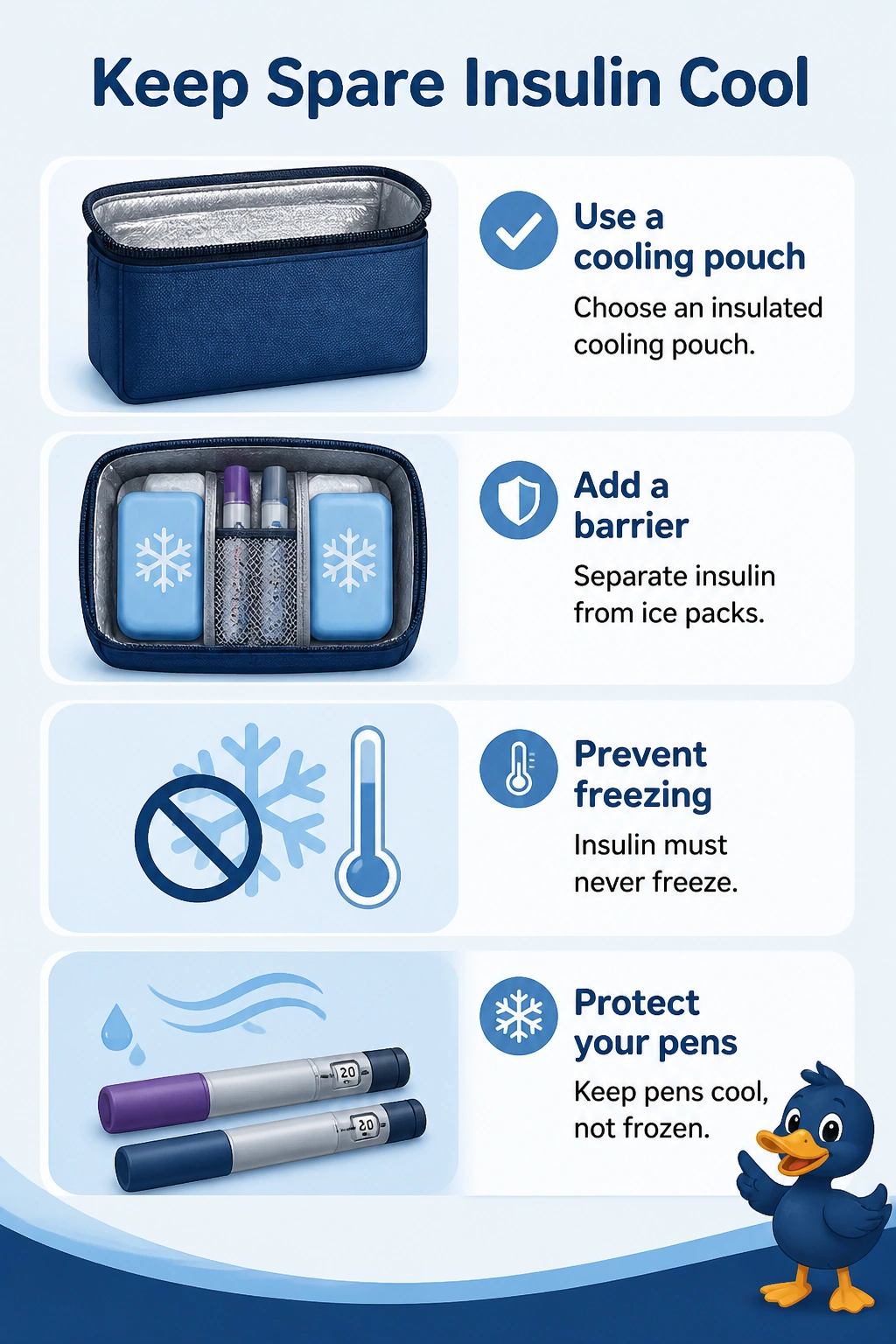
Insulin is temperature-sensitive: too much heat can spoil it, and freezing can ruin it just as quickly. Keep your spare pens cool in an insulated pouch with a barrier between them and any ice pack, so they stay effective without freezing. You’ve got the right idea by cooling them gently, not making them icy.
Full Explanation
Insulin is a protein hormone whose molecular structure can denature with excessive heat or freezing, causing unpredictable loss of potency. Use an insulated cooling pouch with a barrier so insulin never touches ice packs directly or freezes; the insulation and divider help keep the pens cool without exposing them to freezing temperatures. Placing the pens directly against a frozen gel pack risks freezing the insulin in the cartridge, even inside a sealed plastic bag. Using ice packs without a barrier because the insulin still appears clear is unsafe because freezing may damage the product; do not use insulin that has frozen, even after thawing. Appearance alone cannot establish potency. Keeping the pens in a car’s glove compartment is unsafe: cars and closed compartments can heat rapidly between stops, even when the air conditioning is running on low during the drive. As a caveat, an in-use insulin pen can usually be kept at room temperature within the manufacturer’s specified in-use window, as long as it stays out of direct heat. For a practical check, inspect the insulin for clumps, crystals, or unusual cloudiness, and carry the insulated bag inside at every stop.
Prefer to study offline? Printable PDF study book + test engine ($7.50, unofficial). These questions stay free here.