
A 34-year-old runner with type 1 diabetes on multiple daily injections eats breakfast, injects rapid-acting insulin into the thigh, and notices blood glucose dropping sharply 20 minutes into a morning jog despite eating the usual meal. Which injection-site adjustment should the diabetes care and education specialist recommend before morning runs?
Select an answer to reveal the explanation.
Short Explanation
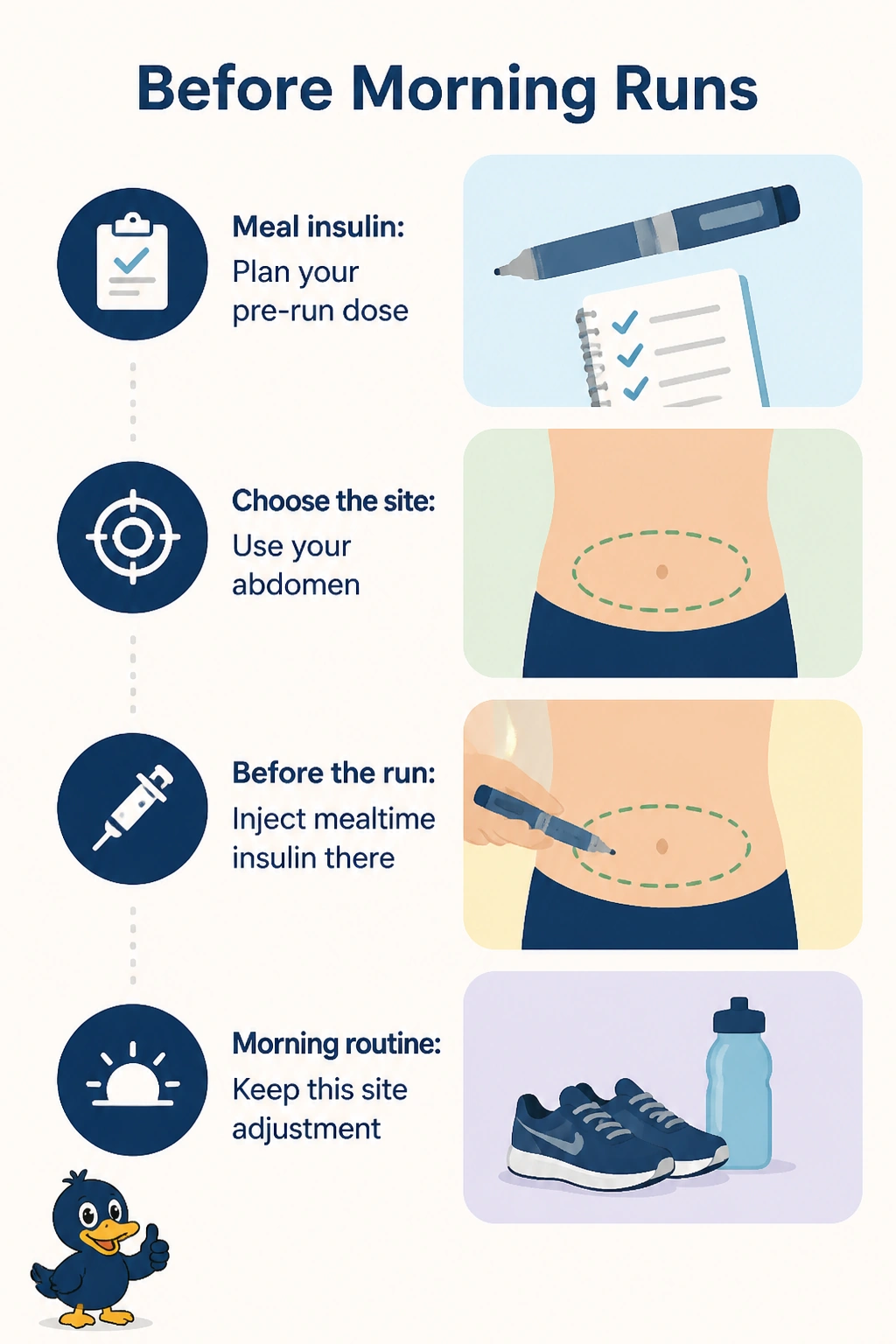
Think of an exercising leg like a busy highway that sweeps anything nearby into circulation faster than usual, so when you inject into the thigh right before a run you can see a fast early drop. Avoid intramuscular injection and consider a non-exercising site as part of a plan addressing active bolus insulin, carbohydrate, intensity and glucose trends; site effects vary by formulation. Watch out for the trap of splitting the dose in the same thigh or relying only on symptoms, which leaves you vulnerable to unpredictable lows.
Full Explanation
Physical activity increases blood flow in working muscles and overlying subcutaneous tissue, accelerating insulin absorption from an exercising limb. Choosing to Inject the pre-run mealtime insulin into the abdomen instead of the thigh places the rapid-acting dose in a non-exercising area with more predictable baseline perfusion. Avoid intramuscular injection and consider a non-exercising site as part of a plan addressing active bolus insulin, carbohydrate, intensity and glucose trends; site effects vary by formulation. By contrast, choosing to Give the usual thigh dose earlier without considering active insulin at exercise onset fails because timing shift alone still leaves active bolus insulin during the run, keeping early hypoglycemia risk without dose adjustment. Choosing to Keep the same dose and site and rely only on symptoms to detect falling glucose fails because exercise can blunt awareness and delay symptoms until glucose is already low, so glucose monitoring is required rather than symptoms alone. Choosing to Split the pre-run mealtime insulin into two separate injections in the thigh still leaves the entire dose in the working leg, so local exercise-induced perfusion continues to speed absorption. As a clinical caveat, moving the injection site does not replace pre-run dose or carbohydrate planning when exercise lasts longer or intensifies.
Prefer to study offline? Printable PDF study book + test engine ($7.50, unofficial). These questions stay free here.