
A 36-year-old man with type 1 diabetes is scheduled for an outpatient surgical procedure requiring him to fast after midnight and asks if he should skip all of his insulin on the morning of surgery. Which guidance should the diabetes care and education specialist provide?
Select an answer to reveal the explanation.
Short Explanation
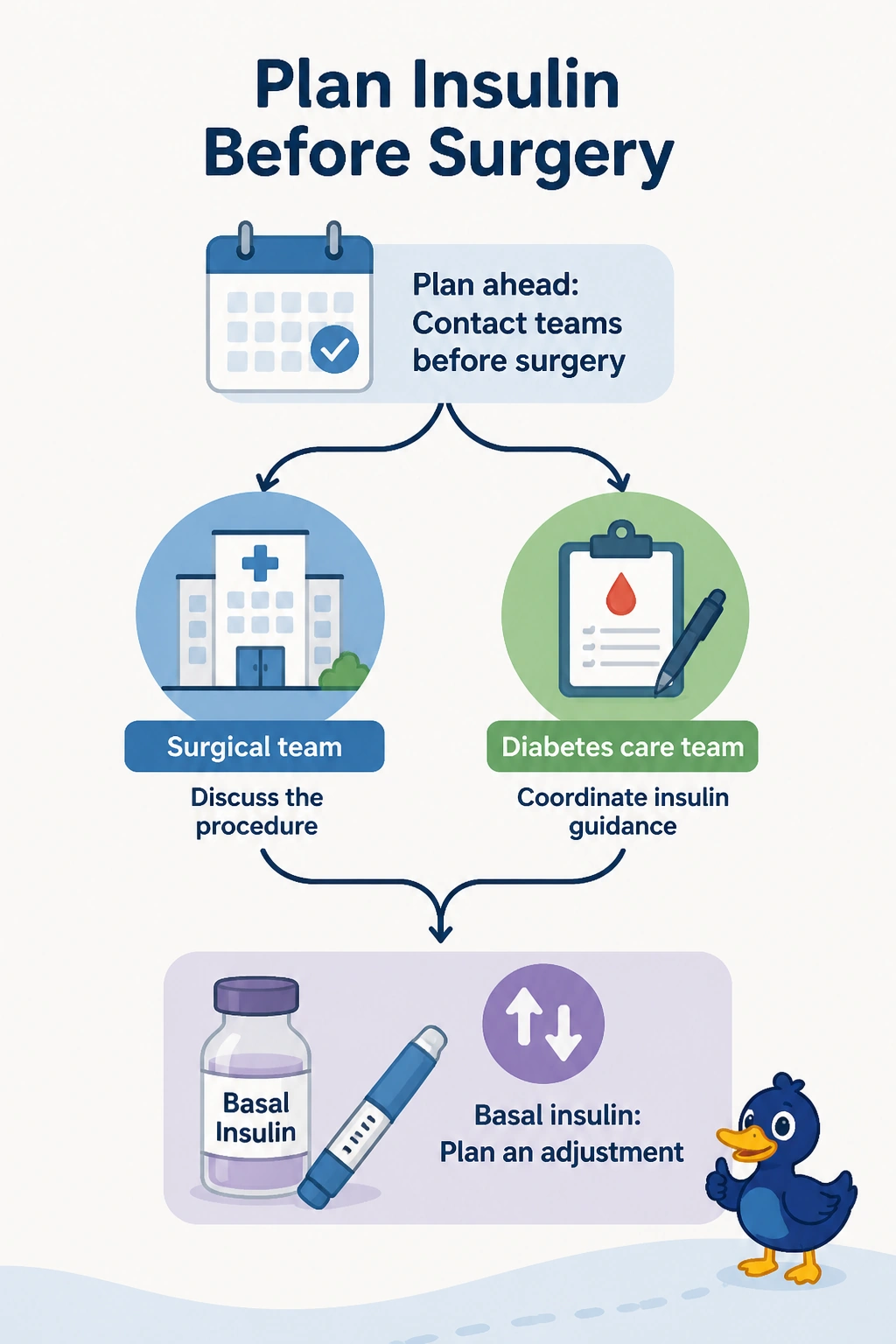
You’re right to check before surgery: fasting does not mean you stop needing background insulin if you have type 1 diabetes. Contact the surgical and diabetes care teams ahead of time for a basal insulin adjustment, because stopping all insulin can quickly lead to diabetic ketoacidosis. Mealtime insulin and basal insulin have different roles, so follow a plan made for your procedure.
Full Explanation
People with type 1 diabetes have absolute insulin deficiency and still need basal insulin while fasting to suppress lipolysis and ketogenesis, so you should contact the surgical and diabetes care teams ahead of time for an individualized basal adjustment. Care teams typically advise continuing or modestly reducing basal insulin while holding mealtime boluses during fasting to prevent both diabetic ketoacidosis and severe hypoglycemia. The plan should also specify correction insulin, glucose monitoring, and any IV-insulin replacement. Skipping every dose of basal and mealtime insulin until solid food resumes removes all circulating insulin and can precipitate diabetic ketoacidosis within hours. Taking full mealtime rapid-acting boluses without carbohydrate intake can cause dangerous hypoglycemia before or during anesthesia. Applying the same fixed percentage reduction to every insulin formulation without consulting the surgical plan ignores differences in insulin action. A perioperative caveat is that people using insulin pumps or automated insulin delivery systems also need explicit guidance on temporary targets, infusion-site placement away from the surgical field, and backup supplies. As a practical check, confirm that you have written pre-procedure insulin instructions and know how to check blood glucose and ketones on the morning of surgery.
Prefer to study offline? Printable PDF study book + test engine ($7.50, unofficial). These questions stay free here.