
A 56-year-old woman with type 2 diabetes and elevated cardiovascular risk asks which overall eating pattern has strong evidence for improving both glycemic management and heart health without requiring strict specialty shakes or single-nutrient elimination. Which nutrition recommendation should the specialist emphasize?
Select an answer to reveal the explanation.
Short Explanation
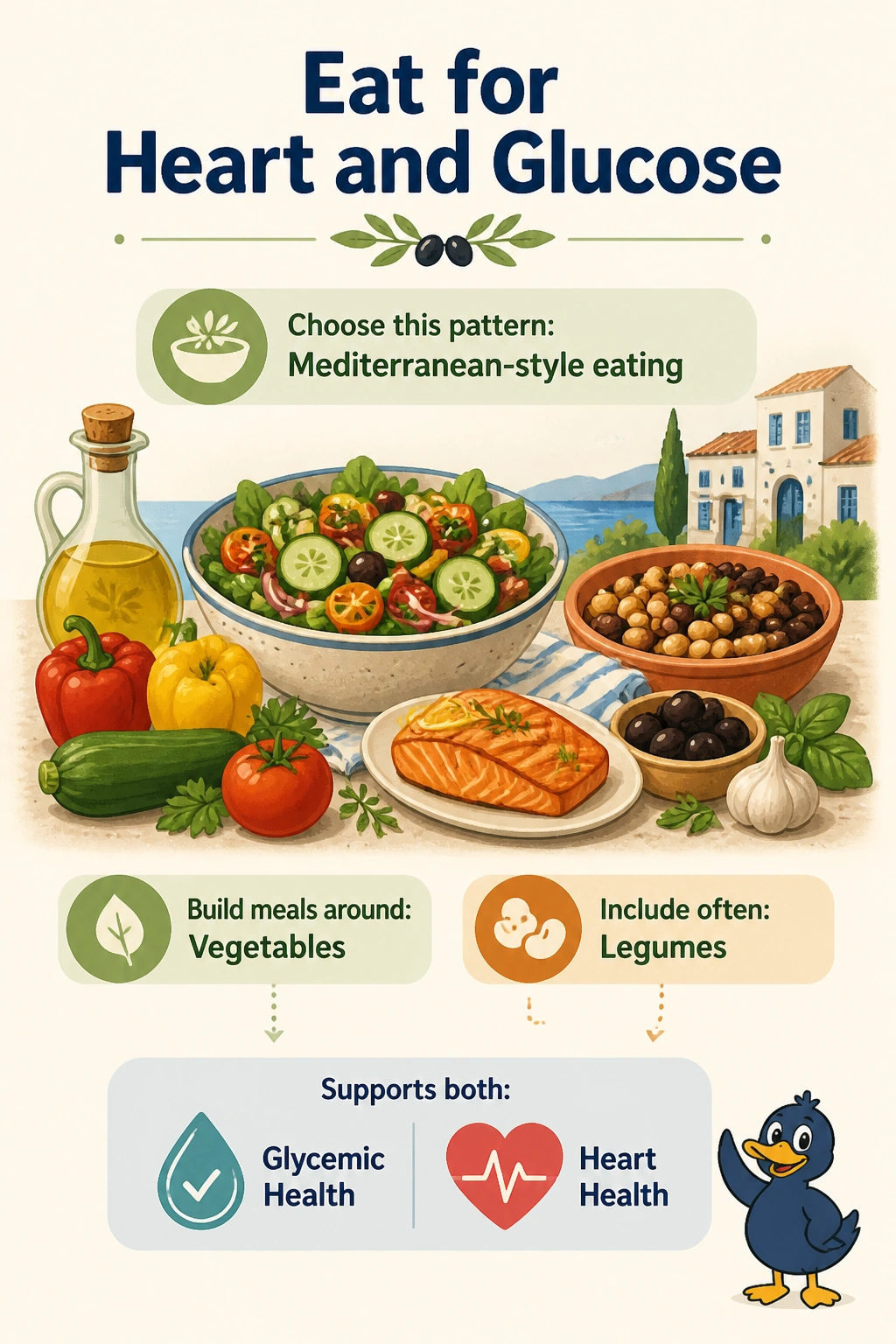
You can support both blood glucose management and heart health with a sustainable Mediterranean-style eating pattern rich in vegetables and legumes. Rather than relying on a single dietary rule, focus on the overall pattern to help protect A1C and cardiovascular health.
Full Explanation
Evidence-based nutrition guidance supports flexible, whole-food eating patterns for improving glycemic outcomes and cardiovascular risk over time. Adopting a Mediterranean-style eating pattern rich in vegetables and legumes is appropriate because it emphasizes non-starchy vegetables, legumes, whole grains, nuts, olive oil, and fish, which can improve insulin sensitivity, lipid profiles, and blood pressure. Choosing foods by low-carbohydrate labeling alone is inadequate: a label does not ensure good fat quality, sufficient fiber, or an overall heart-healthy pattern. Prioritizing a fixed macronutrient ratio without adapting foods to preferences or cardiovascular goals fails to account for the factors that support sustainability and benefit. Reducing total fat without distinguishing unsaturated from saturated fats can remove cardioprotective monounsaturated and omega-3 fats. One caveat is that portions of calorie-dense healthy fats and carbohydrate-containing whole grains still matter for individual glycemic and weight goals. As a practical check, work with the patient to map two familiar weekly meals onto Mediterranean-style ingredients and offer a Medical Nutrition Therapy referral.
Prefer to study offline? Printable PDF study book + test engine ($7.50, unofficial). These questions stay free here.