
A 47-year-old woman with type 1 diabetes calls the clinic because her blood glucose meter displayed "HI" instead of a number after lunch, and she assumes the meter is broken because she feels only mildly thirsty. Which action should the diabetes care and education specialist advise first?
Select an answer to reveal the explanation.
Short Explanation
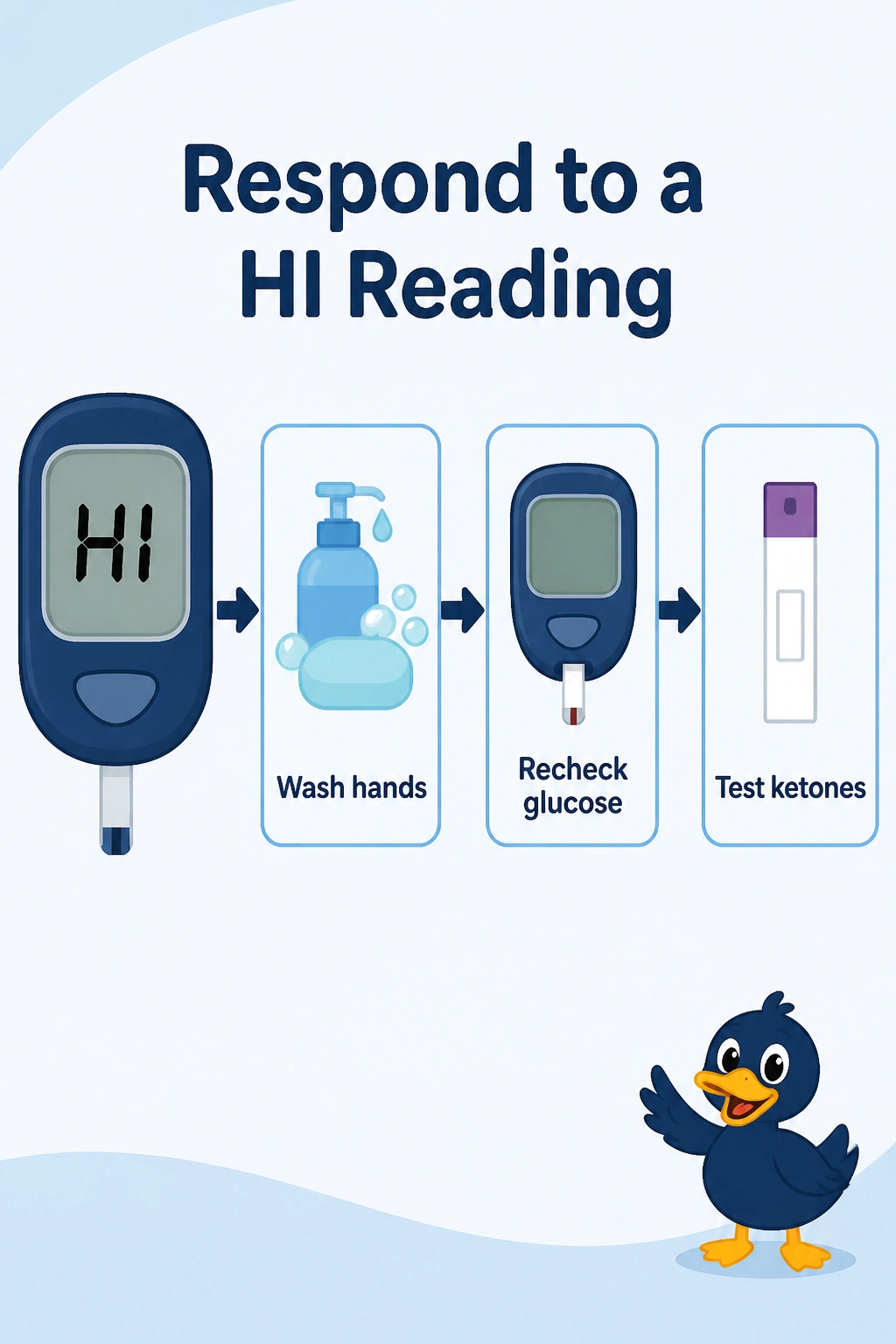
A "HI" message on a meter is not a harmless glitch—it is a warning light telling you that blood glucose has climbed above the device's measurable ceiling. The trap is treating it as a minor display error or guessing a blind double dose without confirming the value. Have your patient wash up, recheck, and check ketones immediately.
Full Explanation
Blood glucose meters display an out-of-range "HI" message when the measured glucose exceeds the upper analytical limit of the strip and meter, which requires prompt verification rather than dismissal. The safest first step is to Wash her hands, recheck her glucose, and test for ketones right away, because food residue on the fingers can falsely elevate a reading while true severe hyperglycemia in type 1 diabetes carries an urgent risk of diabetic ketoacidosis. If HI persists or emergency symptoms/meaningful ketones occur, obtain urgent clinical or emergency assessment according to the sick-day plan; do not keep repeating measurements while delaying care. Telling her to Replace the meter battery and repeat the test after waiting two hours delays critical evaluation when insulin deficiency may already be progressing. Advising her to Administer a double correction bolus immediately based on her usual high target is dangerous because guessing an unconfirmed dose without ruling out finger contamination or checking ketones can trigger severe hypoglycemia. Suggesting she Drink a large glass of water and ignore the message unless nausea develops misses the opportunity to intervene before acidosis worsens. As an important caveat, exact numerical thresholds for "HI" or "LO" vary by meter model. During follow-up, verify that the patient knows her emergency sick-day thresholds and has unexpired blood or urine ketone strips at home.
Prefer to study offline? Printable PDF study book + test engine ($7.50, unofficial). These questions stay free here.