
A 58-year-old man with type 2 diabetes and an A1C of 7.8% asks how his newly prescribed SGLT2 inhibitor lowers blood glucose without causing frequent hypoglycemia when taken with metformin. Which explanation should the diabetes care and education specialist provide?
Select an answer to reveal the explanation.
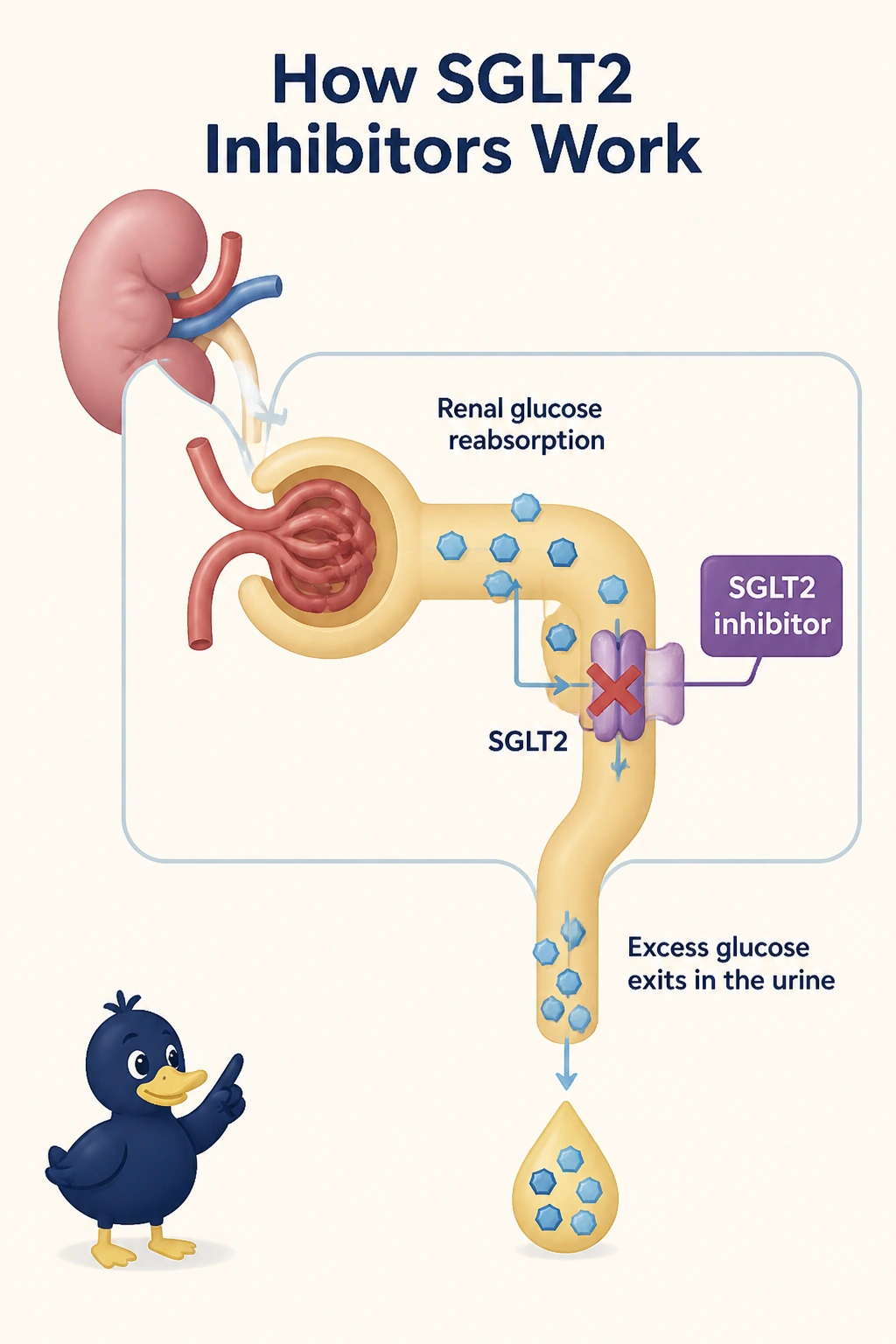
Short Explanation
Think of an SGLT2 inhibitor as opening a spill valve in your kidneys rather than pushing the pancreas harder. Because it lowers blood glucose without forcing extra insulin release, it carries a low risk of hypoglycemia when paired with metformin. The trap is confusing this kidney pathway with medications that stimulate insulin around the clock.
Full Explanation
SGLT2 inhibitors lower blood glucose through an insulin-independent mechanism in the proximal renal tubules: It blocks renal glucose reabsorption so excess glucose exits in the urine. Because this glucosuric effect does not force additional insulin secretion and diminishes as blood glucose falls, the medication carries a low intrinsic risk of hypoglycemia when used alone or with metformin. By contrast, It stimulates pancreatic beta cells to release insulin throughout the day describes insulin secretagogues such as sulfonylureas, which raise hypoglycemia risk regardless of meal timing. It slows carbohydrate digestion in the small intestine after every meal describes alpha-glucosidase inhibitors like acarbose rather than renal glucose transport. Reduced hepatic glucose production is a principal effect of metformin; it is distinct from blocking renal SGLT2-mediated glucose reabsorption. Caveat: hypoglycemia risk still increases if an SGLT2 inhibitor is combined with insulin or a sulfonylurea, and dehydration or euglycemic ketoacidosis can occur during acute illness or fasting. Operational check: during follow-up, ask the person to explain how the medication works in their own words and confirm they know to maintain hydration and contact the care team before prolonged fasting or surgery.
Prefer to study offline? Printable PDF study book + test engine ($7.50, unofficial). These questions stay free here.