
A 51-year-old woman with type 2 diabetes tells her diabetes care and education specialist that she prefers doing one 150-minute hike on Saturdays and staying completely inactive Sunday through Friday. Which evidence-based guidance should the specialist share about spacing aerobic activity?
Select an answer to reveal the explanation.
Short Explanation
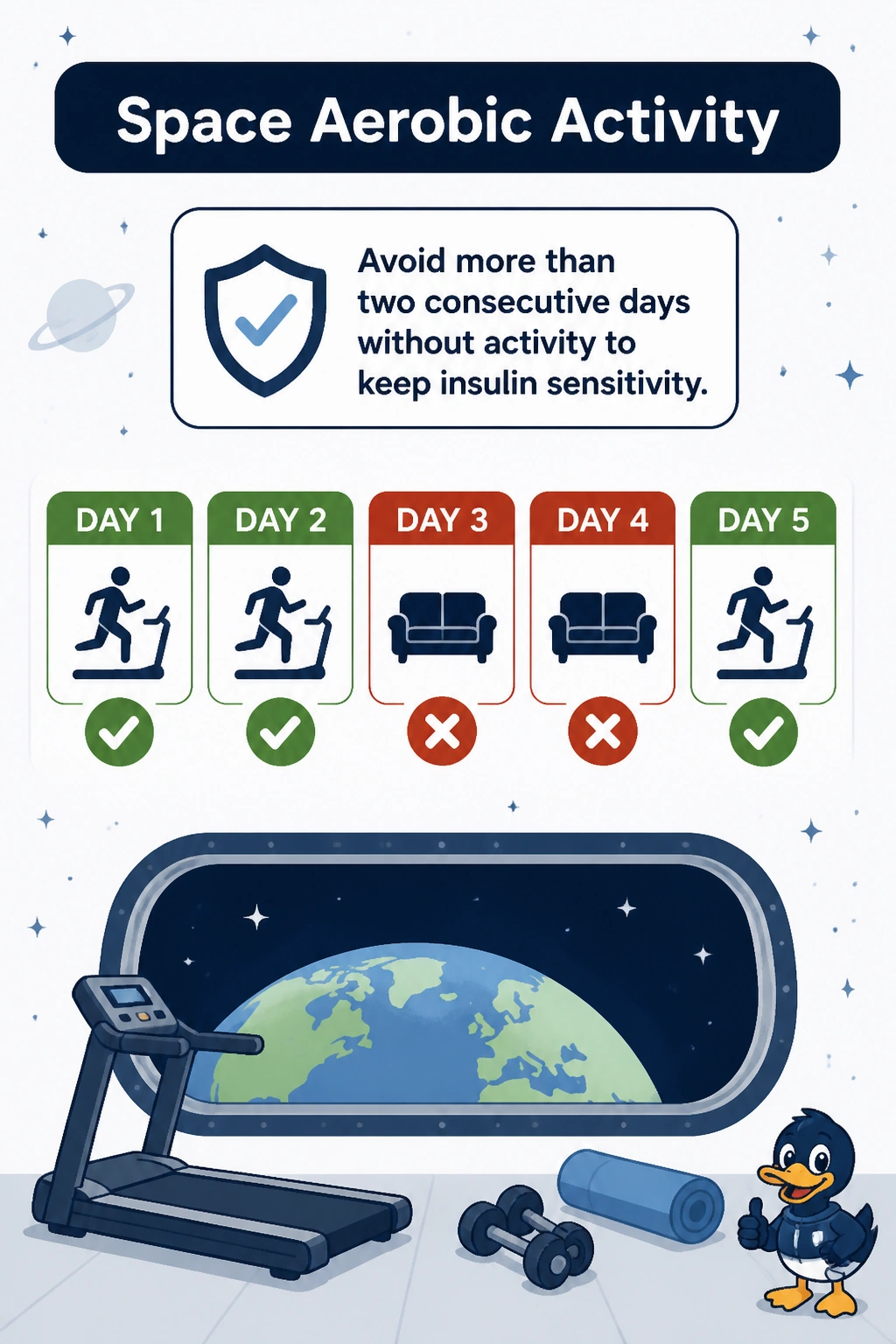
Your muscles act like a sponge for glucose after aerobic exercise, but that extra sensitivity does not last all week. Spreading movement across the week so you avoid more than two consecutive inactive days keeps insulin action working in your favor. The trap is assuming total weekly minutes on a single day deliver the same metabolic payoff.
Full Explanation
A single bout of aerobic exercise enhances insulin-stimulated glucose uptake for roughly 24 to 48 hours, which is why American Diabetes Association guidelines advise to Avoid more than two consecutive days without activity to keep insulin sensitivity. When five or six inactive days pass between workouts, that transient improvement in insulin action wanes, so spreading aerobic activity across at least three days with no more than two consecutive inactive days supports more consistent effects. Consolidating all weekly activity into one weekend day maximizes muscle glycogen depletion is misleading because weekend glycogen depletion does not sustain insulin sensitivity through the workweek and a single very long bout can raise risk of overuse injury. Exercising once weekly prevents joint strain while delivering the same glycemic benefit is incorrect because long, infrequent bouts may increase overuse strain rather than prevent it while losing the benefit of regular movement. Add all further activity to Saturday rather than spreading it through the week conflicts with spacing guidance, as concentrating minutes on one day leaves long gaps after the acute sensitizing effect has waned. Caveat: those with joint pain can break activity into shorter daily bouts such as 10 to 15 minutes after meals. Operational check: collaborate on a weekly calendar that places moderate movement at least every other day and review barriers at follow-up.
Prefer to study offline? Printable PDF study book + test engine ($7.50, unofficial). These questions stay free here.