
During an outpatient review of continuous glucose monitor data, a 45-year-old man with type 1 diabetes asks why his care team treats readings below 54 mg/dL more urgently than readings of 65 mg/dL when both are considered low. Which explanation should the diabetes care and education specialist provide?
Select an answer to reveal the explanation.
Short Explanation
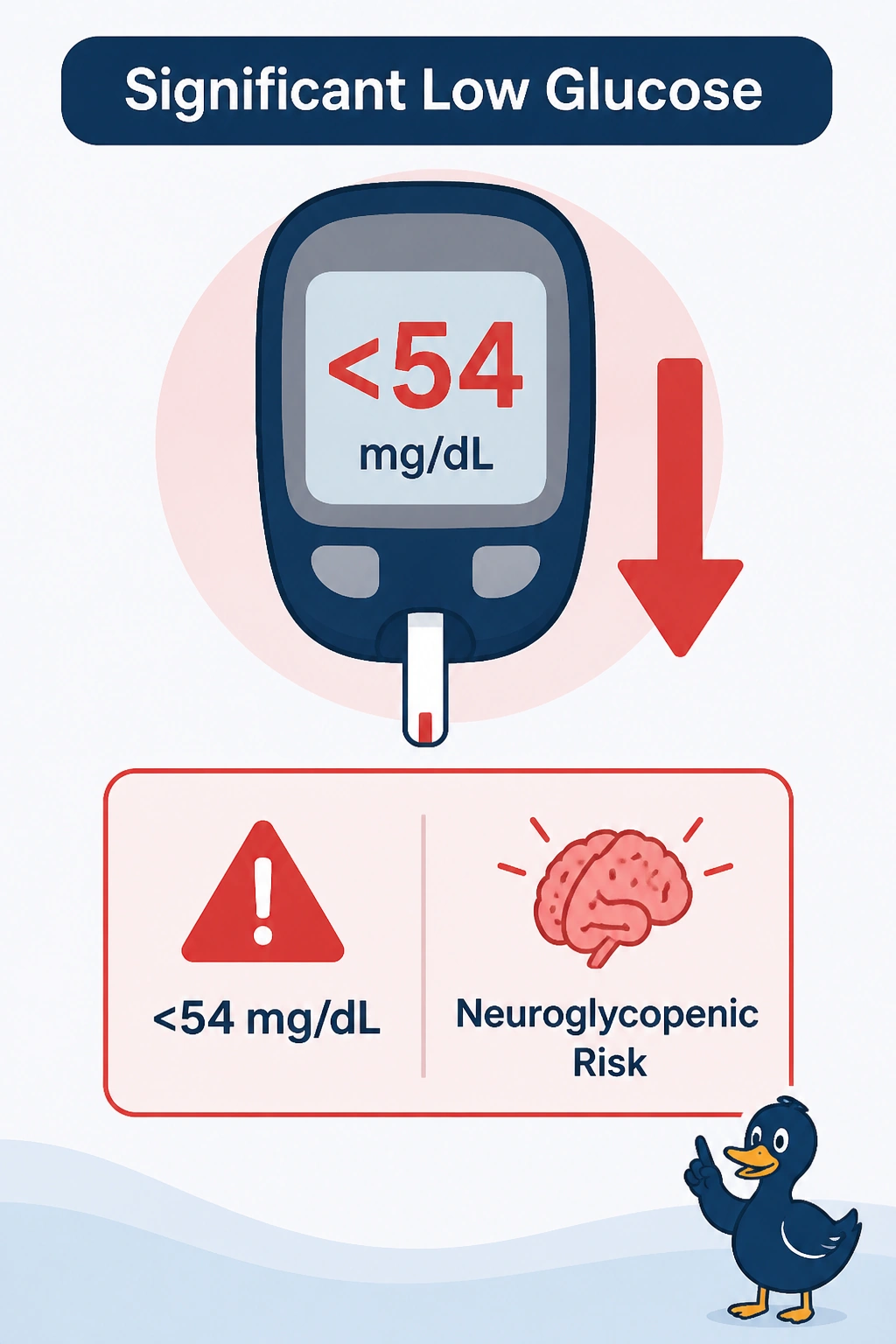
Not all low numbers carry the same danger, and knowing the difference helps you stay safe. You should treat 65 mg/dL promptly as an alert, while below 54 mg/dL is clinically significant hypoglycemia with higher risk to brain function and heart rhythm. Never ignore an asymptomatic low waiting for symptoms, and remember a low below 54 mg/dL does not by itself mean severe hypoglycemia or hospital IV care.
Full Explanation
According to American Diabetes Association standards, Readings below 54 mg/dL represent clinically significant hypoglycemia with neuroglycopenic risk. Level 1 hypoglycemia (54 to 69 mg/dL) is an alert to treat with fast-acting carbohydrate to prevent a further drop, whereas Level 2 hypoglycemia (below 54 mg/dL) reflects serious vulnerability where neuroglycopenic symptoms, cognitive impairment, arrhythmias, and progression to Level 3 become much more likely. By contrast, Readings below 54 mg/dL define level 3 hypoglycemia regardless of ability to self-treat is inaccurate because Level 3 is defined by altered mental function requiring another person's help, regardless of glucose value. Readings below 54 mg/dL always require intravenous dextrose in a hospital is incorrect because a conscious person who can swallow safely can treat with oral carbohydrate and recheck in 15 minutes. An asymptomatic reading below 54 mg/dL can be ignored until symptoms appear is unsafe because lack of symptoms does not remove risk and may reflect unawareness. Treat level 1 promptly too; the lower threshold does not justify waiting to treat a 65 mg/dL result. Caveat: repeated Level 2 readings can blunt counterregulatory responses and worsen unawareness. Operational check: review ambulatory glucose profile Time Below Range (<54 mg/dL) target under 1% and verify fast-acting glucose and glucagon plan.
Prefer to study offline? Printable PDF study book + test engine ($7.50, unofficial). These questions stay free here.