
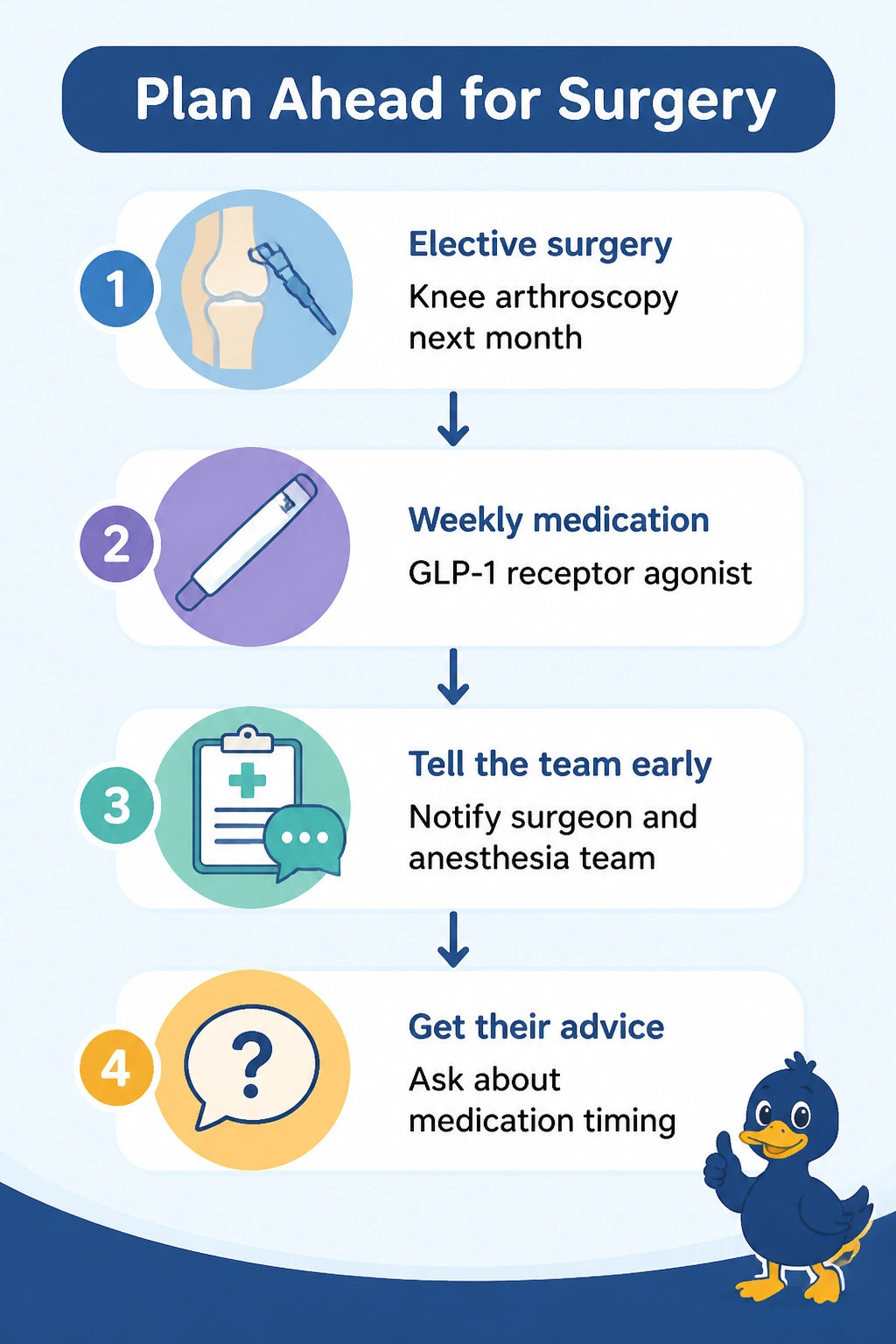
A 58-year-old woman with type 2 diabetes taking a weekly GLP-1 receptor agonist tells her diabetes care and education specialist that she has an elective outpatient knee arthroscopy scheduled next month. Which safety instruction should the specialist emphasize?
Select an answer to reveal the explanation.
Short Explanation
GLP-1 medications slow down stomach emptying, which matters a lot when anesthesia is on the calendar. The trap is assuming non-insulin drugs don't affect surgery prep, leaving your patient unprepared for fasting and aspiration precautions.
Full Explanation
GLP-1 receptor agonists delay gastric emptying, which can increase the risk of retained gastric contents and pulmonary aspiration during sedation or general anesthesia. Emphasizing to notify the surgeon and anesthesia team early so they can advise on perioperative medication timing ensures the procedural team can give individualized pre-procedure holding and fasting instructions. Many lower-risk patients can continue GLP-1 therapy; individualized risk assessment may instead require dietary, medication or anesthesia modifications. Do not apply an automatic week-long hold to everyone. Telling her to stop the weekly drug for every procedure using a fixed rule without consulting the procedural team replaces individualized assessment with an automatic hold and bypasses airway planning. Suggesting to discuss only insulin use because non-insulin drugs do not need perioperative review omits critical information, since GLP-1 effects on emptying directly affect anesthesia care. Assuming standard fasting instructions alone address all GLP-1-related aspiration risk is insufficient because retained contents can persist despite standard fasting. As a clinical caveat, protocols vary by center and glycemic status, so reinforce communicating rather than unilaterally stopping therapy.
Prefer to study offline? Printable PDF study book + test engine ($7.50, unofficial). These questions stay free here.