
A 28-year-old woman with type 1 diabetes using a tubed insulin pump plans to spend four hours kayaking and swimming at a lake where she will disconnect her pump. Which self-management plan should the diabetes care and education specialist emphasize?
Select an answer to reveal the explanation.
Short Explanation
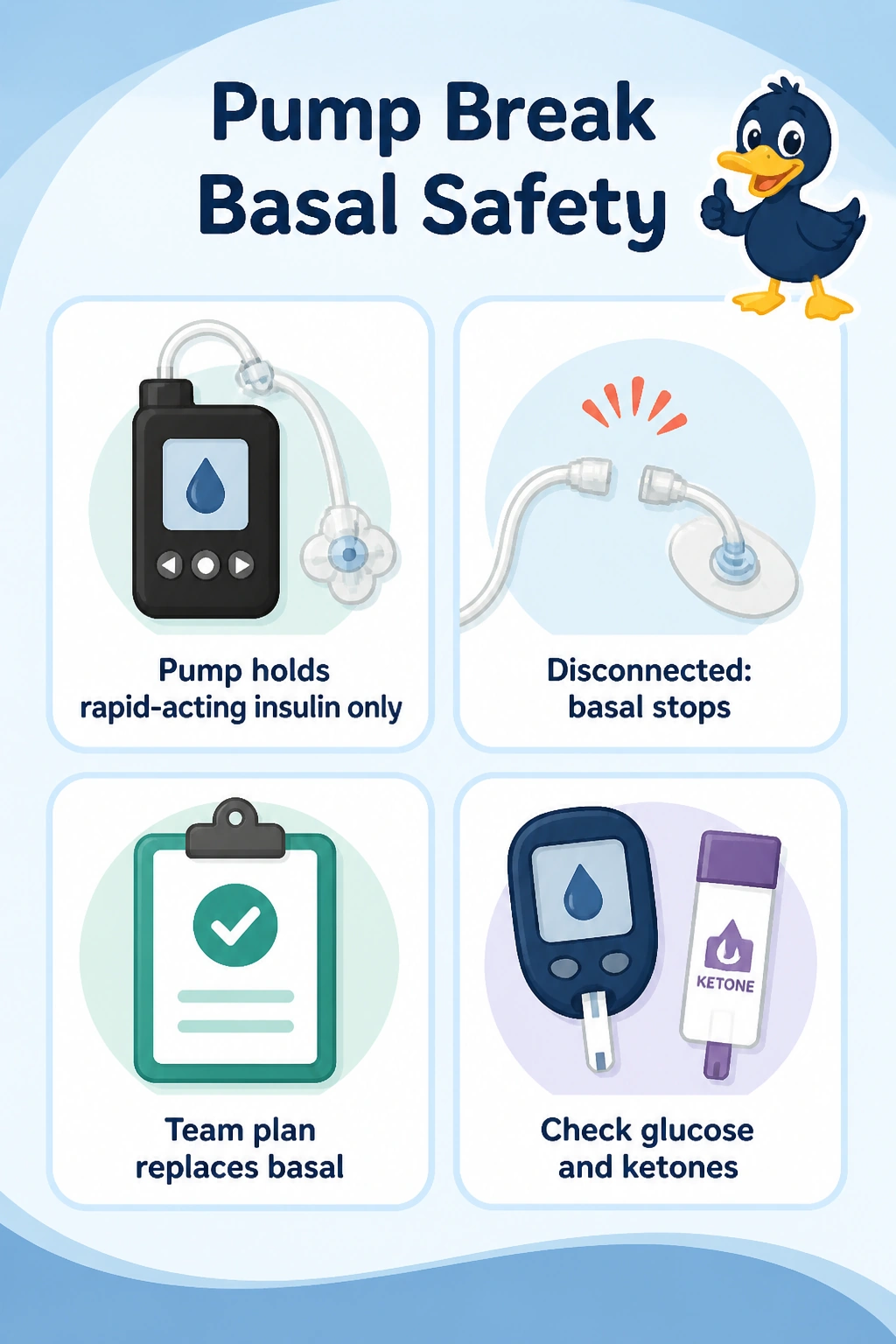
Because your pump uses only rapid-acting insulin, you lose basal coverage soon after disconnecting, with no long-acting safety net. You’ll need a team-approved plan to replace missed basal insulin, check glucose frequently, and test ketones when indicated; exercise alone cannot prevent ketosis.
Full Explanation
Insulin pumps deliver only rapid-acting insulin, so disconnecting removes basal coverage within a couple of hours and raises the risk of hyperglycemia and diabetic ketoacidosis. A team-approved plan to replace missed basal insulin, with frequent glucose checks and ketone testing when indicated, preserves basal needs while allowing water activity. Reconnection must actually deliver the planned insulin; timing and dose depend on exercise, active insulin, and the device. Do not assume that reconnecting hourly by itself replaces missed basal delivery. Disconnecting for the entire four hours and giving one large bolus before entering the water creates an early peak that risks severe hypoglycemia in the water, followed by later insulin deficiency. Leaving the pump disconnected without backup insulin because activity stays vigorous ignores that counterregulatory hormones during exertion without insulin can accelerate ketone production. Using the usual meal bolus alone to cover food and all four hours of missed basal insulin conflates prandial and basal needs, leaving a prolonged gap that promotes hyperglycemia and ketosis. As a clinical caveat, store spare infusion sets, a syringe or pen, and ketone strips in a waterproof, temperature-protected bag. For an operational check, review the allowed disconnection window with the care team and track missed basal insulin.
Prefer to study offline? Printable PDF study book + test engine ($7.50, unofficial). These questions stay free here.