
A 63-year-old man with type 2 diabetes and peripheral neuropathy calls the clinic on Friday afternoon because he noticed a small, painless open sore on the ball of his right foot after wearing new dress shoes. Which instruction should the diabetes care and education specialist give first?
Select an answer to reveal the explanation.
Short Explanation
With neuropathy, a painless foot sore is a quiet emergency—no pain doesn't mean no danger. The trap is letting your patient soak the wound or wait it out because it feels fine, which turns a small blister into a deep ulcer.
Full Explanation
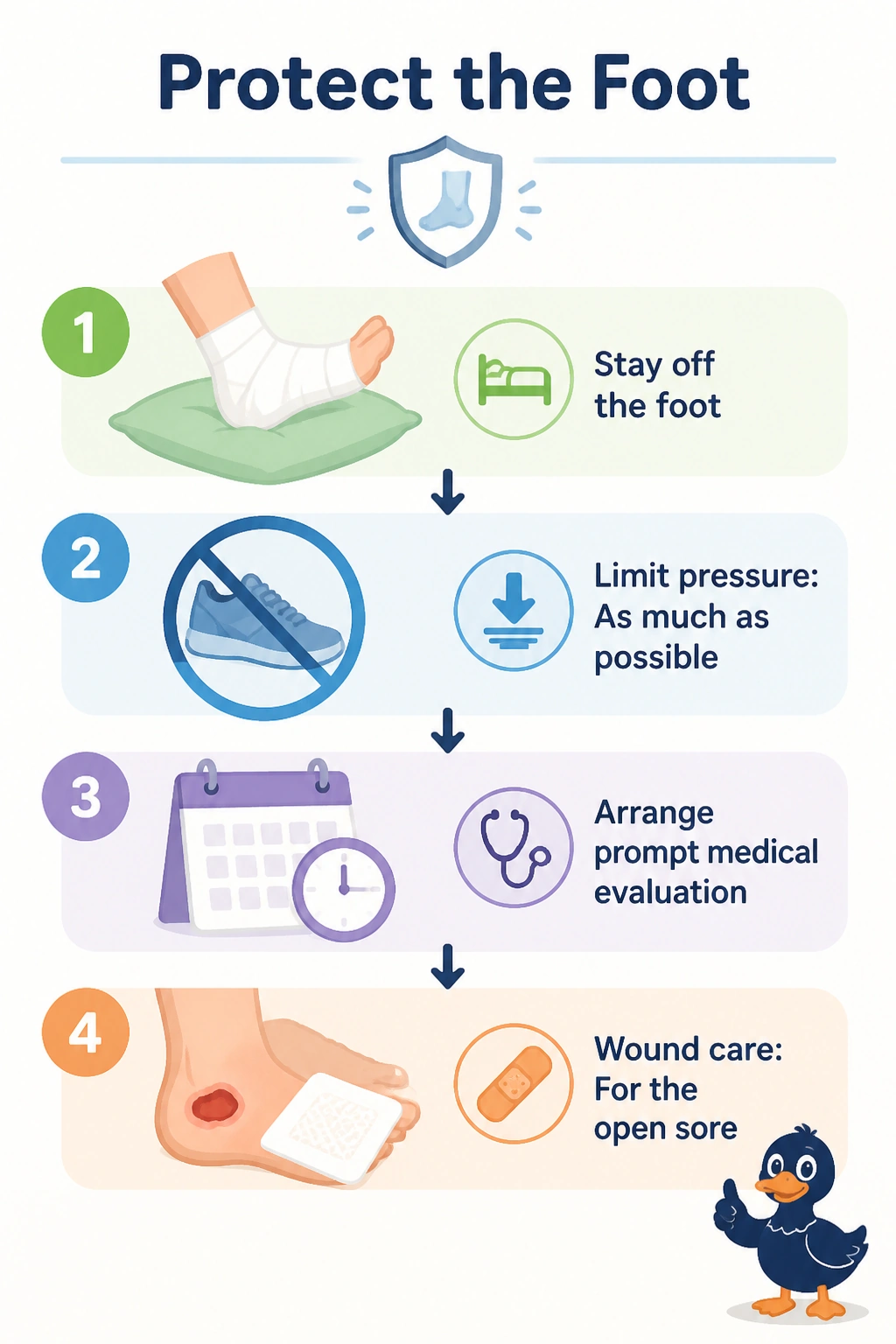
Peripheral neuropathy masks pain signals, so repetitive pressure on an open plantar sore rapidly worsens tissue breakdown and invites deep infection. Instructing him to stay off the foot as much as possible and arrange prompt medical evaluation for wound care protects the tissue through offloading and ensures timely debridement and infection assessment. Soaking can macerate the wound, and an unsupervised salicylic-acid pad can injure surrounding skin; an open plantar wound needs prompt evaluation and appropriate offloading. Advising him to wait two weeks to see if the sore closes on its own since it is small and does not hurt delays essential wound care during the critical early window. Advising him to continue usual walking in cushioned shoes until the next routine foot visit fails to offload plantar pressure and leaves an open diabetic foot ulcer unexamined far too long. As a clinical caveat, instruct him to seek immediate urgent care if he notices spreading redness, warmth, swelling, drainage, or fever. For an operational check, help him schedule a same-day or urgent podiatry or primary care visit and inspect the inside of the new shoes for rough seams.
Prefer to study offline? Printable PDF study book + test engine ($7.50, unofficial). These questions stay free here.