
A 66-year-old woman with type 2 diabetes and dry, flaky skin on her heels asks how to keep her feet moisturized without causing skin infections. Which foot-care instruction should the diabetes care and education specialist provide?
Select an answer to reveal the explanation.
Short Explanation
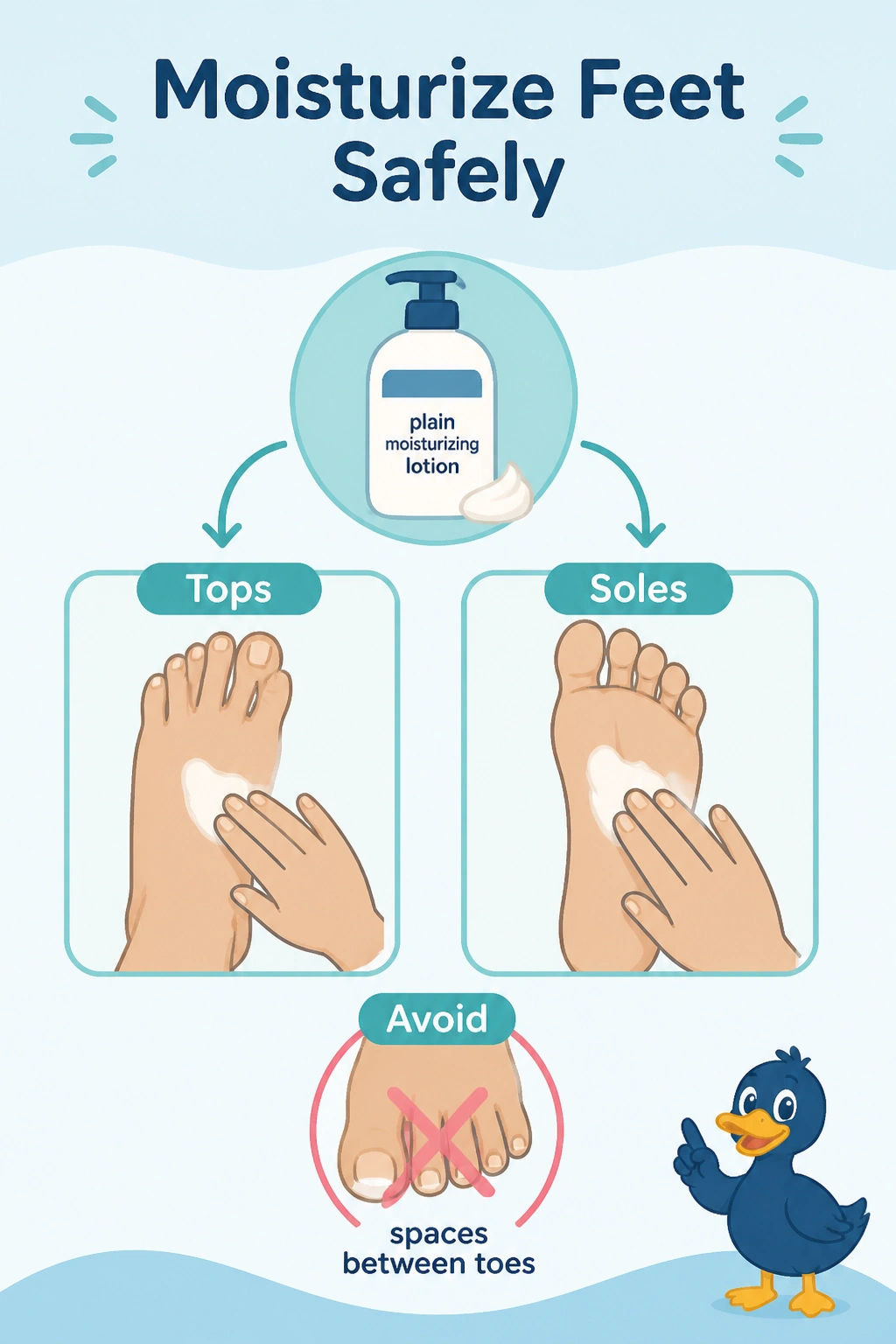
Moisturizing dry heels is smart, but when you trap lotion between toes it is like leaving wet towels in a dark gym bag. You protect her feet by moisturizing tops and soles while keeping the spaces between toes clean and dry.
Full Explanation
Teaching her to apply plain moisturizing lotion to tops and soles of feet, avoiding spaces between toes prevents painful heel fissures while keeping interdigital spaces dry so fungal infections and skin maceration do not develop. Recommending soaking both feet in warm soapy water for 20 minutes daily before applying thick petroleum jelly increases skin breakdown, strips natural oils, and risks thermal burns if neuropathy is present. Advising moisturizing between the toes as well as the heels to prevent cracking traps moisture in interdigital spaces, promoting maceration and fungal growth despite the goal of preventing cracking. Advising applying an OTC salicylic-acid callus remover before moisturizing rough heel skin is unsafe for home use. Unsupervised chemical callus removal risks skin injury; seek professional advice for callus care. As a clinical caveat, any new cracks, redness, warmth, or drainage on the feet should be evaluated promptly by a clinician or podiatrist rather than treated at home. As an operational check, ask her to demonstrate how she dries her feet and where she will apply lotion after her next shower.
Prefer to study offline? Printable PDF study book + test engine ($7.50, unofficial). These questions stay free here.