
A 41-year-old man with type 1 diabetes using carbohydrate counting notices his blood glucose consistently rises above 240 mg/dL after eating packaged trail mix, even though he doses insulin for the 18 grams of total carbohydrate listed on the label. When reviewing the package together, which label-reading step should the diabetes care and education specialist emphasize?
Select an answer to reveal the explanation.
Short Explanation
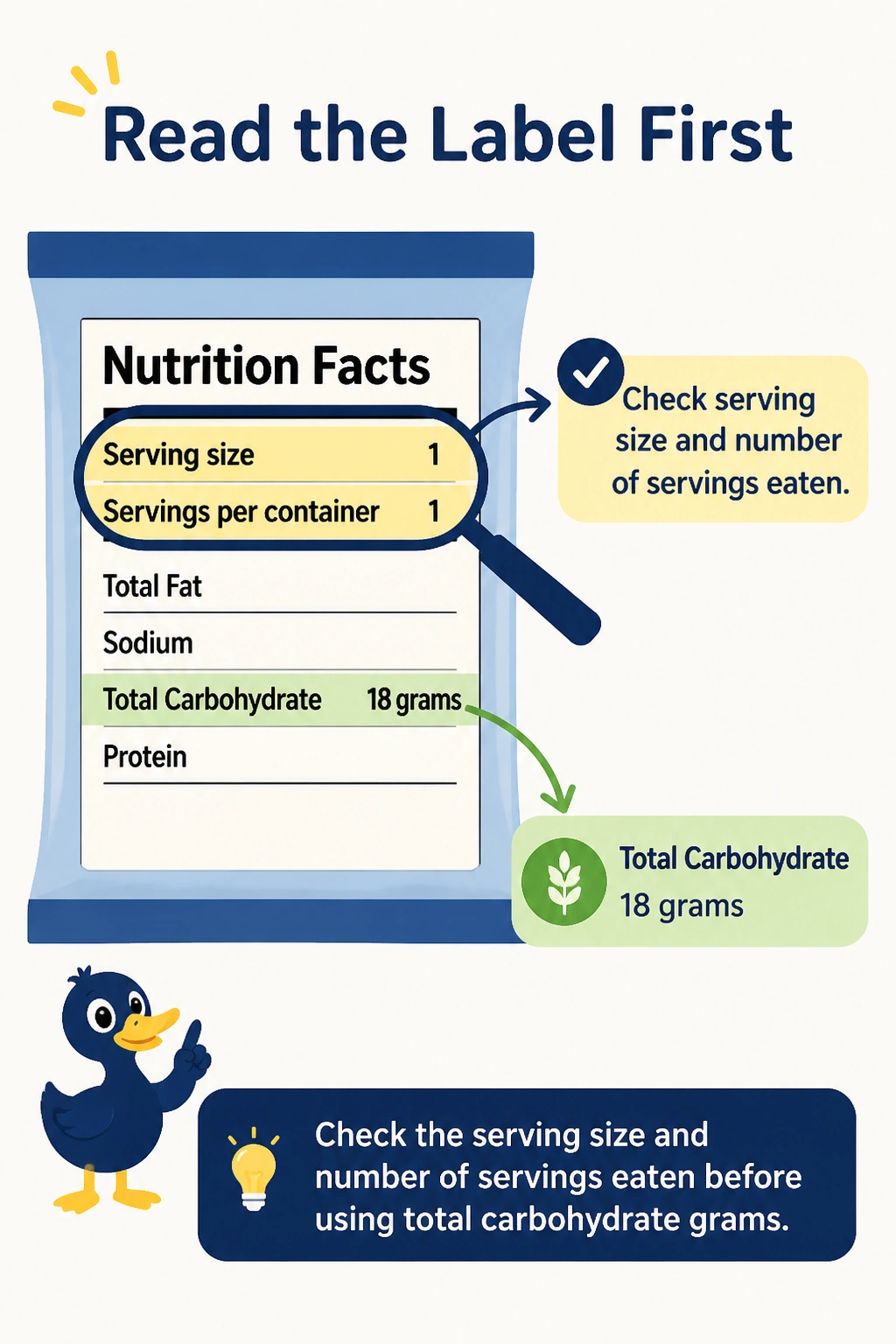
A Nutrition Facts label is like a price tag per ounce rather than the bill for the whole bag. The trap is dosing insulin for a single listed serving when the actual handful holds two or three servings. Always guide your patient to check the serving size and servings eaten before counting total carbohydrates.
Full Explanation
Nutrition Facts panels list nutrients per single serving, so checking the serving size and number of servings eaten before using total carbohydrate grams prevents underestimating carbohydrate intake and post-meal hyperglycemia. Subtracting both total sugars and added sugars from the listed total carbohydrate grams per serving double-counts sugars that are already included in the total carbohydrate line, leading to severe insulin underdosing. Using only the added sugars line instead of total carbohydrate when estimating mealtime insulin ignores starches and naturally occurring sugars from dried fruit that still raise blood glucose. Using the package’s net-carbohydrate claim without checking the number of servings eaten relies on unregulated marketing math that still applies per serving and may subtract fiber and sugar alcohols, so total carbohydrate for the amount eaten remains the basis for dosing. As a nutrition caveat, high-fat nuts and seeds in trail mix can also delay gastric emptying and cause a later glucose rise even when carbohydrates are measured accurately. As an operational check, have the person measure their usual portion into a bowl and compare it with the package serving size using teach-back.
Prefer to study offline? Printable PDF study book + test engine ($7.50, unofficial). These questions stay free here.