
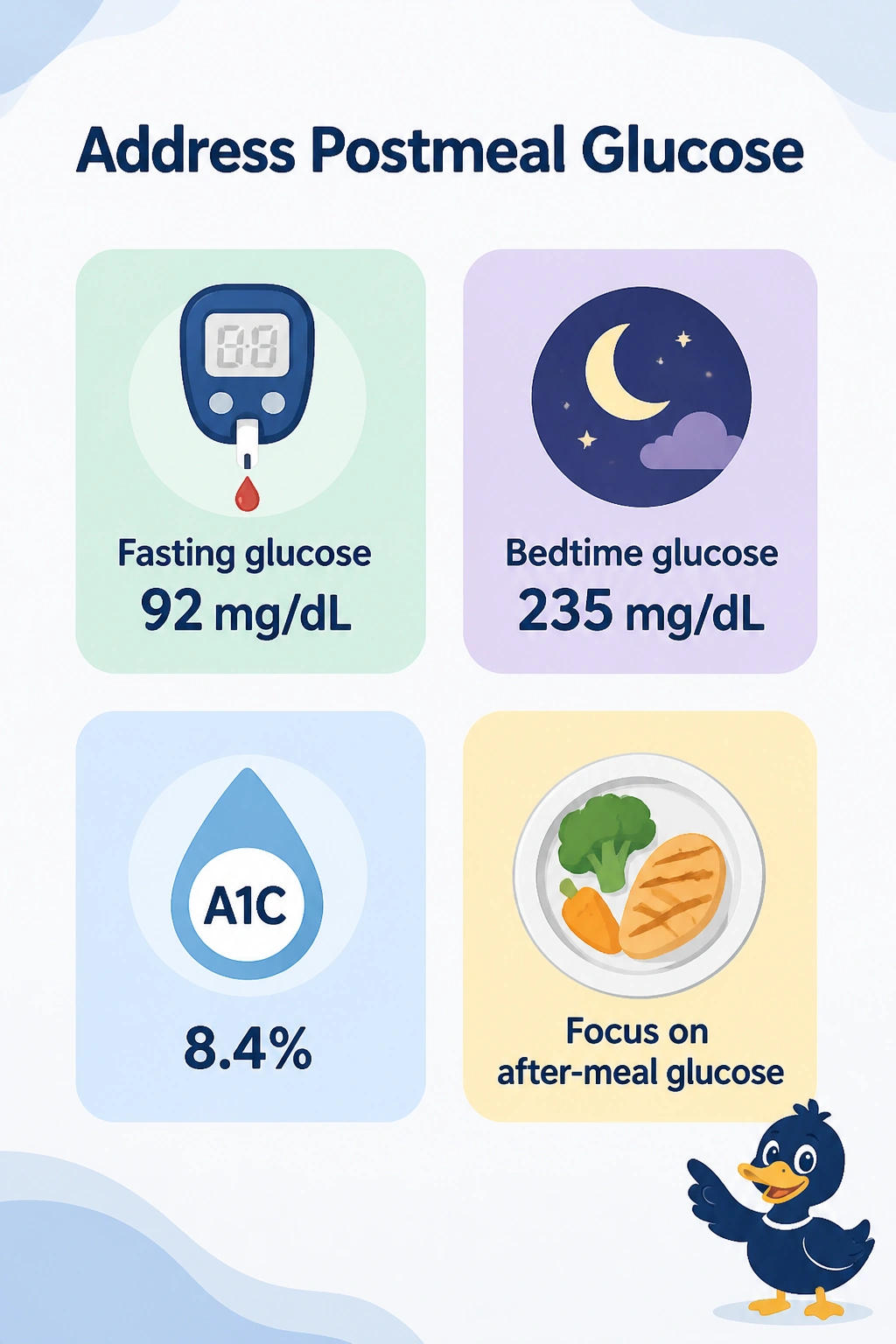
A 60-year-old man with type 2 diabetes on basal insulin has a bedtime glucose of 235 mg/dL, a fasting morning glucose of 92 mg/dL, an A1C of 8.4%, and occasional mid-morning lows. He asks whether increasing his basal insulin further will fix his A1C. Which guidance should the diabetes care and education specialist emphasize?
Select an answer to reveal the explanation.
Short Explanation
You’re right to question whether more basal insulin is the answer: your fasting glucose is already at target, and you sometimes have mid-morning lows. Focus on postprandial hyperglycemia instead of increasing basal insulin and risking more daytime hypoglycemia.
Full Explanation
Basal insulin controls hepatic glucose output overnight and between meals; it is not designed to cover rises in glucose after meals. Your fasting glucose is 92 mg/dL, and occasional mid-morning lows suggest that increasing basal insulin further could cause harm without correcting your A1C of 8.4%. Addressing postprandial hyperglycemia rather than increasing basal insulin avoids overbasalization and targets the likely source of the remaining elevation. Titrating basal insulin upward every three days until post-dinner readings fall below 140 mg/dL uses a fasting-targeted drug to treat a mealtime problem and increases hypoglycemia risk. Switching the basal injection from evening to early morning without changing the daily dose does not address daytime meal spikes or resolve the bedtime-to-morning glucose drop. Eliminating all carbohydrates at dinner while maintaining the current basal titration plan is overly restrictive and unsustainable, and leaves the underlying excess basal dose unaddressed. A clinical caveat is that a large bedtime-to-morning glucose drop with A1C still above target can signal overbasalization and warrants discussion with the prescriber. As a practical check, review paired bedtime and fasting glucose logs alongside total daily basal units per kilogram before your next medical visit.
Prefer to study offline? Printable PDF study book + test engine ($7.50, unofficial). These questions stay free here.