
A 46-year-old man with type 2 diabetes taking rapid-acting mealtime insulin is invited to a restaurant dinner where food service is unexpectedly delayed by 45 minutes. Which self-management instruction should the diabetes care and education specialist reinforce?
Select an answer to reveal the explanation.
Short Explanation
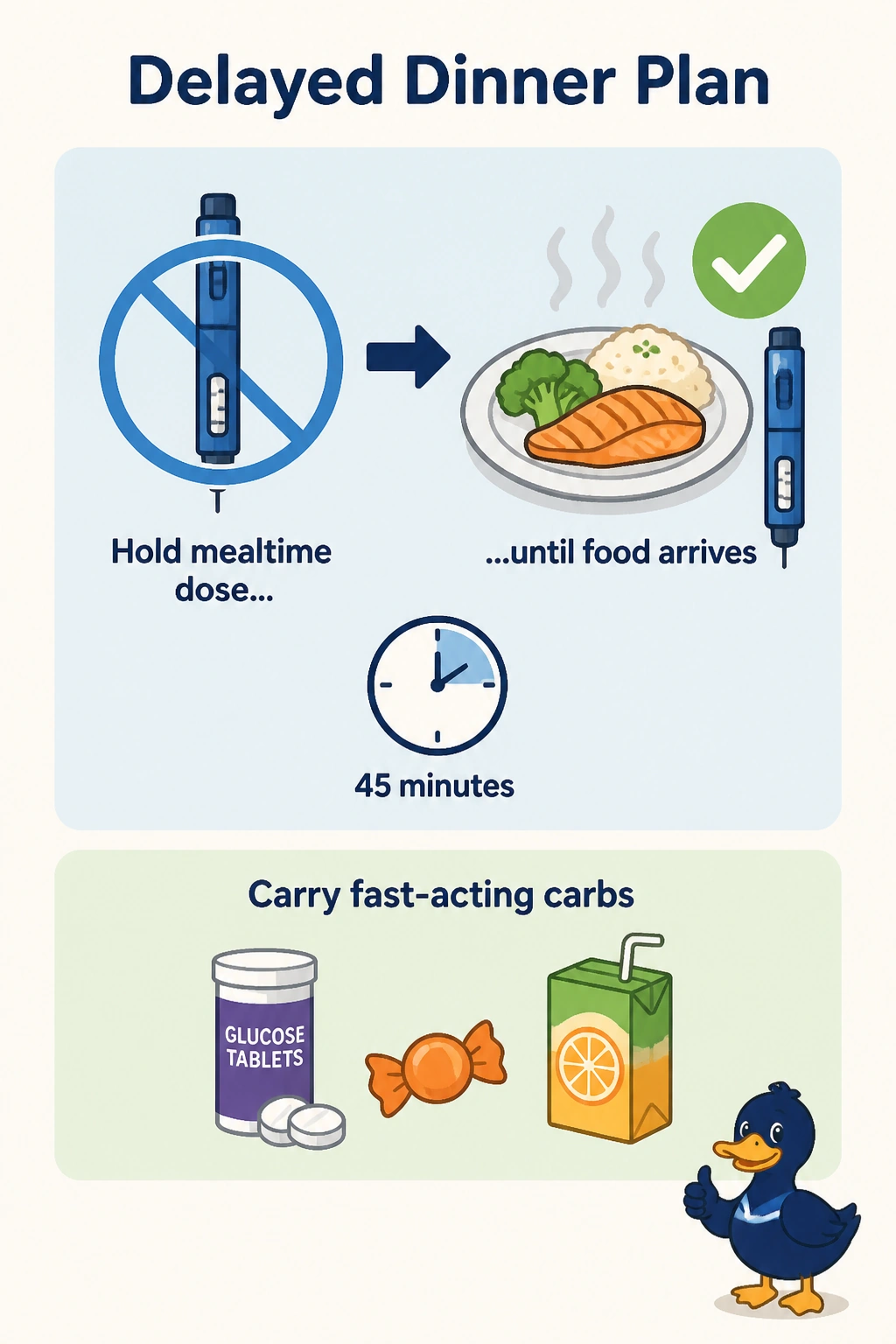
Restaurant kitchens run on their own clock, while rapid-acting insulin starts working right on schedule. The trap is dosing the moment you sit down and hoping the food arrives fast, so you should wait until your plate is on the way and keep rescue carbs handy.
Full Explanation
Reinforcing Hold the mealtime dose until food arrives and carry fast-acting carbs prevents restaurant-delay hypoglycemia while preserving safe mealtime coverage. Rapid-acting insulin begins lowering blood glucose within minutes and can start acting before food is available; onset and peak vary by formulation and person, so waiting until food delivery is imminent aligns insulin action with carbohydrate absorption. Advising Inject the mealtime insulin immediately upon arriving and wait without eating creates a dangerous mismatch between active insulin and absent carbohydrate intake. Recommending Give the full meal bolus when ordering, using the usual expected service time still assumes normal service despite a known 45-minute delay, leaving insulin active without carbohydrate to cover. Suggesting Give the meal bolus on arrival and use symptoms alone to decide whether carbohydrate is needed during the delay relies on unreliable symptom detection instead of planned glucose monitoring and timely carbohydrate coverage. As a practical caveat, if someone has already injected before learning of a delay, carbohydrate intake must cover the active dose and glucose trend, not an unspecified small amount, with monitoring to guide amount and timing. For an operational check, ask how he plans to verify his glucose before eating and confirm he carries glucose tablets or gel whenever dining out.
Prefer to study offline? Printable PDF study book + test engine ($7.50, unofficial). These questions stay free here.