
A 27-year-old woman with type 1 diabetes on multiple daily injections asks why her pre-meal rapid-acting insulin dose changes from day to day even when she eats the exact same 45-gram carbohydrate lunch. Which concept should the diabetes care and education specialist explain?
Select an answer to reveal the explanation.
Short Explanation
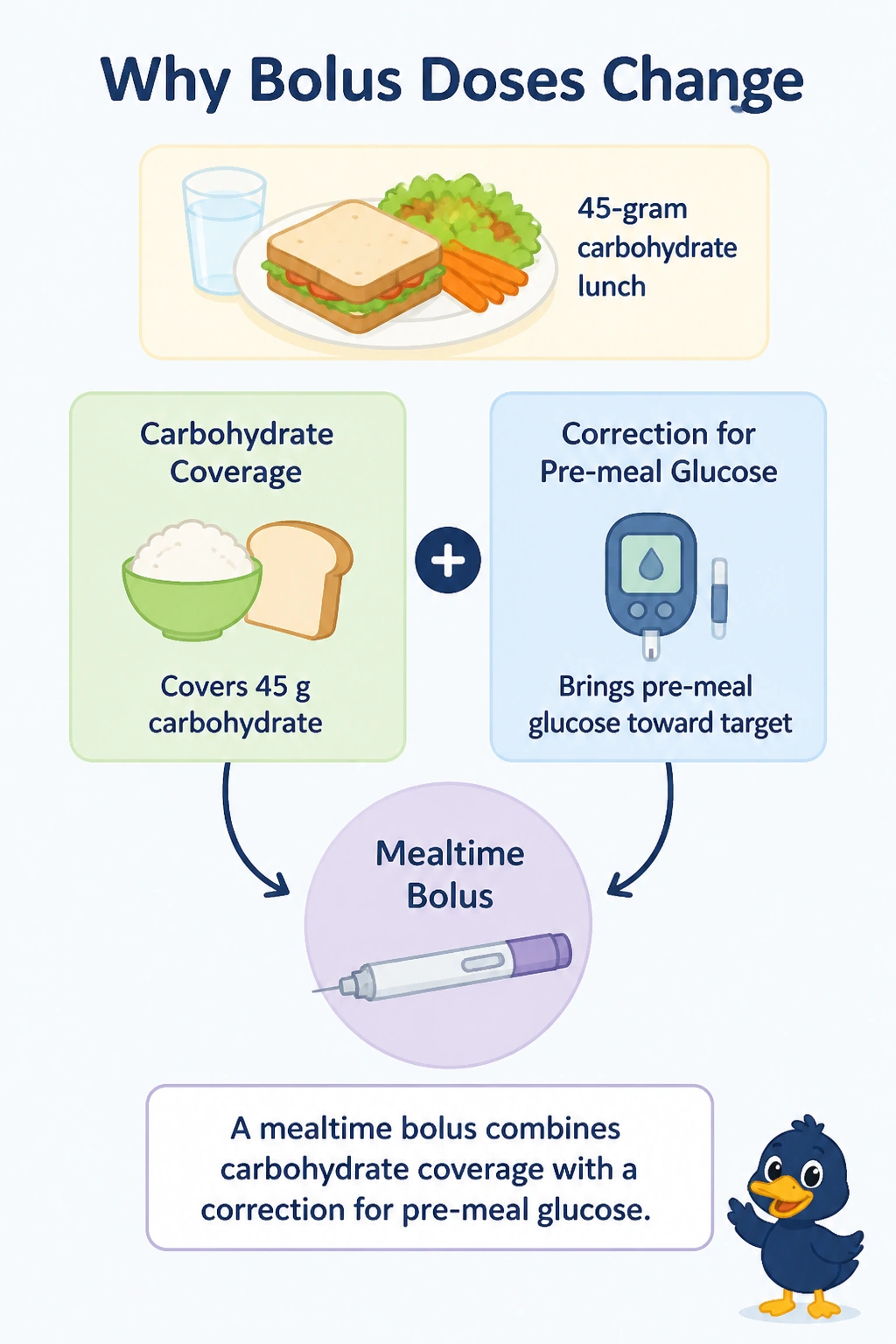
Think of a mealtime bolus like paying a restaurant bill that includes both your meal and any unpaid tab from earlier. The trap is assuming identical meals always require identical insulin doses. Explaining how carbohydrate coverage pairs with a pre-meal correction clears up the daily variation.
Full Explanation
In flexible multiple daily injection therapy, a mealtime bolus combines carbohydrate coverage with a correction for pre-meal glucose, so the same 45-gram lunch requires more rapid-acting insulin when starting at 210 mg/dL than when starting at 105 mg/dL. Stating that basal insulin is recalculated before every meal to cover both carbohydrates and high readings confuses background long-acting insulin with rapid-acting mealtime dosing. Claiming correction insulin replaces carbohydrate dosing whenever a pre-meal reading is above 100 mg/dL would leave mealtime carbohydrates uncovered and cause sharp post-meal hyperglycemia. Insisting that mealtime rapid-acting insulin doses remain identical regardless of pre-meal glucose levels describes fixed-dose therapy rather than individualized bolus calculation. As a safety caveat, active insulin on board from a recent bolus must also be considered before adding a full correction dose to avoid insulin stacking. As an operational check, walk through two sample pre-lunch glucose scenarios with her prescribed ratios and verify her math.
Prefer to study offline? Printable PDF study book + test engine ($7.50, unofficial). These questions stay free here.