
A 55-year-old man with type 2 diabetes who is switching from glipizide to a DPP-4 inhibitor asks why his clinician told him his risk of low blood glucose should decrease. Which explanation should the diabetes care and education specialist provide?
Select an answer to reveal the explanation.
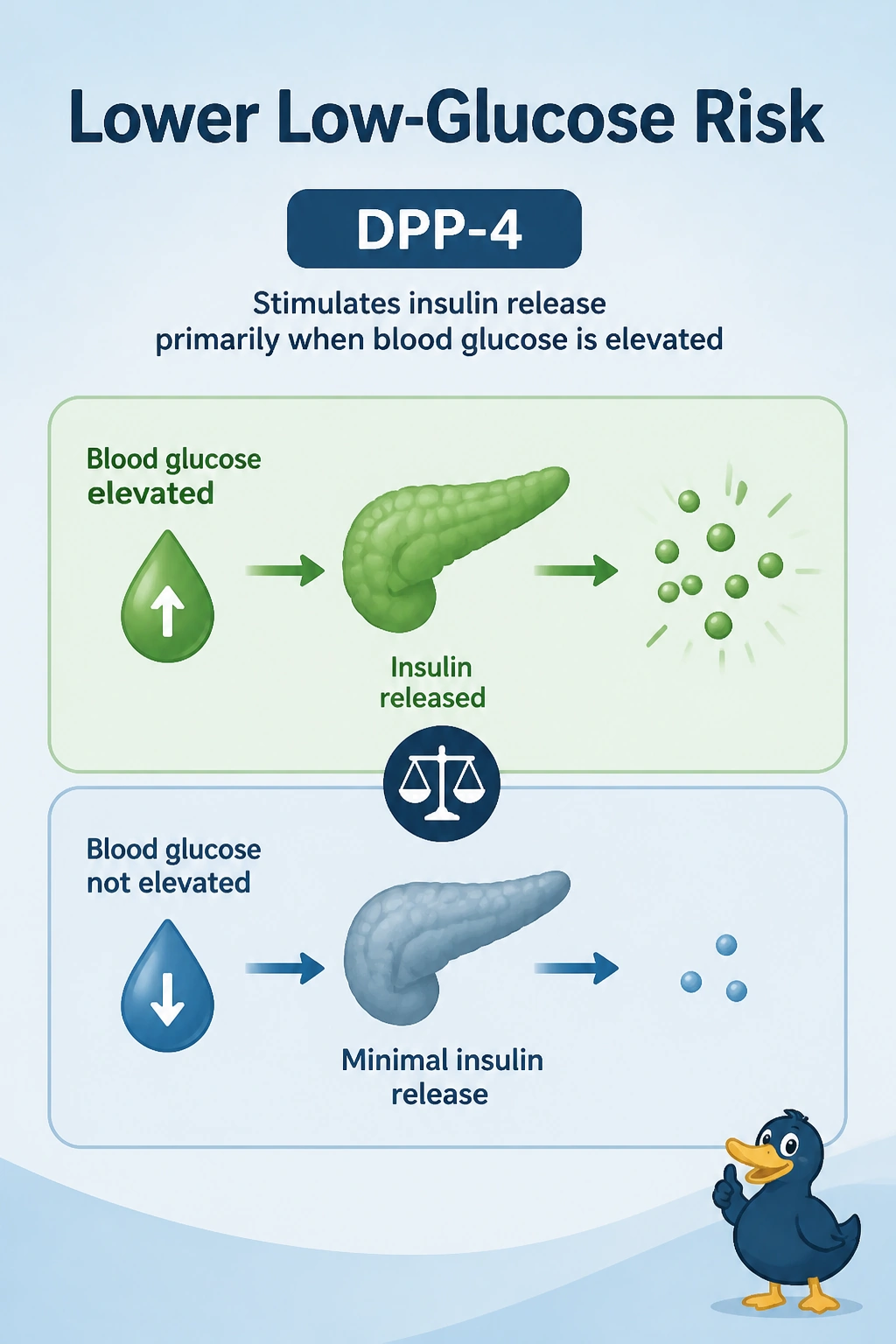
Short Explanation
Knowing how a medication responds to blood glucose helps your patient understand why one pill causes lows and another rarely does. The trap is mixing up incretin action with carbohydrate blockers or kidney-excretion drugs instead of glucose-dependent insulin release.
Full Explanation
DPP-4 inhibitors stimulate insulin release primarily when blood glucose is elevated by slowing the breakdown of endogenous incretin hormones such as GLP-1, which enhances insulin secretion and suppresses glucagon in a glucose-dependent manner. Because this effect tapers off as blood glucose approaches normal, DPP-4 inhibitors carry a low risk of hypoglycemia when used without insulin or a sulfonylurea. Sulfonylureas stimulate insulin secretion without normal glucose dependence; action still follows formulation and pharmacokinetics. DPP-4 inhibition directly slows intestinal carbohydrate digestion describes alpha-glucosidase inhibition rather than incretin preservation. DPP-4 inhibition primarily improves insulin sensitivity through PPAR-gamma activation describes thiazolidinediones, not DPP-4 inhibitors. DPP-4 inhibitors eliminate excess glucose strictly through the kidneys regardless of meals describes SGLT2 inhibitors, not DPP-4 inhibitors. As a clinical caveat, hypoglycemia can still occur if a DPP-4 inhibitor is combined with insulin or a sulfonylurea, so review the full medication list. For an operational check, ask the patient to explain in his own words why his low-glucose risk changes after stopping glipizide.
Prefer to study offline? Printable PDF study book + test engine ($7.50, unofficial). These questions stay free here.